


A Yang Wood personality is principled, resilient, and naturally inclined toward leadership, symbolized in BaZi by the towering tree — deeply rooted, steadily growing, and impossible to push over. People with Jia Wood (甲 / Yang Wood) as their Day Master tend to think long-term, speak honestly, and hold firm to their values even when everyone else has moved on. The challenge is that same rigidity can become a liability when flexibility matters more than principle.
If you’ve ever been called “too stubborn” — principled to a fault, unyielding when the room has already reached consensus — your BaZi chart may hold the explanation. Most content on Yang Wood describes the traits in mystical terms and leaves you there. This guide maps the Jia Wood Day Master as a system of patterns you can actually use for career decisions, relationship dynamics, and daily balance.
Not sure if you’re Yang Wood? Calculate your BaZi chart first. Your Day Master is the Heavenly Stem that sits on your Day Pillar — the core identity in your Four Pillars chart.
Key Takeaways
- Yang Wood (Jia Wood / 甲) behaves like a mighty oak — principled, resilient, and slow to change direction once rooted in a belief.
- Strong Jia Wood born in Spring is confident and decisive; weak Jia Wood born in Autumn is more cooperative but prone to indecision.
- Best career fits include leadership, law, education, and entrepreneurship — roles where long-term vision and principled execution matter.
- Wood controls Earth, making Earth-element industries and steady asset-building the natural wealth strategy for Yang Wood types.
- The main health pattern centers on liver tension, anger, and tendon strain — balanced through Water activities, Metal structure, and deliberate flexibility practice.
What Is Yang Wood? The Towering Tree as a Behavioral Model

The Core Symbolism
In the Five Elements system, Yang Wood (Jia / 甲) is the mighty tree — the oak, the pine, the redwood. Unlike Yin Wood (Yi / 乙木), which behaves like a vine or flower that bends around obstacles, Jia Wood is structural and upright. It builds deep roots before visible height. It grows slowly, steadily, and with clear direction.
This metaphor is not decorative. It predicts behavior. A tree does not pivot overnight. It does not change direction with every wind. It commits to upward growth and defends its position. That is the Yang Wood pattern in human form — a person who invests heavily in foundations, holds long-term vision, and resists disruption once established.
The key insight: a tree’s greatest strength and its greatest vulnerability are the same thing. Deep roots create stability, but they also make relocation costly.
Why the Day Master Matters
Your Day Master — the Heavenly Stem on your Day Pillar — represents your core identity in BaZi. It is one of ten stems, not a zodiac sign. Think of it as your default operating system. It shapes how you process information, respond to pressure, and make decisions under uncertainty.
However, your Day Master is just one layer. The full chart — Year, Month, Day, and Hour Pillars, plus the hidden stems within each Earthly Branch — modifies these traits. A Jia Wood Day Master with strong Water support behaves differently from one surrounded by Metal. This is why reading your full BaZi chart matters more than reading your Day Master alone.
Yang Wood Personality Traits: The Pattern Breakdown
The Upright Profile
Yang Wood personalities show a consistent pattern across five dimensions:
- Principled and honest. Jia Wood has a strong internal moral compass. They say what they mean, mean what they say, and expect the same from others. This makes them trustworthy in positions where integrity is non-negotiable.
- Determined and resilient. Setbacks do not derail Yang Wood easily. Like a tree growing around a rock, they adapt their path without abandoning their destination. This persistence is often mistaken for stubbornness — and sometimes it is.
- Natural leadership. They do not seek dominance for its own sake, but their clarity of vision and unwillingness to compromise on core values position them as leaders others trust to hold the line.
- Strategic and visionary. Yang Wood thinks in years, not quarters. They excel at multi-year planning, infrastructure building, and any endeavor where delayed gratification pays off.
- Protective and loyal. Once someone is inside their inner circle, Jia Wood becomes a shelter. They defend their team, family, or community with the same intensity they bring to their own goals.
The Shadow Side
Every strength carries a shadow. For Yang Wood, the same traits that create stability can produce rigidity:
- Stubborn and inflexible. Changing a Yang Wood person’s mind requires new evidence, clear logic, and time. They do not pivot quickly, and they may stick with a failing plan longer than the situation warrants.
- Blunt to a fault. Their directness can alienate people who need softer delivery. They often do not realize they have caused offense until the damage is done.
- Impatient with slow progress. They understand delayed gratification for their own goals, but they can become frustrated when others move at different speeds.
- Overly competitive. The tree must grow taller than the rest. Yang Wood can fall into comparison traps and measure their worth against others’ visible achievements.
- Resistant to change. Once rooted — in a career, a city, a belief system — they prefer to deepen rather than relocate. This loyalty is admirable until the environment no longer supports their growth.
When David, a product director at a SaaS company in Austin, learned he was Jia Wood, everything clicked. For three years, he had built a five-year technical roadmap his team admired. Then the CEO pivoted to a new market every quarter. David’s frustration spiraled. He interpreted each pivot as a betrayal of principle rather than a business necessity. Understanding his Yang Wood pattern did not make the pivots easier — but it gave him a framework for building flexibility into his planning process rather than fighting the structure of the organization.
Strong vs. Weak Yang Wood: Why Context Changes Everything
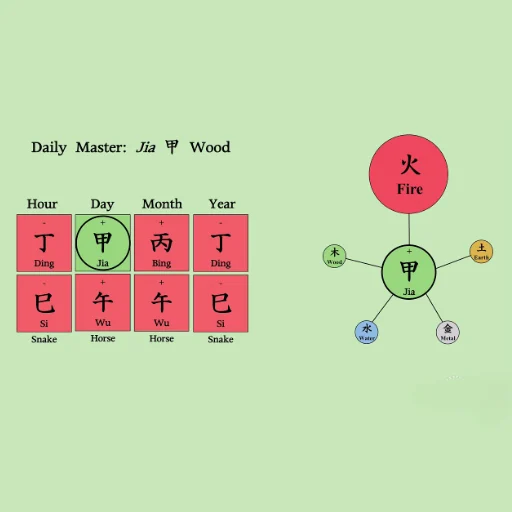
Strong Jia Wood (The Deep-Rooted Oak)
A strong Jia Wood Day Master is typically born in Spring, when Wood is in season, or supported by abundant Water and Wood elsewhere in the chart. The deep-rooted oak is confident, decisive, and naturally authoritative. People listen when they speak. Their vision is clear, and their follow-through is consistent.
The risk: rigidity turns into dominance. They may override valid objections, insist on their own approach when collaboration would yield better results, and struggle to admit error. The oak that refuses to sway in a storm eventually breaks.
Weak Jia Wood (The Young Sapling)
A weak Jia Wood is often born in Autumn, when Metal is strong and Wood is weakest, or surrounded by heavy Earth and Metal that restrict growth. The young sapling is more cooperative, less assertive, and quicker to seek consensus.
The risk: indecision and dependency. Without sufficient root structure, weak Jia Wood may bend too easily to external pressure, struggle to set boundaries, and feel perpetually swayed by stronger personalities around them. They have the same principled core but lack the confidence to defend it.
How to Tell Which One You Are
Start with the season of your birth:
- Spring (Wood season): Likely strong Jia Wood
- Summer (Fire season): Wood feeds Fire; may be draining
- Autumn (Metal season): Metal cuts Wood; likely weaker
- Winter (Water season): Water nourishes Wood; generally supportive
Then look at your full chart. Count the Wood and Water elements across all stems and branches. Heavy Wood/Water suggests strength. Heavy Metal/Earth suggests weakness. For a precise reading, generate your complete BaZi chart and check the element distribution.
Yang Wood at Work: Career Strategy by Design
Where Yang Wood Thrives
Yang Wood excels in environments that reward principle, vision, and steady execution over rapid pivoting:
- Leadership and management. Their natural authority and long-term thinking make them effective executives, team leads, and department heads.
- Law, advocacy, and politics. Roles where holding a principled position is the job description itself.
- Education, coaching, and mentorship. They nurture growth in others with the same patience they apply to their own.
- Construction, real estate, and environmental fields. Earth-element industries align with Wood’s natural control cycle — Wood penetrates and shapes Earth.
- Entrepreneurship. Founding a company requires the deep-rooted commitment and vision that Yang Wood supplies naturally.
Where Yang Wood Struggles
- Highly fluid environments with no stable structure
- Roles requiring constant pivoting and ambiguous direction
- Cultures where politics outweigh principles
- Micromanaged positions that leave no room for independent judgment
The Yang Wood Career Framework
Three principles guide Yang Wood career strategy:
- Lead with principle, not just charisma. Your credibility comes from consistency, not performance. Build a reputation for being the person who does what they say.
- Build teams that complement your rigidity. Pair yourself with Water types who bring adaptability and Metal types who bring refinement and structure. You need people who can bend where you cannot.
- Schedule quarterly root checks. Review whether your current foundation — skills, network, financial position — still supports your growth trajectory. Prune what no longer serves you before it becomes dead weight.
The Yang Wood Wealth Angle
In BaZi, Wood controls Earth. Earth is the Wealth element for Jia Wood. This has a strategic implication: wealth builds slowly and steadily for Yang Wood, not in sudden windfalls. The speculative trader who chases quick returns is working against their own pattern.
The better wealth strategy for Yang Wood: invest in assets that appreciate over time — real estate, equity in stable companies, skills that compound. Build systems that generate returns through patience, not adrenaline. Your wealth cycle rewards depth, not speed.
Yang Wood in Relationships
Social Dynamics
Yang Wood is honest to a fault. What you see is what you get. They do not perform affection they do not feel, and they do not hide opinions to preserve harmony. This directness creates deep trust with people who value authenticity — and friction with people who prefer diplomacy.
They are slow to open up but deeply loyal once they do. Their inner circle is small and well-defended. To outsiders, they can seem aloof or neutral. To insiders, they are a shelter.
Their greatest relationship pitfall is stubbornness. When a Yang Wood person believes they are right — and they usually do — compromise feels like surrender. Learning to reframe negotiation as joint problem-solving rather than personal defeat is a lifelong growth edge.
Compatibility Patterns
Compatibility in BaZi follows the element cycles:
| Element | Dynamic | Compatibility |
|---|---|---|
| Water | Nourishes Wood | High — Water types support and sustain Yang Wood |
| Earth | Controlled by Wood | High — Earth types ground Yang Wood and represent wealth |
| Fire | Produced by Wood | Moderate — Fire appreciates Wood’s fuel but can drain it |
| Metal | Cuts Wood | Low — Excessive Metal feels like constant criticism or control |
The classic pairing for Jia Wood is Ji Earth (Yin Earth). In the Heavenly Stem combination cycle, Jia and Ji combine to form Earth — a stable, productive partnership. Ji Earth is soft, nurturing soil that holds the tree without restricting its growth.
However, full chart compatibility requires more than Day Master matching. The Spouse Palace (Day Branch), Ten Gods structure, and Luck Pillar timing all modify the picture. Use Day Master compatibility as a starting point, not a conclusion.
Health, Balance, and Rigidity Prevention
The Physical Pattern
In Traditional Chinese Medicine, the Wood element governs the liver, gallbladder, tendons, and eyes. When Yang Wood is balanced, energy flows smoothly, decisions feel clear, and the body moves with ease. When Wood is excessive or blocked, the pattern shows up physically and emotionally:
- Excess Wood: Anger, frustration, tension headaches, tendon strain, jaw clenching, eye strain
- Weak Wood: Fatigue, indecision, poor planning, low frustration tolerance, difficulty initiating action
Modern stress research confirms what TCM has documented for centuries: chronic tension, suppressed anger, and rigid posture correlate with musculoskeletal issues and cardiovascular strain. The Wood-liver connection is one of the most well-documented bridges between traditional metaphysics and contemporary health science.
The Yang Wood Balance Protocol
Generic advice like “be more flexible” fails because it does not give Yang Wood a system. Here is a practical protocol:
Elemental adjustments:
- Add Water activities — swimming, baths, walking near water — to soften rigidity and replenish creative flow
- Add Metal structure — clear routines, firm boundaries, scheduled review cycles — to channel Wood energy productively instead of chaotically
Cognitive reframes:
- Reframe compromise as strategic flexibility, not surrender. A tree that bends in wind keeps its roots intact.
- Practice deliberate perspective-taking before decisions. Ask: “What would someone with the opposite view see that I am missing?”
Environmental design:
- Introduce curved lines, flowing shapes, and green spaces into your environment
- Reduce sharp angles and harsh lighting that amplify tension
Behavioral habits:
- Before responding to criticism or disagreement, pause for one full breath. This single delay interrupts the reactive pattern.
- Schedule one activity per month that is entirely outside your comfort zone — a new cuisine, a different route to work, an unfamiliar social setting. Small flexibility practice prevents large rigidity breakdowns.
Seasonal Awareness
- Spring: Wood is in season. Energy peaks. Channel into new initiatives, major launches, and bold moves.
- Summer: Wood feeds Fire. Energy converts into expression and visibility. Good for communication and leadership.
- Autumn: Metal is strong and cuts Wood. Energy is lowest. Delegate, rest, consolidate gains. Do not launch major new projects.
- Winter: Water nourishes Wood. Energy returns through rest and planning. Use this season for root-checks and strategy refinement.
Yang Wood vs. Yin Wood: The Critical Distinction
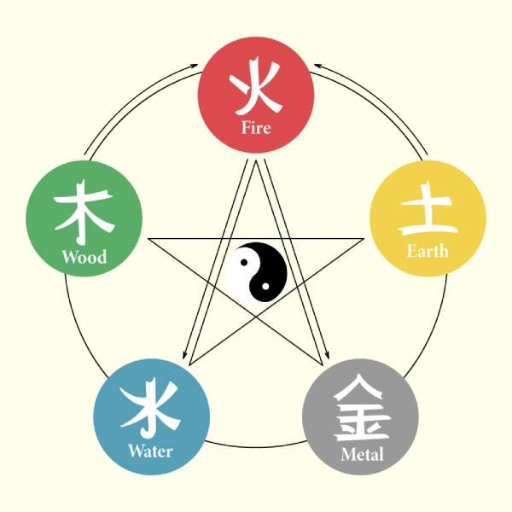
Both Jia (Yang Wood) and Yi (Yin Wood) belong to the Wood element, but their expression is fundamentally different. Understanding this distinction prevents the common mistake of treating all Wood types as the same.
| Trait | Yang Wood (Jia / 甲) | Yin Wood (Yi / 乙木) |
|---|---|---|
| Archetype | Towering tree — oak, pine | Vine or flower — bamboo, rose |
| Core style | Upright, structural, principled | Flexible, adaptive, diplomatic |
| Approach to obstacles | Pushes through or stands firm | Bends around or finds elegant path |
| Decision speed | Slow and deliberate | Quick and timing-driven |
| Communication | Direct, blunt, honest | Tactful, nuanced, strategic |
| Leadership style | Authority through vision | Influence through relationship |
| Competitive drive | Must grow taller than rest | Finds niche and dominates it |
| Stress response | Rigidity, anger, tension | Scatteredness, indecision |
| Best paired with | Water (nourishment), Earth (grounding) | Fire (expression), Water (flow) |
Sarah and Michael both have Wood Day Masters, but their responses to the same workplace conflict reveal the polarity. When their department faced a reorganization, Sarah (Jia Wood) spent three weeks analyzing whether the new structure aligned with her principles before deciding to stay or leave. Michael (Yi Wood) assessed the political landscape within three days, identified which relationships to preserve, and adapted his position to maintain influence.
Neither approach was wrong. Both achieved their goals — Sarah found a role that matched her values, and Michael secured a promotion in the new structure. The difference was tempo and method. Yang Wood builds. Yin Wood adapts.
For a deeper dive into the adaptive side of Wood, see our guide to (Yin Wood (Yi) personality).
Conclusion
Yang Wood is not a fate. It is a pattern — a predictable system of strengths, vulnerabilities, and behavioral tendencies that shows up when Jia Wood sits at the center of your BaZi chart. Your stubbornness is a feature when it protects your integrity. It is a bug when it prevents necessary adaptation.
The goal is not to become someone else. The goal is to understand how you work, then design your career, relationships, and environment around that understanding. Lead with your vision. Build teams that bend where you cannot. Schedule root checks before your foundation cracks. And remember: even the mightiest oak sways in the wind.
Calculate your full BaZi chart to see how Yang Wood interacts with the other elements in your Four Pillars. Your Day Master is just the beginning — the complete picture shows where your natural resilience is supported, and where you may need to build new roots.