

Chinese Zodiac Elements vs BaZi: Same Roots, Different Resolution
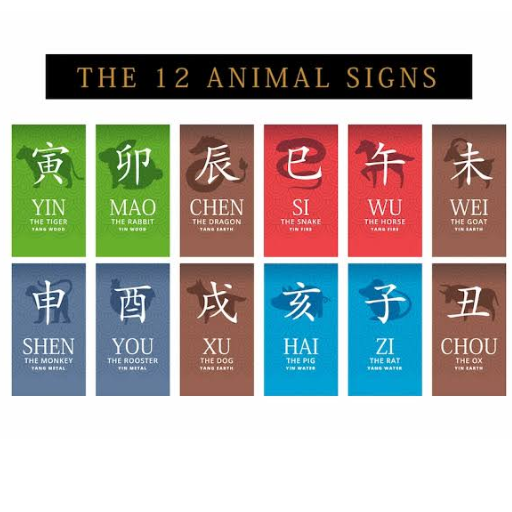
Chinese zodiac elements and BaZi share the same Five Elements system. But they operate at completely different levels of detail. Your zodiac element comes from your birth year only. BaZi builds a complete Four Pillars chart from your year, month, day, and hour. That chart contains eight characters plus dynamic timing cycles.
So why do so many people confuse the two?
Because they share the same vocabulary. Wood, Fire, Earth, Metal, and Water appear in both systems. The difference is resolution. One gives you a single brushstroke. The other gives you the full painting.
If you have ever wondered whether your “Metal Dragon” year means the same thing as a BaZi chart that also shows Metal, this guide is for you. You’ll learn exactly how Chinese zodiac elements vs BaZi compare. You’ll also see how bazi vs chinese zodiac discussions often miss the deeper picture. You’ll see where they overlap. And you’ll learn how to move from a fun zodiac label to a structured life map.
By the end, you’ll know which system to use for quick personality insights and which one to trust for major life decisions.
New to BaZi? Start with our beginner’s guide to BaZi before diving deeper.
Key Takeaways
- Chinese zodiac elements come from the same Wu Xing framework as BaZi, but they use only one data point: your birth year.
- BaZi builds a Four Pillars chart from your year, month, day, and hour of birth, with your Day Master as the core identity.
- Two people born in the same zodiac year can have completely different BaZi charts, strengths, and timing cycles.
- Zodiac elements work best for quick personality snapshots; BaZi works best for career, relationship, and timing strategy.
- The easiest next step is to generate your full BaZi chart and see how your zodiac element fits into the bigger picture.
What Are Chinese Zodiac Elements?
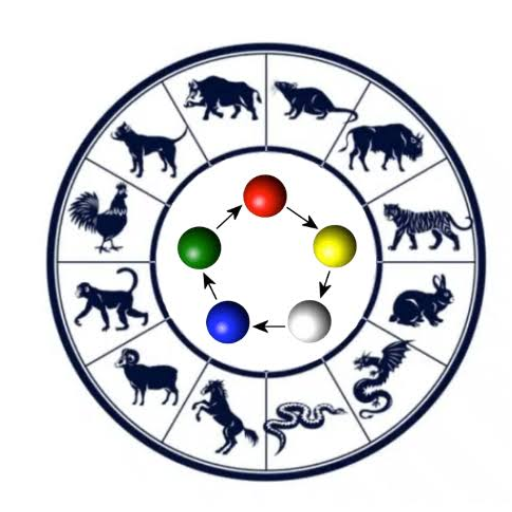
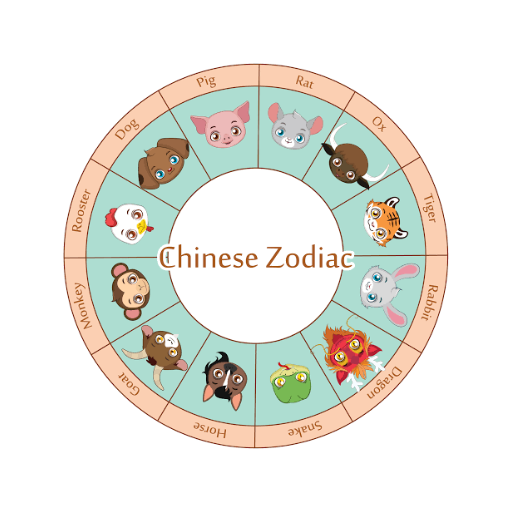
The Chinese zodiac assigns each year an animal and an element. Most people know their animal sign. Fewer know their element. Yet the element adds an important layer of meaning.
The five zodiac elements are Wood, Fire, Earth, Metal, and Water. Each element also carries a Yin or Yang polarity. This creates a 60-year cycle: 12 animals multiplied by 5 elements, with each element appearing in both Yin and Yang forms.
For example, 2024 is a Yang Wood Dragon year. 2025 is a Yin Wood Snake year. The element comes from the year’s Heavenly Stem, one of the ten stems used in classical Chinese metaphysics. For background on how the Chinese calendar ties animals and elements to years, see Britannica’s overview of the Chinese calendar.
What Your Zodiac Element Tells You
Your zodiac element adds flavor to your animal sign. It suggests broad personality tendencies and compatibility patterns. This is the core of chinese zodiac elements meaning.
- Wood years favor growth, vision, and long-term thinking.
- Fire years favor expression, passion, and visibility.
- Earth years favor stability, practicality, and support.
- Metal years favor structure, discipline, and precision.
- Water years favor intelligence, adaptability, and flow.
This system is accessible and widely shared. It works well for party conversation, annual forecasts, and quick self-reflection. But it’s also limited. It treats everyone born in the same year as if they share the same elemental profile.
That’s where BaZi becomes useful.
Want to see the difference for yourself? Generate your full BaZi chart and compare it to your zodiac element.
What Is BaZi?
BaZi, also called Four Pillars of Destiny, is a Chinese metaphysical system built from your birth date and time. It creates a chart with four pillars: Year, Month, Day, and Hour. Each pillar contains a Heavenly Stem and an Earthly Branch, giving you eight characters total. Leading BaZi educator Joey Yap offers extensive resources for those who want to study the system more deeply.
BaZi is not fortune-telling in the traditional sense. It’s a structured analysis of elemental patterns over time. Think of it as a personal blueprint that shows strengths, blind spots, relationships, career direction, and timing.
If you’re new to this, start with our complete guide to the Four Pillars of Destiny. It explains the building blocks in plain language.
The Four Pillars of Destiny
Each pillar represents a different dimension of your life.
- Year Pillar shows your background, family influence, and early environment.
- Month Pillar shows your career structure, social role, and working style.
- Day Pillar shows your core identity. The Day Master is the most important element in your chart.
- Hour Pillar shows your ambitions, children, and later-life direction.
Within each pillar, the Heavenly Stem is visible. The Earthly Branch contains hidden stems. These hidden elements add layers that the zodiac never touches.
Five Elements in BaZi
Your BaZi chart contains a distribution of Wood, Fire, Earth, Metal, and Water. The goal is not to have equal amounts of every element. The goal is balance relative to your Day Master. This section is essentially bazi elements explained in practical terms.
For instance, a Yang Fire Day Master may need Water to control excess Fire and Earth to stabilize it. A Yin Wood Day Master may need Water to nourish it and Metal to shape it. The right balance depends on the entire chart, not just one element.
That’s why Five Elements analysis in BaZi is far more nuanced than a single zodiac element.
A Quick Example
Meet Emma and Liam. Both were born in 1990, the Metal Horse year. Their zodiac elements are identical. Both are “Metal Horse.”
But Emma was born in June, on a Yang Fire day, at 3 p.m. Liam was born in December, on a Yin Water day, at 11 p.m. Their BaZi charts are completely different.
Emma’s Day Master is Yang Fire. Liam’s is Yin Water. Their favorable elements, career strengths, and relationship patterns diverge sharply.
The zodiac label told them they were the same. BaZi showed them they weren’t.
Chinese Zodiac Elements vs BaZi: Key Differences
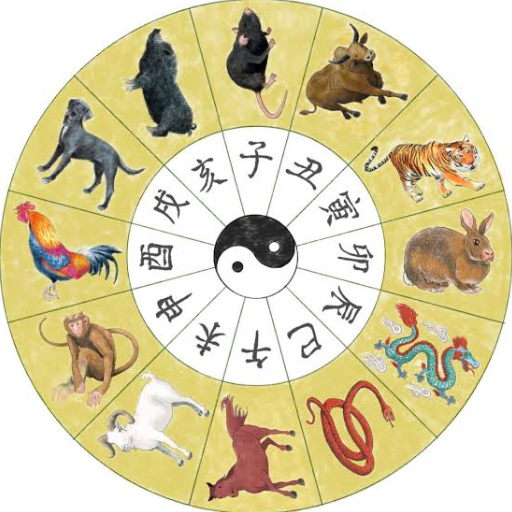
When you compare Chinese zodiac elements vs BaZi side by side, four differences stand out. Each one matters if you want to use these systems for real decisions. This is also the heart of any four pillars vs chinese zodiac comparison.
Resolution: One Year vs Eight Characters
The Chinese zodiac uses one year. That year has one animal and one element. Everyone born in 2024 gets “Yang Wood Dragon.” That is roughly 365 days of people collapsed into one label.
BaZi uses four time units. Year, month, day, and hour each contribute characters. That gives at least eight data points, plus hidden stems inside each branch. The resolution is exponentially higher.
This doesn’t make the zodiac wrong. It makes the zodiac a wide-angle lens. BaZi is the zoom lens.
Scope: Personality vs Life Patterns
Zodiac elements describe broad personality tendencies. They answer questions like: “Am I generally more fiery or more grounded?”
BaZi answers more specific questions. What industries suit you? When should you change jobs? How do you relate to your partner?
It also covers health patterns and favorable elements for decision-making. The scope difference is the difference between a horoscope and a strategy session.
Accuracy Through Timing
The Chinese zodiac offers 12-year animal cycles and annual forecasts. These are useful but generalized.
BaZi adds Luck Pillars, which are 10-year cycles, and annual flows that interact with your chart. This lets you see when your elements are supported and when they are challenged. For more on this, read our guide to Luck Pillars.
Timing is where BaZi becomes a practical decision tool. You can plan launches, career moves, and major commitments with more clarity.
Practical Use Cases
Use your zodiac element when you want a quick, accessible entry point. Use BaZi when you want depth.
Chinese zodiac elements work well for:
- Party conversation
- Annual forecasts
- General compatibility checks
- Fun self-reflection
BaZi works well for:
- Career direction
- Relationship analysis
- Wealth and timing strategy
- Major life decisions
- Understanding your true strengths
Side-by-Side Comparison
Here’s a clear comparison of Chinese zodiac elements vs BaZi.
| Feature | Chinese Zodiac Elements | BaZi (Four Pillars) |
|---|---|---|
| Birth data used | Year only | Year, month, day, and hour |
| Number of characters | 1 animal + 1 element | 8 characters + hidden stems |
| Core identity | Year animal/element | Day Master |
| Time cycles | 12-year animal cycle | 10-year Luck Pillars + annual flow |
| Best for | Quick personality insights | Career, relationship, and timing strategy |
| Learning curve | Low | Medium |
| Accuracy level | Broad | Detailed |
The table makes the pattern obvious. Both systems draw from Wu Xing. Both use elements. But BaZi layers in time, hidden stems, and dynamic cycles.
Ready to move beyond your zodiac element? Try the free BaZi calculator and see your full chart in seconds.
Which One Should You Use?
The honest answer is: it depends on what you need.
If you’re curious about general traits and want something easy to share, the Chinese zodiac is a great starting point. It’s culturally rich, widely understood, and genuinely fun.
If you’re facing a real decision and want structured insight, BaZi is the better tool. It gives you a personalized map instead of a generic label.
Start With Your Zodiac Element If You Want…
- A quick personality snapshot
- A conversation starter at gatherings
- A simple way to track annual energy
- An introduction to Chinese metaphysics
Upgrade to BaZi If You Want…
- Career direction based on your strengths
- Relationship compatibility beyond sun-sign logic
- Timing for major life moves
- A deeper understanding of your elemental balance
- Clarity on why you and someone born in the same year are so different
The two systems are not enemies. The zodiac is the doorway. BaZi is the house.
How to Read Your BaZi Elements After Knowing Your Zodiac Element
Once you know your zodiac element, you already understand one piece of Wu Xing. The next step is placing that piece inside your full chart.
Step 1: Generate Your Four Pillars
Enter your birth date and time into a reliable BaZi calculator. If you don’t know your exact birth time, you can still generate a chart using year, month, and day. The hour pillar will be missing, but the other three pillars still provide useful insight.
Step 2: Identify Your Day Master
Your Day Master is the Heavenly Stem of your Day Pillar. This is the most important element in your chart. It represents your core identity. Learn more in our Day Master guide.
Step 3: Evaluate Element Balance
Look at the distribution of Wood, Fire, Earth, Metal, and Water across all pillars. Ask:
- Which element is strongest?
- Which element is weakest or missing?
- Which elements support my Day Master?
- Which elements challenge it?
Step 4: Find Your Favorable Elements
Your favorable elements are the ones that bring balance to your chart. These aren’t random guesses. They’re derived from the relationship between your Day Master and the rest of your chart.
When you know your favorable elements, you can make better choices about career, environment, colors, industries, and timing.
Marcus’s Story
Marcus was born in 1988, a Yang Earth Dragon year. His zodiac element told him he was stable, grounded, and reliable. That felt true, but it also felt vague.
When he generated his BaZi chart, he discovered his Day Master was actually Yang Wood. His chart had strong Earth but weak Water. Water nourishes Wood. So his favorable elements included Water and Wood.
He had been working in finance, an Earth-heavy industry, and felt drained. After shifting into a consulting role with more travel, learning, and creative problem-solving, his energy improved. His income followed.
The zodiac gave him a label. BaZi gave him a strategy.
Common Mistakes When Comparing the Two
People often make three mistakes when comparing Chinese zodiac elements vs BaZi. Avoiding these will save you confusion.
Mistake 1: Assuming They Predict the Same Thing
They don’t. The zodiac gives broad trends. BaZi gives personalized patterns. Treating them as interchangeable leads to frustration.
Mistake 2: Thinking Zodiac Element Equals Dominant BaZi Element
Your zodiac element is the year stem. Your dominant BaZi element might be your Day Master, your strongest element, or your favorable element. These are often different.
Mistake 3: Treating Either System as Fixed Fate
Neither system locks you into a destiny. Both describe tendencies and timing. You still make the choices. BaZi Web’s approach is empowering, not deterministic.
Frequently Asked Questions
Is BaZi the same as the Chinese zodiac?
No. They share the same Five Elements vocabulary, but BaZi is much more detailed. The Chinese zodiac uses your birth year only. BaZi uses your year, month, day, and hour to build a Four Pillars chart.
Which is more accurate: BaZi or Chinese zodiac?
It depends on what you need. The Chinese zodiac gives accurate broad trends for large groups. BaZi gives more accurate personal insights because it uses your full birth data and timing cycles.
How many elements are in BaZi?
There are five elements in BaZi: Wood, Fire, Earth, Metal, and Water. These same five elements appear in the Chinese zodiac, but BaZi analyzes their balance across your entire chart.
Can your Chinese zodiac element be different from your BaZi element?
Yes. Your zodiac element is the element of your birth year. Your BaZi chart contains many elements, and your Day Master may be completely different from your zodiac element.
Should beginners start with the Chinese zodiac or BaZi?
Start with the Chinese zodiac if you want something simple and accessible. Move to BaZi when you want deeper insights into career, relationships, and timing.
Conclusion
Chinese zodiac elements vs BaZi is not a battle between two rival systems. It’s a question of depth.
The zodiac gives you a single elemental lens. It is accessible, cultural, and fun. BaZi gives you a complete map: your Day Master, your element balance, your Ten Gods, your Luck Pillars, and your timing.
Two people born in the same zodiac year can live very different lives. BaZi explains why.
If you’re just starting out, enjoy your zodiac element. Let it spark curiosity. When you’re ready for more clarity, generate your full BaZi chart.
See how your zodiac element fits into the larger pattern. Understand your strengths, your favorable elements, and your timing.
The same ancient wisdom powers both systems. BaZi simply uses more of it. For readers interested in the classical texts behind these systems, the Chinese Text Project hosts many foundational sources.