


A Yin Wood (Yi Wood) personality is the vine of the BaZi chart. Flexible, socially intelligent, and surprisingly resilient, this Day Master type reads the room before anyone speaks, adapts to change without breaking, and builds networks that others envy. In Chinese metaphysics, Yi Wood represents the most diplomatic and timing-aware of all ten Heavenly Stems. It governs adaptability, creative problem-solving, and the kind of social intelligence that turns strangers into allies.
But here is what most BaZi content misses. Yin Wood is not a mystical label or a fixed destiny. It is a behavioral pattern. Like a vine, it follows predictable rules. It senses support, times its climb, and finds paths around obstacles that would stop a tree cold. When the pattern is conscious, it becomes a competitive advantage. When it is unconscious, the same flexibility can look like indecision, people-pleasing, and a constant need for external validation.
If you have ever been called “too sensitive,” “a people-pleaser,” or “indecisive” but you know you are actually reading the room and adapting strategically, your chart may hold the explanation. This guide maps the Yi Wood Day Master as a system of patterns you can actually use. You will learn how Yin Wood shows up in your career, relationships, health, and daily decisions, and how to turn your natural adaptability into a strength you control.
Key Takeaways
- Yin Wood (Yi Wood) behaves like a vine: flexible, socially intelligent, timing-driven, and resilient under pressure
- Strong Yi Wood (lush vine) is socially dominant and influential but risks manipulation and scattered focus; weak Yi Wood (wilted flower) is cooperative and humble but needs support to avoid excessive people-pleasing
- Best career paths use social intelligence and creative adaptation: marketing, diplomacy, design, consulting, law, and network-based roles
- Wealth builds through relationships and timing for Yin Wood, not brute force; Earth-element strategies fit this pattern best
- Balance comes from reframing “needing support” as strategic resourcefulness, practicing timed decision-making, and building internal validation routines
What Is Yin Wood? The Vine as a Behavioral Model
In BaZi (Four Pillars of Destiny), your Day Master is the Heavenly Stem sitting on top of your Day Pillar. Think of it as your core operating system. It is how you process the world, make decisions, and express energy under pressure.
If your Day Master is Yi (乙), you are Yin Wood. The classical symbol is the vine, the ivy, the bamboo, or the flowering plant.
That is not a poetic metaphor. It is a functional model. A vine does not stand alone. It senses structure, finds support, and climbs with precision. It bends around obstacles rather than breaking through them. It grows steadily toward light, but only when the conditions are right. These are the exact mechanics of a Yin Wood personality.
Unlike Yang Wood (Jia Wood), which behaves like a towering oak, upright and principled, Yin Wood is adaptive and diplomatic. Where Jia Wood confronts obstacles head-on, Yi Wood finds the path around them. Where Jia Wood needs deep roots and long-term stability, Yi Wood needs a trellis, a network, or a support system to climb. Both are Wood. Both grow. But the Yin form expresses growth through flexibility, not force.
Your Day Master is only one layer of your chart, though. To understand how Yin Wood actually shows up in your life, you need to see the full picture. Learn how to read your BaZi chart so you can place your Day Master in context.
Yin Wood in Other Pillars
Yin Wood can appear in any of your four pillars, and each position tells a different story.
- Year Pillar: This is your outer personality. If Yi Wood sits here, the world sees you as approachable, creative, and socially graceful before they know anything else about you.
- Month Pillar: This shapes your career and work style. Yi Wood in the Month Pillar suggests a professional life built on relationships, adaptation, and strategic timing.
- Hour Pillar: This reveals inner desires and late-life expression. Yi Wood here means your deeper ambitions center on connection, creative fulfillment, and leaving a gentle but lasting impact.
- Day Pillar (Day Master): This is your core identity. Everything in this guide applies most directly when Yi Wood rules your Day Pillar.
Yin Wood Personality Traits: The Pattern Breakdown
Yin Wood personalities share a recognizable set of behavioral signatures. These are not vague spiritual qualities. They are observable patterns you can track in yourself or others.
The Adaptive Profile
Diplomatic and tactful. Yi Wood individuals read social situations with precision. They know when to speak, when to listen, and when to shift their position to preserve harmony. This is not weakness. It is social intelligence operating in real time.
Creative and artistic. Yin Wood carries a strong aesthetic sense. These individuals notice beauty, design, and flow that others miss. They are drawn to writing, visual arts, performance, and any medium where imagination translates into expression.
Socially intelligent. Yi Wood builds networks naturally. They connect people. They remember details. They create environments where others feel seen and valued. Research on emotional intelligence confirms that this kind of social awareness is a trainable skill, and Yin Wood types start with a natural advantage.
Resilient survivor. Under pressure, Yin Wood does not break. It bends. Like ivy cracking through stone, Yi Wood individuals overcome obstacles through persistence and adaptation rather than brute force. This makes them among the most resourceful of all ten stems.
Timing-driven. A vine does not grow in winter. Yi Wood individuals have an intuitive sense of when conditions are right. They know when to push and when to wait. This timing awareness is one of their most underrated strengths.
The Shadow Side
Needs external validation. Yin Wood confidence is often tied to praise and recognition. When the feedback stops, the self-doubt creeps in. This is the classic Yi Wood blind spot: a brilliant social strategist who cannot function without applause.
Indecisive under pressure. Too many options, too much flexibility. Yi Wood individuals can freeze when every path seems viable. The ability to see all sides becomes a liability when a decision is required.
People-pleasing tendency. The desire for harmony can override personal needs. Yi Wood types sometimes accommodate others at their own expense, then resent the cost.
Attention-seeking. The vine craves the spotlight because light means growth. When Yi Wood feels invisible, it can engage in dramatic or manipulative behavior to reclaim attention.
Surface-level fixes. Speed over depth. Yi Wood individuals sometimes apply quick solutions that solve the immediate problem but create larger ones downstream.
Strong vs. Weak Yin Wood: Why Context Changes Everything
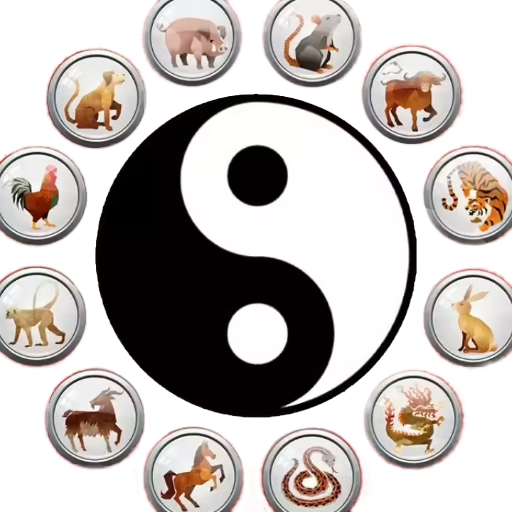
Here is where most BaZi articles fail. They describe Yin Wood as a single personality type. But a strong Yi Wood and a weak Yi Wood are fundamentally different expressions of the same energy.
Strong Yi Wood: The Lush Vine
A strong Yi Wood person is born in Spring (Tiger, Rabbit, Dragon months) or has substantial Water and Wood support throughout their chart. They are the lush vine in full growth.
They radiate social confidence effortlessly. People naturally gravitate toward them. Their networks are extensive, their creative output is high, and their ability to read and adapt to any room is almost uncanny.
The risk is excess. Strong Yi Wood can become manipulative, using charm to advance an agenda. They may spread their energy across too many projects and people, leaving nothing with real depth. The lush vine that climbs every wall at once may never reach the top of any single one.
Weak Yi Wood: The Wilted Flower
A weak Yi Wood person is born in Autumn (Monkey, Rooster, Dog months) or has their Wood energy suppressed by heavy Metal and Earth in their chart. They are the flower that needs more water and sun.
They are more humble, more cooperative, and often more detail-oriented than their strong counterparts. They listen deeply. They support others generously. But they are also more vulnerable to being overshadowed.
When weak Yi Wood feels unsupported, the people-pleasing escalates. They may lose their sense of self in relationships, agree with positions they do not hold, and seek validation from anyone who offers it.
Consider two colleagues, David and Daniel. Both are Yi Wood Day Masters. David is strong Yi Wood, born in March with Water support in his chart. When a team conflict erupts, he reads both sides instantly, adapts his language to each person, and brokers a compromise that leaves everyone feeling heard. Daniel is weak Yi Wood, born in October with heavy Metal in his chart. He sees the same conflict, feels the tension acutely, but struggles to assert his own position. He agrees with whoever spoke last. By Friday, he is exhausted from absorbing everyone else’s emotions. Same stem, different expression.
How to Tell Which One You Are
Start with your birth season. Spring-born Wood Day Masters are usually strong. Autumn-born Wood Day Masters are usually weak. But the full chart matters. Your Month Branch, Year Pillar, and Hour Pillar all modify your Day Master’s strength.
The fastest way to know for certain is to generate your complete BaZi chart and examine your Five Elements distribution. If Wood and Water dominate, you are likely strong Yin Wood. If Metal and Earth dominate, you are likely weak.
Yin Wood at Work: Career Strategy by Design
Yin Wood does not thrive in every environment. Put a Yi Wood person in an isolated cubicle with no human interaction and their energy wilts. Career fit for Yin Wood is about connection, creative expression, and strategic movement.
Where Yin Wood Thrives
Yin Wood excels in roles that reward social intelligence, creative adaptation, and relationship building. The ideal careers channel their natural flexibility rather than suppressing it.
- Marketing and communications. Yi Wood people can read an audience before the data arrives. They craft messages that land because they understand what people need to hear. Their adaptability lets them pivot campaigns without ego.
- Diplomacy and negotiation. The ability to see all sides and find common ground makes Yi Wood natural mediators. They excel in law, public relations, human resources, and international relations.
- Design and creative fields. Their aesthetic sense and imaginative capacity fit naturally into graphic design, writing, photography, film, and fashion.
- Consulting and coaching. Yi Wood types ask the right questions, mirror their clients effectively, and adapt their approach to each personality. They build trust faster than most.
- Network-based roles. Sales, community management, talent relations, and partnership development all reward the Yi Wood gift for turning strangers into allies.
Elena, a Yi Wood marketing director at a mid-sized tech firm, illustrates this perfectly. During a product launch crisis last year, her team was split between two competing strategies. Elena spent one hour talking to each stakeholder individually. She did not argue. She listened, adapted her framing to each person’s concerns, and by the end of the day had built a coalition around a third option no one had considered. The campaign outperformed projections by 34%. Her ability to read the room and build bridges was not people-pleasing. It was strategic resourcefulness.
Where Yin Wood Struggles
- Highly isolated roles with no human interaction. Data entry, night security, solo field research. Without people to connect with, Yi Wood loses its primary fuel source.
- Environments requiring rigid conformity. Military-style hierarchies, heavily procedural bureaucracies. Yi Wood needs room to adapt its approach.
- Roles with constant direct confrontation. High-pressure sales floors where aggression is the norm. Yi Wood prefers negotiation to combat.
The Yin Wood Career Framework
Build your career like a vine builds its climb. First, build a “trellis” intentionally. Cultivate mentors, networks, and support systems before you need them. Second, use timing. Do not force growth when conditions are wrong. Sense when the wind is favorable, then climb. Third, partner with complementary types. Yang Wood (Jia) provides the structure and vision you need. Metal types provide the boundaries and refinement you might avoid on your own.
The Yin Wood Wealth Angle
In the Five Elements cycle, Earth represents wealth for Wood. For Yi Wood, this means wealth builds through relationships and timing, not brute force. The best strategies include network-based income, creative intellectual property, and relationship-driven business models. Yi Wood individuals often succeed as connectors, brokers, and creative entrepreneurs who monetize their social intelligence.
The wrong strategy is speculative trading or high-pressure isolated sales work. These environments drain Yi Wood’s natural strengths and amplify its weaknesses.
Yin Wood in Relationships
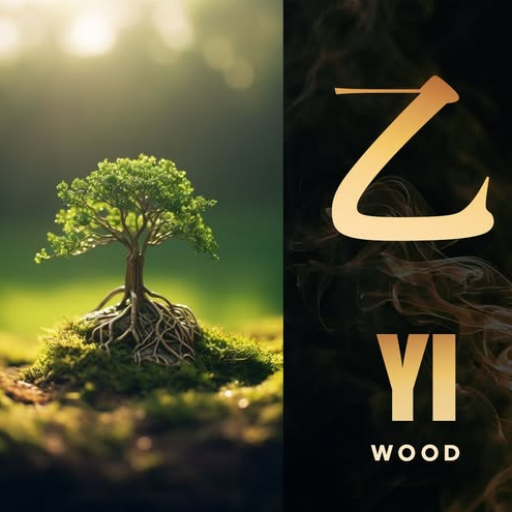
Yin Wood shows up in relationships as warmth, attentiveness, and a genuine desire for harmony. But the same flexibility that makes Yi Wood charming can also make it hard to pin down.
Social Dynamics
Yi Wood individuals are naturally charming. They make others feel seen. They remember birthdays, notice mood shifts, and adjust their energy to match the room. This attentiveness builds deep loyalty in friends and partners.
The challenge is conflict avoidance. Yi Wood prefers harmony over direct confrontation. They may suppress their own needs to keep the peace, then feel resentment they cannot quite name. To others, this can look like flakiness: their position seems to shift depending on who spoke last.
They also need affirmation. A Yi Wood partner who does not feel appreciated will slowly withdraw or seek validation elsewhere. The need is not vanity. It is structural. Like a vine needs light, Yi Wood needs feedback to know it is growing in the right direction.
Compatibility Patterns
From an elemental perspective, certain pairings complement Yin Wood better than others.
- Most compatible: Water types nourish Wood. They provide the inspiration and emotional depth Yi Wood craves. Fire types offer expression and warmth, drawing Yi Wood out of its shell. Yang Wood (Jia) provides the structure and vision a vine needs to climb.
- Most challenging: Excessive Metal cuts and suppresses Wood. A heavily Metal partner may make Yi Wood feel constantly judged or constrained. Strong Earth without Water support can drain Wood’s energy, leaving Yi Wood feeling exhausted and unappreciated.
Keep in mind that full chart analysis matters more than Day Master alone. Two Yi Wood people can have completely different relationship patterns depending on their full elemental balance. For a complete compatibility reading, see our guide to Day Master compatibility.
The Yin Wood Growth Path in Relationships
James, a Yi Wood project manager, spent three years in a relationship where he never expressed a conflicting opinion. He agreed with his partner’s restaurant choices, vacation plans, and even her criticisms of his friends. He told himself he was being accommodating. In reality, he was erasing himself. When the relationship ended, he could not name a single preference he had held onto for three years.
The growth path for Yi Wood in relationships is learning to hold your position when it matters. Not every hill is worth dying on. But some are. The skill is distinguishing between strategic flexibility and self-abandonment. Practice direct communication in low-stakes situations first. Build the muscle. Then use it where it counts.
Health, Balance, and Adaptability Maintenance
In traditional Chinese medicine, the Wood element governs the liver, gallbladder, tendons, and eyes. Research on the mind-body connection continues to validate what TCM has observed for centuries: emotional stress patterns correlate with physical symptoms. For Yi Wood, the connection is direct.
The Physical Pattern
Excess Yin Wood often manifests as anxiety, indecision, and tension from over-adapting. The liver, responsible for the smooth flow of qi throughout the body, gets constrained when Yi Wood is constantly shifting to please others. Symptoms include tight shoulders, jaw clenching, digestive issues, and sleep disruption.
Weak Yin Wood shows up differently. Fatigue, low motivation, and social withdrawal are common. The Wood element is the energy of growth and movement. When it is weak, the body and mind both slow down.
The Yin Wood Balance Protocol
Balance for Yi Wood is about channeling flexibility without losing your center.
Elemental support. Water activities restore Yi Wood. Swimming, baths, walks near water, and journaling all replenish the reflective, inward energy that Yin Wood needs. Fire activities build confidence. Public speaking, performance, or any expressive outlet strengthens Yi Wood’s sense of visibility and self-worth.
Cognitive reframes. The phrase “I need support” can become “I am strategically resourceful.” The need for a trellis is not weakness. It is the vine’s natural operating system. Reframing dependency as design changes everything.
Environmental cues. Curved lines, flowing shapes, natural textures, and green spaces all support Wood energy. Your physical environment should feel alive and growing, not rigid or static.
Behavioral practices. Practice decision-making with time limits. Set a timer for two minutes and make the call. Build internal validation routines: write three things you did well each day, independent of anyone else’s feedback. The goal is to shift the validation source from external to internal.
Seasonal Awareness
Yi Wood energy follows the seasons. Spring is peak growth. Initiate new projects, expand your network, and take risks. Autumn is energy lowest. Consolidate gains, reflect on what worked, and strengthen existing bonds rather than building new ones. Work with the cycle, not against it.
Yang Wood vs. Yin Wood: The Critical Distinction
Wood splits into two expressions in BaZi. Understanding the difference helps you read your chart with more nuance and understand the people around you.
Yang Wood (Jia 甲) is the oak. It is upright, structural, and principled. Jia types confront obstacles head-on. They build deep roots before growing tall. Their strength is stability. Their weakness is rigidity.
Yin Wood (Yi 乙) is the vine. It is flexible, adaptive, and diplomatic. Yi types find paths around obstacles. They sense support and climb with timing. Their strength is adaptability. Their weakness is dependence.
| Trait | Yang Wood (Jia) | Yin Wood (Yi) |
|---|---|---|
| Approach | Direct, confrontational | Indirect, diplomatic |
| Strength | Stability and principle | Adaptability and timing |
| Weakness | Rigidity, stubbornness | Indecision, people-pleasing |
| Leadership style | Commands through presence | Influences through connection |
| Conflict style | Stands firm | Finds compromise |
| Growth pattern | Deep roots first | Climbs as it goes |
Neither is better. A startup might need Jia to establish unshakable values. A scaling company might need Yi to navigate complex stakeholder relationships. Your chart may contain both. The ratio determines how Wood shows up in your life.
If your chart shows missing Wood, the traits described here will be less pronounced. You may benefit from specific remedies to strengthen Wood energy.
Frequently Asked Questions
What is Yin Wood (Yi) in BaZi?
Yin Wood (Yi, 乙) is the second of the ten Heavenly Stems and represents the Yin expression of the Wood element. Symbolized by vines, flowers, bamboo, and ivy, it governs flexibility, social intelligence, creative adaptation, and timing-driven growth in a BaZi chart.
How is Yin Wood different from Yang Wood?
Yang Wood (Jia) is like a towering oak, upright and principled. Yin Wood (Yi) is like a vine, flexible and adaptive. Jia confronts obstacles directly. Yi finds paths around them. Jia needs deep roots. Yi needs a trellis to climb.
What careers suit a Yin Wood person?
Yin Wood thrives in roles requiring social intelligence, creative problem-solving, and strategic adaptation. Marketing, diplomacy, law, design, consulting, coaching, and network-based careers are ideal fits.
Is Yin Wood strong or weak?
It depends on your full chart. Spring-born Yi Wood with Water support is usually strong. Autumn-born Yi Wood with heavy Metal and Earth is usually weak. The strength of your Day Master changes how these traits express themselves.
How can Yin Wood balance their need for validation?
Practice internal validation routines. Set decision time limits to reduce overthinking. Reframe “needing support” as “strategic resourcefulness.” Build a trellis intentionally, but learn to climb independently when necessary.
Which elements support Yin Wood?
Water nourishes Wood directly. Fire provides expression and confidence. Yang Wood (Jia) offers structure. Excessive Metal and strong Earth without Water support challenge Yin Wood.
Are Yin Wood people good in relationships?
Yi Wood individuals are attentive, charming, and deeply loyal partners. Their challenge is conflict avoidance and the tendency to accommodate others at their own expense. Growth comes from learning to hold their position when it matters.
Conclusion
Yin Wood is not a passive label. It is a pattern of adaptive intelligence, social skill, and creative resilience. When you understand how this pattern operates, you stop seeing your flexibility as a flaw and start treating it as a system you can optimize.
Your need for support is not weakness. It is the vine’s natural design. The question is whether you are climbing a trellis you chose or sprawling across whatever surface happens to be nearby. Build your support systems intentionally. Time your growth strategically. And practice holding your center even when the room wants you to bend.
Your chart shows the trellis. You choose how high to climb. For a broader look at how each element shapes personality, see our guide to (Five Elements personality in BaZi).
Generate your complete BaZi chart to see how Yin Wood interacts with your other elements, Luck Pillars, and Ten Gods. Your blueprint is already there. You just need to read it.