
The Chinese zodiac elements are Wood, Fire, Earth, Metal, and Water. Each one adds a distinct layer of behavior, timing, and compatibility to your zodiac animal, turning 12 signs into 60 unique personality patterns.
Most people know their animal sign. Far fewer understand their element.
That gap matters. Your animal gives you the outline. Your element fills in the texture, how you express ambition, handle stress, relate to others, and respond to change. When you know both, you stop reading the five elements Chinese zodiac system like a horoscope and start using it like a decision tool.
In this guide, you’ll learn what each Chinese zodiac element means, how to find yours, how the elements interact, and how the popular zodiac system connects to the deeper Four Pillars of Destiny framework.
Want your full elemental profile right now? Calculate your BaZi chart and see your complete Five Elements breakdown in seconds.
Key Takeaways
- The five Chinese zodiac elements are Wood, Fire, Earth, Metal, and Water, also known as Wu Xing or “Five Phases.”
- You have two element layers: a fixed element tied to your animal, and a year element tied to your birth year.
- Elements interact through a Generating cycle (supportive) and a Controlling cycle (balancing).
- Your element is a pattern, not a fate. It describes tendency, not fixed outcome.
- A full BaZi chart goes deeper than your year element by analyzing your Day Master and overall element balance.
What Are the Chinese Zodiac Elements?
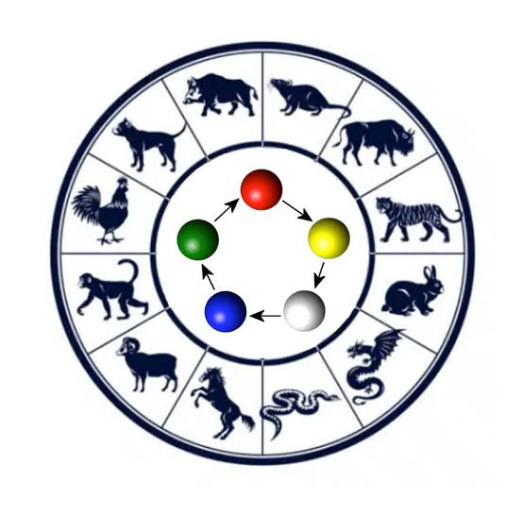
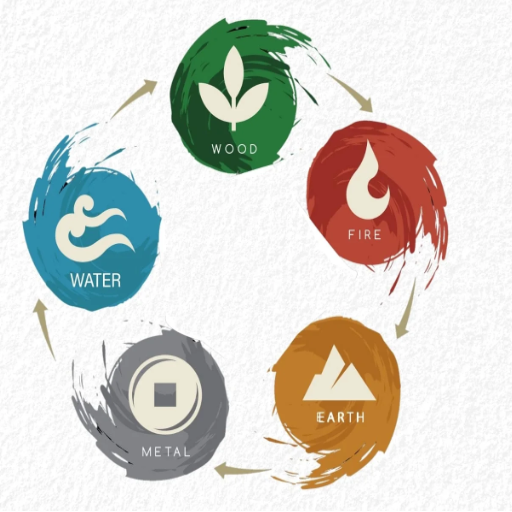
The Chinese zodiac elements come from an ancient framework called Wu Xing (五行), which translates loosely to “Five Movements” or “Five Phases.” These Wu Xing elements are the same five-element system used in Five Elements analysis and the deeper BaZi chart. Unlike the four fixed elements of Western astrology, Wu Xing describes dynamic processes. Wood is not just wood. It is growth. Fire is not just flame. It is expression. Water is not just liquid. It is adaptation.
This system appears across Chinese culture: astrology, Traditional Chinese Medicine, feng shui, martial arts, and philosophy. According to Travel China Guide, the theory took shape during the Spring and Autumn Period and has been used for more than 2,000 years to explain change, balance, and interaction.
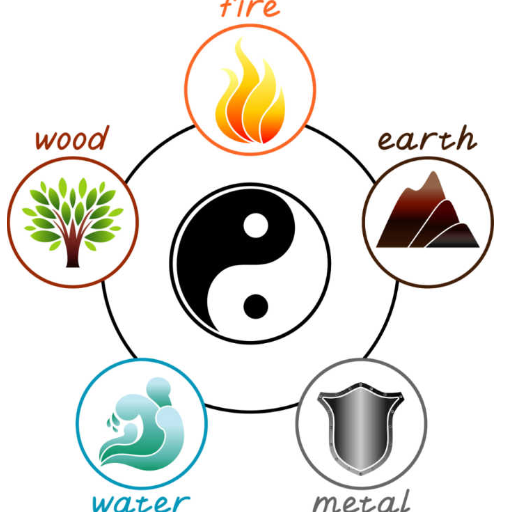
The five elements are:
- Wood, growth, vision, expansion
- Fire, expression, passion, visibility
- Earth, stability, nurturing, practicality
- Metal, discipline, structure, precision
- Water, wisdom, intuition, adaptability
No element is better than another. Each one has clear strengths and predictable blind spots. The goal is not to become “more Fire” or “less Metal.” The goal is to understand the pattern so you can make aligned choices.
How Chinese Zodiac Elements Differ From Western Elements
Western astrology assigns elements based on zodiac sign categories: Fire signs, Water signs, Earth signs, Air signs. These describe temperament.
Chinese zodiac elements work differently. They operate in cycles. Each element feeds, controls, or is controlled by another. This makes the system relational rather than categorical. You can’t understand Wood without understanding how it interacts with Fire, Earth, Metal, and Water.
That relational quality is what makes the Chinese zodiac element system so useful for compatibility, timing, and decision-making.
The Two Layers of Chinese Zodiac Elements
When someone asks, “What is my Chinese zodiac element?” there are actually two possible answers.
Fixed Element: Tied to Your Animal
Use this Chinese zodiac element chart to find the fixed element of each animal sign.
| Element | Zodiac Animals |
|---|---|
| Wood | Tiger, Rabbit |
| Fire | Snake, Horse |
| Earth | Ox, Dragon, Goat, Dog |
| Metal | Monkey, Rooster |
| Water | Rat, Pig |
Your fixed element gives the broad personality tone of your animal. A Metal Monkey and a Wood Tiger will feel fundamentally different even if they share the same birth year.
Year Element: Tied to Your Birth Year
The year element rotates on a 10-year cycle. Each element rules two consecutive years: one Yang year, one Yin year.
| Birth Year Ends In | Element | Polarity Examples |
|---|---|---|
| 0 or 1 | Metal | 2020 Yang Metal Rat, 2021 Yin Metal Ox |
| 2 or 3 | Water | 2022 Yang Water Tiger, 2023 Yin Water Rabbit |
| 4 or 5 | Wood | 2024 Yang Wood Dragon, 2025 Yin Wood Snake |
| 6 or 7 | Fire | 2026 Yang Fire Horse, 2027 Yin Fire Goat |
| 8 or 9 | Earth | 2018 Yang Earth Dog, 2019 Yin Earth Pig |
Your year element modifies your animal sign. A Fire Tiger (1986) and a Water Tiger (1962) are both Tigers, but they express Tiger energy in very different ways.
This two-layer system is why the Chinese zodiac has a 60-year cycle: 12 animals × 5 elements = 60 unique combinations. Britannica explains this cycle as the foundation of the traditional calendar system.
How to Find Your Chinese Zodiac Element
Finding your element is simple if you know your birth year. The challenge is precision.
Method 1: Use the Last Digit of Your Birth Year
Look at the last digit of your birth year:
- 0 or 1 → Metal
- 2 or 3 → Water
- 4 or 5 → Wood
- 6 or 7 → Fire
- 8 or 9 → Earth
This works for most people. But it has one important exception.
Method 2: Check the Chinese New Year Date
The Chinese lunar year usually begins in late January or February. If you were born in January or early February, your zodiac year may actually be the previous year.
For example, the Year of the Wood Dragon began on February 10, 2024. Someone born on January 15, 2024, is still a Water Rabbit by Chinese zodiac standards. Their element is Water, not Wood.
This is the most common mistake people make when calculating their Chinese zodiac element. Always check the exact lunar new year date for your birth year if you were born in the first six weeks of the calendar year.
Method 3: Use a BaZi Calculator for Your Day Master Element
Your year element is useful, but it’s only one layer. In Four Pillars analysis, your Day Master, the element of your day of birth, is considered your core identity.
Calculate your BaZi chart to see your Day Master and full Five Elements distribution. This gives you a far more precise picture than your year element alone.
Chinese Zodiac Elements Meaning: Personality Traits
Each Chinese zodiac element produces a recognizable pattern. These are tendencies, not verdicts.
Wood: Growth and Vision
Wood energy is forward-moving. It plans, expands, and reaches.
Strengths: Ambitious, idealistic, cooperative, generous, long-term thinker
Challenges: Impatient, resentful when constrained, prone to overcommitment
Examples: Wood Tiger, Wood Rabbit, Wood Dragon
Wood people do well when they have room to grow. They struggle in rigid environments that cut off their vision before it can develop.
Fire: Expression and Passion
Fire energy is visible, magnetic, and emotionally intense.
Strengths: Charismatic, courageous, enthusiastic, inspiring, action-oriented
Challenges: Burnout-prone, impulsive, emotionally volatile, poor boundaries
Examples: Fire Snake, Fire Horse, Fire Tiger
Fire people light up a room. The risk is burning too brightly for too long and collapsing from exhaustion.
Earth: Stability and Nurturing
Earth energy holds things together. It is practical, patient, and reliable.
Strengths: Grounded, supportive, responsible, tolerant, detail-aware
Challenges: Overly cautious, resistant to change, prone to worry, absorbs others’ stress
Examples: Earth Ox, Earth Dragon, Earth Goat, Earth Dog
Earth people are the steady center of a family or team. Their growth edge is learning when to move instead of always holding the ground.
Metal: Discipline and Precision
Metal energy cuts, structures, and refines.
Strengths: Disciplined, principled, efficient, persistent, clear-minded
Challenges: Rigid, perfectionist, distant, struggles with ambiguity
Examples: Metal Monkey, Metal Rooster, Metal Tiger
Metal people excel at systems, standards, and execution. They need to remember that not every problem can be solved by tightening the structure.
Water: Wisdom and Adaptability
Water energy flows, reflects, and finds paths around obstacles.
Strengths: Intuitive, adaptable, reflective, strategic, emotionally intelligent
Challenges: Indecisive, passive, escapist, fearful under pressure
Examples: Water Rat, Water Pig, Water Tiger
Water people read situations well. Their challenge is committing to one channel instead of spreading across many.
How the Chinese Zodiac Elements Interact
The Chinese zodiac elements are not isolated labels. They exist in relationship.
The Generating Cycle (Supportive)
This cycle shows how elements nourish each other:
- Wood feeds Fire
- Fire creates Earth (ash)
- Earth bears Metal
- Metal carries Water
- Water nourishes Wood
In compatibility, Generating pairs tend to feel easy. A Wood person with a Water partner often feels supported because Water naturally feeds Wood’s growth.
The Controlling Cycle (Balancing)
This cycle shows how elements keep each other in check:
- Wood penetrates Earth
- Earth dams Water
- Water extinguishes Fire
- Fire melts Metal
- Metal cuts Wood
Controlling pairs are not “bad.” They create friction, and friction can either sharpen or exhaust. A Metal person with a Wood partner may feel challenged by Wood’s expansion, but that challenge can also push Metal to loosen overly rigid structures.
What Compatibility Actually Means
Element compatibility is not destiny. It is a lens for understanding natural dynamics. Two people with challenging element combinations can build strong relationships. The difference is awareness. They know where friction is likely to appear, so they can address it instead of being surprised by it.
For a deeper look at how this applies to relationships, see our guide to BaZi compatibility.
Your Element + Animal: 60 Personality Combinations
The same animal with a different element produces a different result. This is the real power of the Chinese zodiac element system.
Take the Tiger as an example:
- Wood Tiger (1974), creative, nurturing, idealistic
- Fire Tiger (1986), passionate, impulsive, charismatic
- Earth Tiger (1998), realistic, resilient, grounded
- Metal Tiger (2010), disciplined, focused, competitive
- Water Tiger (1962, 2022), intuitive, adaptable, strategic
All five are Tigers. They share the animal’s core traits: courage, independence, leadership. But the element changes how those traits show up.
Maya, a marketing director born in 1986, always felt out of place in her Fire Tiger identity. She was driven, yes, but she was also methodical and private. When she learned that her Day Master in BaZi was actually Yin Metal, the contradiction made sense. Her year element gave her Fire Tiger intensity, but her deeper pattern was Metal: precise, structured, and reserved. That single insight helped her stop trying to perform as the outgoing leader everyone expected and start leading in her own way.
This is why a full chart matters. Your year animal and element are the headline. Your Day Master is the full story.
From Chinese Zodiac Elements to BaZi: The Bigger Picture
The Chinese zodiac is a gateway. It introduces the Five Elements in an accessible way. But the deeper system is BaZi, or Four Pillars of Destiny.
A full BaZi chart uses your birth year, month, day, and hour. Each pillar contains a Heavenly Stem and an Earthly Branch. Together, they create a complete elemental profile.
Why Your Day Master Matters More Than Your Year Element
In BaZi, your Day Master, the Heavenly Stem of your day pillar, is considered your core identity. It represents how you experience yourself and respond to the world.
Your year element is still meaningful. It describes cultural timing, family influence, and outer expression. But your Day Master is the central reference point for analyzing balance, favorable elements, and life strategy.
Element Balance in BaZi
BaZi analysis looks at the distribution of Wood, Fire, Earth, Metal, and Water across your chart. The question is not “Which element am I?” The question is “Which elements are strong, which are weak, and which ones support my Day Master?”
This is where the concept of favorable elements comes in. A weak Day Master benefits from support. A strong Day Master benefits from controlled output. The right elements can amplify your strengths. The wrong ones can create unnecessary friction.
If you want to move beyond your year element and see your full elemental balance, generate your BaZi chart. The report breaks down your Five Elements distribution and shows how each one shows up in your life.
How to Use Your Chinese Zodiac Element in Daily Life
Knowing your element is only useful if you apply it. Here are three practical ways to use the information.
1. Make Career Decisions That Match Your Energy
Your element suggests where you naturally thrive:
- Wood roles: Strategy, planning, product development, entrepreneurship
- Fire roles: Sales, marketing, leadership, public speaking, performance
- Earth roles: Operations, HR, nursing, teaching, administration
- Metal roles: Finance, engineering, law, quality control, systems design
- Water roles: Research, consulting, diplomacy, writing, analytics
These are starting points, not restrictions. A Water person can lead. A Fire person can analyze. The value is in knowing where your energy flows most naturally.
2. Understand Relationship Friction Before It Escalates
If you keep clashing with someone, check the element dynamic. Is one of you controlling the other? Is one of you failing to support the other? Naming the pattern doesn’t solve the relationship, but it gives you a place to start the conversation.
3. Time Your Decisions With the Annual Element
Each year carries a dominant element. 2024–2025 is Wood. 2026–2027 will be Fire. When the year’s element supports your favorable elements, it’s often a good time to launch, expand, or take risks. When the year’s element challenges your pattern, it may be better to consolidate, review, and prepare.
For a full timing analysis, including 10-year Luck Pillars, use a BaZi calculator or consult a detailed Four Pillars reading.
Common Questions About Chinese Zodiac Elements
What are the 5 Chinese zodiac elements?
The five Chinese zodiac elements are Wood, Fire, Earth, Metal, and Water. Together they are called Wu Xing, or the Five Phases.
How do I find my Chinese zodiac element?
Use the last digit of your birth year: 0 or 1 = Metal, 2 or 3 = Water, 4 or 5 = Wood, 6 or 7 = Fire, 8 or 9 = Earth. If you were born in January or early February, check the exact Chinese New Year date because you may belong to the previous year’s element.
What is the difference between fixed element and year element?
Your fixed element is tied to your zodiac animal and never changes. Your year element is tied to your birth year and rotates on a 10-year cycle.
Which Chinese zodiac elements are compatible?
Elements in the Generating cycle tend to be compatible: Wood feeds Fire, Fire creates Earth, Earth bears Metal, Metal carries Water, and Water nourishes Wood. Elements in the Controlling cycle create friction that can either balance or stress the relationship.
What does my Chinese zodiac element mean?
Your element describes how you express the traits of your zodiac animal. It shapes your energy style, decision-making pattern, and relationship dynamics.
Conclusion: Your Element Is a Starting Point, Not a Verdict
The Chinese zodiac elements add depth to a system that too many people read at surface level. Wood, Fire, Earth, Metal, and Water are not magic forces. They are patterns that help you see yourself more clearly.
Your element explains tendency. It doesn’t determine outcome. A Fire person can learn patience. A Metal person can learn flexibility. A Water person can learn decisiveness. The point is not to be ruled by your element. The point is to use it as a reference for growth.
Here’s what to remember:
- You have a fixed element from your animal and a year element from your birth year.
- Elements interact through Generating and Controlling cycles.
- Your year element is a useful introduction, but your Day Master in BaZi is the deeper identity layer.
- The best use of this knowledge is self-awareness and better decision-making, not prediction.
Ready to see your full elemental profile? Calculate your BaZi chart now and discover your Day Master, Five Elements balance, and favorable elements in seconds.
Your chart is not a destiny. It is a map. And every map is easier to read once you know what the symbols mean.