


A weak element in your BaZi chart is an element that appears infrequently or lacks support across your Four Pillars. It is a compositional observation about what is in your chart, not a structural diagnosis of what your chart needs.
Most people who search for “weak element bazi” are actually looking for two different things. Some want to know why their Day Master feels overwhelmed. Others want to understand why their element balance chart shows 8% Metal and 42% Earth. These are different questions with different answers. Confuse them, and you will apply the wrong remedy.
If you have ever looked at your BaZi chart, noticed a low percentage next to one of the Five Elements, and wondered whether you should fix it, this guide is for you. By the end, you will know exactly how to read your element composition, how it differs from Day Master strength, and whether your weak element needs support or should be left alone.
Key Takeaways
- A weak element is a compositional observation, not a structural diagnosis. Low percentage in your element chart does not automatically mean problem.
- Weak element and weak Day Master are different concepts. One measures what is in your chart. The other measures how supported your self-element is.
- You should only strengthen a weak element if your Day Master analysis shows it is favorable. Otherwise, leaving it weak can be the correct strategy.
- Each weak element creates a distinct behavioral pattern: weak Wood struggles with initiation, weak Fire with expression, weak Earth with grounding, weak Metal with boundaries, and weak Water with recovery.
- Luck Pillars layer temporary energy over your natal chart. Favorable 10-year cycles can naturally compensate for weak elements without any external remedy.
What Is a Weak Element in BaZi?
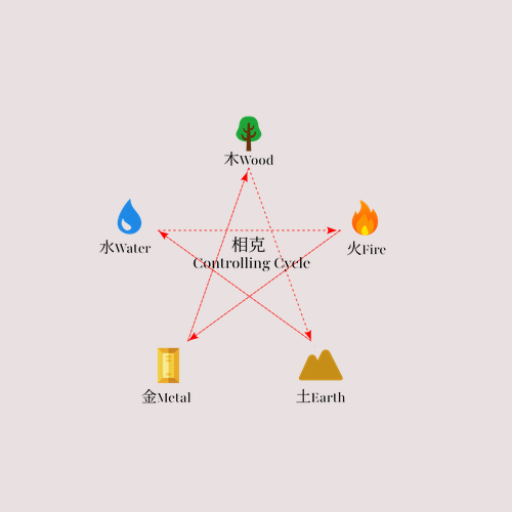
In BaZi, the Five Elements, Wood, Fire, Earth, Metal, and Water, are distributed across your Four Pillars. Each pillar contains a Heavenly Stem and an Earthly Branch, and each of those carries an element. When one element shows up less frequently than the others, it is considered weak in composition.
This is purely a counting exercise. If your chart contains three Wood characters, one Fire character, two Earth characters, one Metal character, and one Water character, then Fire and Metal are compositionally weak. Modern BaZi calculators often visualize this as a pie chart or bar graph. It is descriptive, not diagnostic.
Here is where beginners get stuck. They see a low percentage and assume it is a deficiency that needs fixing. That assumption is only true some of the time. A compositional weakness is only a problem if the element in question is supposed to play a supportive role in your chart structure. If it is not, its absence or low count may actually be helping you.
Think of it like ingredients in a recipe. A cake that calls for two cups of flour and a pinch of salt does not have a salt deficiency. The salt is exactly where it should be. Your BaZi chart works the same way. The goal is not equal distribution. The goal is functional balance.
Weak Element vs. Weak Day Master: The Critical Difference
This is the distinction that almost every beginner gets wrong, and most online articles do not help.
Weak element measures what is in your chart. It is a compositional observation about the distribution of Wood, Fire, Earth, Metal, and Water across your Four Pillars.
Weak Day Master measures how supported your self-element is. It is a structural diagnosis of whether the element representing you, the Day Heavenly Stem, has enough Resource and Companion support to handle the pressures in your chart.
You can have a strong Day Master with weak elements. You can have a weak Day Master with relatively balanced elements. The two concepts are independent until you connect them through Useful God analysis.
When Marcus ran his chart through a free calculator, he saw that Metal made up only 7% of his element distribution. He spent weeks wearing silver jewelry, facing west, and researching Feng Shui remedies. But Marcus had a strong Jia Wood Day Master born in Spring. In his structure, Metal is Wealth, the element his Day Master controls. Because his Wood was already strong, Metal was a favorable element for him, but it was not a crisis that his Metal count was low. The real issue was that he had been applying generic advice without understanding whether his weak Metal was actually a problem.
The danger of conflating these two ideas is real. If you strengthen a weak element that happens to be unfavorable for your Day Master, you can make your chart less balanced, not more. Always determine your Day Master strength first. Only then can you judge whether a compositionally weak element is a blind spot to fix or a natural feature of your structure.
How to Spot Your Weak Elements
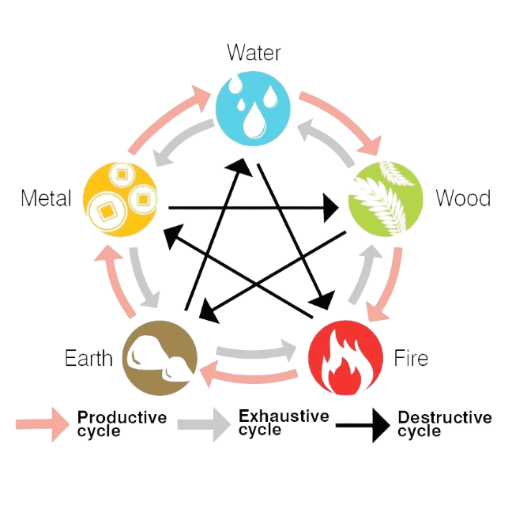
Finding your weak elements is straightforward. Interpreting them correctly takes one extra step.
Step 1: Generate your chart. Use a reliable BaZi calculator to map your Four Pillars from your birth data. You will need your birth year, month, day, and ideally your hour.
Step 2: Count the visible elements. Look at the eight characters, four Heavenly Stems and four Earthly Branches. Tally how many times each of the Five Elements appears.
Step 3: Check the hidden stems. Earthly Branches contain hidden elements that are not visible at first glance. For example, the Branch Si contains Fire, Earth, and Metal. These hidden stems count toward your element distribution.
Step 4: Factor in season. The month branch, your Seasonal Pillar, carries extra weight. An element born in its own season is effectively stronger than its raw count suggests. Wood in Spring, Fire in Summer, Metal in Autumn, and Water in Winter all get a seasonal boost.
Step 5: Cross-reference with Day Master strength. This is the step most people skip. Before you label any element as needing support, determine whether your Day Master is strong or weak. That diagnosis tells you which elements are favorable and which are not.
What Each Weak Element Means for Your Life
A weak element shapes your behavior, preferences, and challenges in predictable ways. Understanding the pattern helps you build systems that compensate without fighting your nature.
Weak Wood
Wood governs growth, vision, and initiative. When Wood is weak, starting projects feels heavier than it should. You may have ideas but struggle to plant the first seed. Long-term planning feels abstract, and momentum dies quickly without external structure.
In a career context, weak Wood makes entrepreneurship and strategic vision roles harder unless you have strong systems or partners who supply the forward push. You thrive better in roles where direction is provided and your job is to refine or execute.
Support strategy: Surround yourself with Water, the Resource element that feeds Wood. That means learning before acting, seeking mentorship, and building routines that reduce the friction of starting.
Weak Fire
Fire governs expression, charisma, and visibility. Weak Fire often shows up as emotional flatness or difficulty conveying enthusiasm. You might have deep internal passion, but it does not translate outward. Social situations that require warmth and spontaneity can feel draining.
Career-wise, weak Fire makes leadership visibility, public speaking, and personal branding more taxing. You may prefer behind-the-scenes influence over front-facing roles.
Support strategy: Add Wood, the element that fuels Fire. Engage in creative input before demanding creative output. Schedule recharge time after visible work. Use structured communication frameworks instead of improvising.
Weak Earth
Earth governs stability, trust, and follow-through. Weak Earth creates a scattered feeling. Routines slip, commitments waver, and you may feel ungrounded even when external circumstances are stable. Others might see you as unreliable, not because you lack intention, but because your internal anchor is light.
In careers, weak Earth challenges roles that require long-term consistency, project management, or building trust slowly over time. You may prefer short-cycle work with clear endpoints.
Support strategy: Add Fire, which generates Earth. Create rituals and warm, structured environments. Physical grounding practices, regular meals, and a consistent sleep schedule matter more for you than for most.
Weak Metal
Metal governs discipline, boundaries, and precision. Weak Metal often appears as difficulty saying no, scattered focus, or leaving tasks 80% finished. You may be agreeable and diplomatic, but decisions take longer because the internal blade that cuts through ambiguity is dull.
Careers demanding precision, finance, law, engineering, or strict hierarchy require extra scaffolding when Metal is weak. You benefit from checklists, deadlines set by others, and accountability partners.
Support strategy: Add Earth, which produces Metal. Build routines that create natural decision points. Organize your physical space. Clarity in your environment creates clarity in your mind.
Weak Water
Water governs adaptability, recovery, and deep processing. Weak Water means rest does not fully restore you. You may sleep enough but still feel hollow, or struggle to shift gears when circumstances change. Uncertainty creates anxiety rather than curiosity.
Research-heavy, adaptive, or consulting roles can feel draining without sufficient recovery systems. You may prefer predictable environments with clear parameters.
Support strategy: Add Metal, which feeds Water. Reflection practices, journaling, and scheduled downtime are not luxuries for you. They are structural necessities. Hydration, quiet environments, and solo processing time help rebuild your reserves.
For a broader look at how each element shapes personality, see our guide to Five Elements personality in BaZi.
Should You Strengthen a Weak Element?
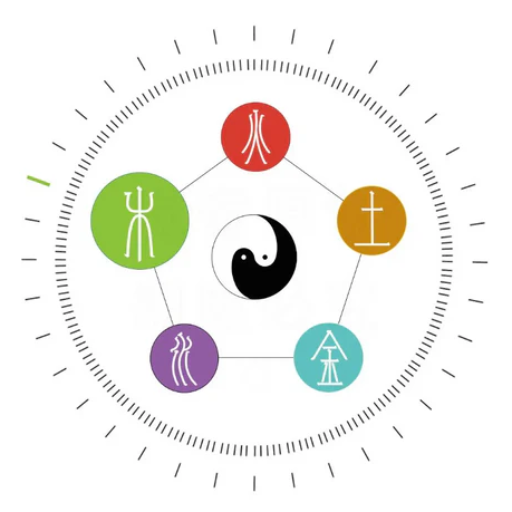
The honest answer is: it depends on your Day Master.
If your Day Master is strong, it can handle pressure and output. In that case, a weak element that represents Wealth, Output, or Officer may actually be something you want to cultivate. Strengthening it can bring balance by giving your strong Day Master productive channels.
If your Day Master is weak, it needs support, not pressure. You should only strengthen a weak element if it is your Resource element, the one that produces you, or your Companion element, the same element as your Day Master. If the weak element represents Wealth, Output, or Officer, strengthening it will drain or pressure your already-limited self. Leave it alone.
There is also a special case called Follower Structure. If your Day Master is extremely weak and your chart is overwhelmingly dominated by one element, the classical approach is not to strengthen your Day Master at all. Instead, you follow the dominant flow. Some of the most successful charts in history are Follower Structures. Weakness, in the right context, becomes alignment.
The classical principle is simple: suppress the strong, support the weak. But that principle applies to your Day Master’s condition, not to raw element counts. A weak element in your pie chart is only a candidate for strengthening if your structural analysis says it will help the Day Master.
For a step-by-step method to identify your chart’s strongest force, read our (complete guide to dominant element in BaZi).
Timing Your Recovery: Luck Pillars and Weak Elements
Your natal chart is fixed. Your Luck Pillars are not.
Luck Pillars are 10-year cycles that layer temporary energy over your birth chart. They can bring a weak element to the surface, or they can exaggerate an imbalance. Understanding where you are in your cycle changes how you approach a weak element.
If you are in a Luck Pillar dominated by your Resource or Companion element, your weak favorable elements get a natural boost. This is the time to learn, network, build foundations, and make moves that require support.
If you are in a Luck Pillar dominated by Wealth, Output, or Officer without Resource backup, even a normally manageable weak element can feel like a crisis. This is not the time to force major career changes or aggressive investments. Consolidate, reduce overhead, and focus on skill maintenance.
Annual energies fine-tune the picture. Even within a favorable 10-year Luck Pillar, individual years may clash with your Day Pillar or bring unfavorable elements. Match your annual focus to the year’s energy. A Resource year is for study. A Companion year is for partnership. A Wealth year is for maintenance, not expansion, if your Day Master is weak.
For a complete breakdown of how these cycles work, read our guide to Luck Pillars and 10-year cycles.
When Elena entered her mid-thirties, she moved into a Water Luck Pillar. Her natal chart showed weak Water, but Water was her Resource element, her Day Master’s nourishment. During that decade, decisions that had previously felt impossible started flowing. She changed careers, built a support network, and finally felt restored by rest. The weak element in her natal chart had not changed. The environment had. Timing made the difference.
Practical Ways to Support a Weak Element
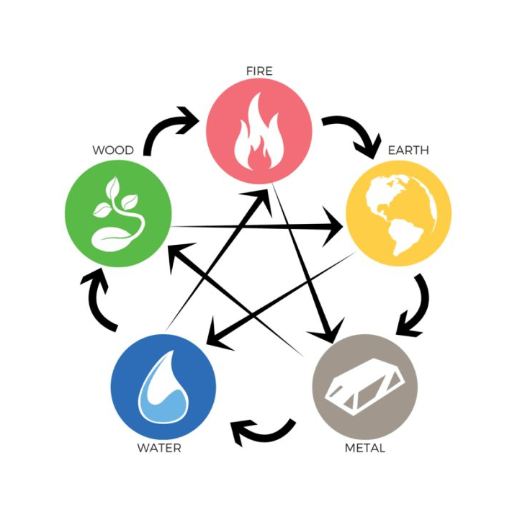
If your structural analysis confirms that a weak element needs support, the adjustments are practical, not mystical. You are designing an environment that reduces friction for your specific pattern.
Career and activities: Align your work with the element that supports your weak element. Weak Wood benefits from learning-heavy roles. Weak Fire benefits from creative input before output. Weak Earth benefits from ritual and routine. Weak Metal benefits from organized systems. Weak Water benefits from scheduled reflection and recovery.
Environment: Your workspace and home should reflect your supporting element. This is not about magical energy. It is about environmental psychology. Green plants and natural light support Wood. Warm lighting and clean lines support Fire. Stable furniture and earth tones support Earth. Minimalist organization supports Metal. Quiet, flowing spaces support Water.
Relationships: Build close connections with people whose charts naturally contain your Resource or Companion elements. They act as stabilizers. This is not about screening friends by their birth charts. It is about noticing who leaves you feeling energized versus drained, and leaning into the relationships that fill your gaps.
Mindset: A weak element is a strategic profile, not a deficit. It tells you where you need systems, partners, and timing. It does not tell you what you cannot do.
Conclusion
A weak element in your BaZi chart is not a flaw waiting to be fixed. It is a piece of information. It tells you what is underrepresented in your elemental composition, but it does not tell you whether that underrepresentation is a problem.
To know that, you need to understand your Day Master strength. A weak element that supports a weak Day Master is a priority. A weak element that pressures a weak Day Master is a relief. A weak element in a strong Day Master chart may be an opportunity. Context changes everything.
The goal of BaZi analysis is not to chase perfect percentages. It is to understand your structural patterns so you can make intentional decisions about career, relationships, and timing.
Start with your chart. Generate your Four Pillars now, check your element balance, and determine your Day Master strength. Once you see the full picture, you will know exactly which elements to support, which to leave alone, and when the timing is right to act.
Your weak elements are not holding you back. They are pointing you toward the systems and people that will move you forward.