


Your dominant element in BaZi is the Five Element (Wood, Fire, Earth, Metal, or Water) that appears most frequently and powerfully across your entire Four Pillars chart. You find it by counting every Heavenly Stem, Earthly Branch, and hidden stem in your chart, then scoring each element to see which one wins.
Most people stop at their Day Master. That’s a mistake.
Your Day Master tells you who you are at the core. But your dominant element tells you which energy shapes your personality, your decisions, and your life path the most.
When Marcus, a Yang Water Day Master, kept burning out in creative roles, he assumed he was on the wrong track entirely. His Day Master pointed toward flexibility and flow. But when he mapped his full chart, he discovered dominant Fire. Every job he chose amplified that Fire until he felt drained.
He wasn’t failing. He was missing the full picture.
In this guide, you will learn exactly how to find your dominant element in BaZi. We’ll cover a simple 4-step counting method, explain why it differs from your Day Master and your favorable element, walk through a real chart example, and show you how to use this knowledge in your career and relationships.
Key Takeaways
- Your dominant element is the most abundant energy in your chart, found by counting all stems, branches, and hidden stems.
- It is not the same as your Day Master (your core identity) or your favorable element (what you need for balance).
- A simple scoring system (1 point per stem/branch, 0.5 per hidden stem) lets you calculate it in under 10 minutes.
- Your dominant element shapes your default personality and decision style, but it does not determine your fate.
- If one element overwhelms your chart, you may have a special structure like Follower (Cong Ge) that requires a different reading approach.
What Is the Dominant Element in BaZi?
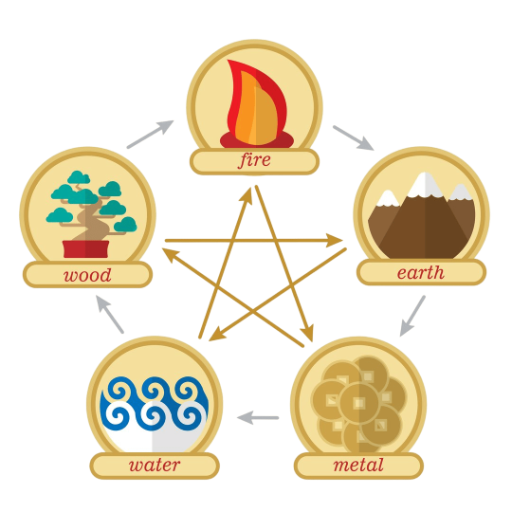
A standard BaZi chart contains eight visible characters. Four sit on top as Heavenly Stems. Four sit below as Earthly Branches. Inside those branches hide additional stems, bringing the total elemental references to roughly twelve or more.
Your dominant element is simply the one that shows up most often across all of these positions. Think of it as the prevailing weather system in your life. Your Day Master is the ship. The dominant element is the wind that pushes it, sometimes gently and sometimes with force.
This matters because the dominant element influences your default tendencies. It colors how you express yourself, what feels natural, and where you may overdo things.
A chart dominated by Wood tends toward growth and vision. One dominated by Metal leans into structure and precision. Neither is better. Both are simply patterns.
Importantly, your dominant element is not a prediction. It is a map of energetic tendencies. The Five Elements in Chinese Astrology form the foundation of this system, and understanding them makes reading your dominant element far easier.
Day Master vs. Dominant Element vs. Favorable Element
Here is where most beginners get confused. Three concepts sound similar but serve completely different purposes.
| Concept | What It Is | What It Tells You |
|---|---|---|
| Day Master | The Heavenly Stem on your Day Pillar | Your core identity, ego, and how you see yourself |
| Dominant Element | The most frequent element across all pillars | The prevailing energy that shapes your behavior and environment |
| Favorable Element | The element that balances your chart | What you need more of (or less of) to create harmony |
Your Day Master is fixed. It never changes. It answers the question: “Who am I?”
Your dominant element answers: “What energy surrounds me most?”
Your favorable element answers: “What do I need to perform at my best?”
These three can align, or they can clash.
Elena, a Yin Metal Day Master, spent years frustrated by her inability to make quick decisions. Her Day Master prized precision. But her dominant element was Water, flooding her chart with analysis and reflection.
She wasn’t indecisive. She was processing too much. Once she saw the pattern, she stopped forcing snap decisions. She built systems that gave Water the time it needed, and her career accelerated.
The dominant element shows your tendency. The favorable element shows your solution. Do not confuse the two.
How to Calculate Your Dominant Element: The 4-Step Method
You do not need years of study to find your dominant element. You need a chart, a reference table, and about ten minutes. Here is the exact method.
Step 1: Generate Your Four Pillars
Start with your birth date, time, and location. Use a calculator that accounts for true solar time, not just clock time.
Longitude matters. Daylight saving time matters. Small errors here produce wrong pillars, which produce wrong counts.
If you do not have your birth time, you can still run a partial count using the Year, Month, and Day pillars. It will be less precise but still useful.
Step 2: Map Every Stem and Branch to an Element
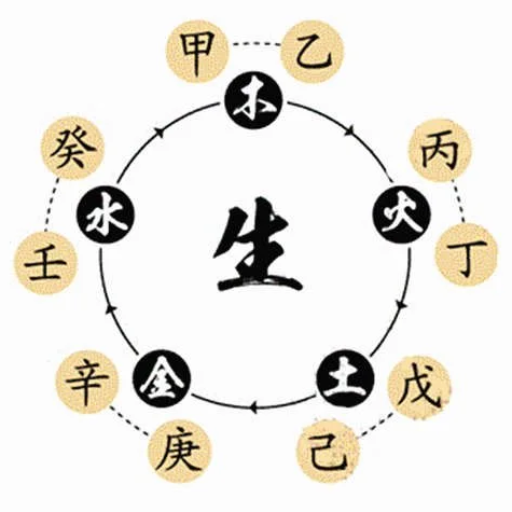
Each Heavenly Stem and Earthly Branch corresponds to one of the Five Elements. Here is the quick reference you need.
Heavenly Stems:
- Wood: Jia (Yang), Yi (Yin)
- Fire: Bing (Yang), Ding (Yin)
- Earth: Wu (Yang), Ji (Yin)
- Metal: Geng (Yang), Xin (Yin)
- Water: Ren (Yang), Gui (Yin)
Earthly Branches (main element):
- Wood: Yin, Mao
- Fire: Si, Wu
- Earth: Chen, Xu, Chou, Wei
- Metal: Shen, You
- Water: Zi, Hai
Hidden Stems inside Branches:
Every branch contains one to three hidden stems. These are typically listed in your chart output. Translate each hidden stem to its element using the Heavenly Stem list above.
Step 3: Count and Score Each Element
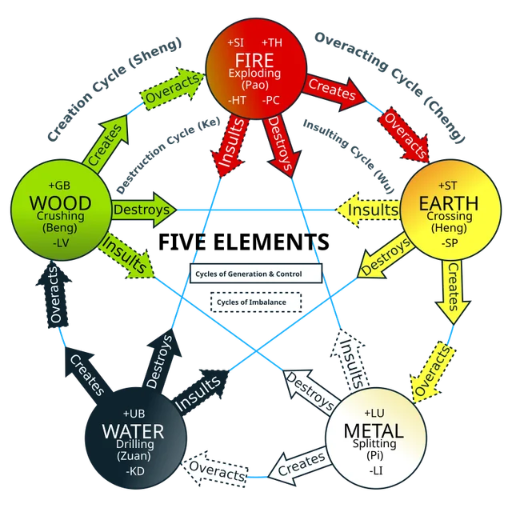
Now tally everything. Use this simple scoring system:
- Heavenly Stem: 1 point
- Earthly Branch (main element): 1 point
- Hidden Stem: 0.5 point each
Create a scorecard. Here is a blank template you can copy:
| Element | Stems | Branches | Hidden Stems | Total Score |
|---|---|---|---|---|
| Wood | ||||
| Fire | ||||
| Earth | ||||
| Metal | ||||
| Water |
The element with the highest total is your dominant element. If two elements tie within 0.5 points, you have a co-dominant chart. That is normal and simply means two energies compete for influence.
Step 4: Factor in Seasonal Strength
Birth season changes everything. An element born in its own season acts stronger than the raw count suggests.
| Season | Dominant Element | Boost |
|---|---|---|
| Spring (Yin, Mao, Chen) | Wood | Strong |
| Summer (Si, Wu, Wei) | Fire | Strong |
| Late Summer (Chen, Xu, Chou, Wei) | Earth | Strong |
| Autumn (Shen, You, Xu) | Metal | Strong |
| Winter (Zi, Chou, Hai) | Water | Strong |
If your dominant element matches your birth season, add a mental bonus point. It is not just frequent. It is reinforced by timing.
For the complete framework on weak and missing elements across all five elements, see our (guide to weak element in BaZi).
Chart Walkthrough: Finding the Dominant Element in a Real Example
Let us walk through a concrete chart. This is a simplified example, but the method works on any chart.
Sample Chart:
- Year Pillar: Jia Wood / Yin Wood
- Month Pillar: Bing Fire / Wu Fire
- Day Pillar: Xin Metal / Si Fire
- Hour Pillar: Ren Water / Zi Water
Step 1: List all visible elements
- Stems: Wood, Fire, Metal, Water
- Branches: Wood, Fire, Fire, Water
Step 2: Add hidden stems
- Yin (Wood branch) hides Jia Wood, Bing Fire, Wu Earth
- Wu (Fire branch) hides Ding Fire, Ji Earth
- Si (Fire branch) hides Bing Fire, Wu Earth, Geng Metal
- Zi (Water branch) hides Gui Water
Step 3: Score it
| Element | Stems | Branches | Hidden Stems | Total |
|---|---|---|---|---|
| Wood | 1 (Jia) | 1 (Yin) | 1 (Jia hidden) | 3.0 |
| Fire | 1 (Bing) | 2 (Wu, Si) | 2.5 (Bing, Ding, Wu, Bing) | 6.5 |
| Earth | 0 | 0 | 1.5 (Wu, Ji, Wu) | 1.5 |
| Metal | 1 (Xin) | 0 | 0.5 (Geng) | 1.5 |
| Water | 1 (Ren) | 1 (Zi) | 0.5 (Gui) | 2.5 |
Result: Fire dominates with 6.5 points, more than double the next closest element. This is a Fire-dominant chart.
Important note: The Day Master here is Xin Metal. That means the core identity is refined, precise, and detail-oriented. But the dominant element is Fire, which brings passion, visibility, and speed. This person may feel a constant tension between wanting to perfect details (Metal) and wanting to act quickly (Fire). Understanding that tension is the entire point of the exercise.
What Your Dominant Element Means for You
Once you know your dominant element, you can read its influence. Our complete guide to Five Elements personality covers each element in depth. Here is the practical summary.
Wood Dominant
You default to growth mode. New projects excite you. Long-term vision comes naturally. You may struggle with completion or patience. When balanced, you are a principled leader. When excessive, you become rigid or impatient, pushing forward without checking whether the ground is solid.
Fire Dominant
Expression is your native language. You communicate well, energize rooms, and lead through charisma. When balanced, you inspire. When excessive, you burn hot and fast, making impulsive decisions or overwhelming others with intensity.
Earth Dominant
Stability is your strength. People trust you. You think practically and nurture relationships. When balanced, you are the reliable center of any group. When excessive, you resist change, worry excessively, or get stuck in routines that no longer serve you.
Metal Dominant
Structure and clarity define you. You cut through noise. You value fairness and precision. When balanced, you make excellent decisions under pressure. When excessive, you become overly critical, rigid, or emotionally distant.
Water Dominant
You process deeply. Strategy, research, and adaptability come easily. When balanced, you are wise and perceptive. When excessive, you overthink, hesitate, or float between options without committing.
Remember: the dominant element describes your default environment. It does not lock you in.
James spent years trying to “fix” his dominant Wood because he thought it made him too stubborn. He tried to be more flexible, more adaptable, more Water. The effort exhausted him.
When he finally accepted that Wood was his natural strength, he stopped fighting himself. He channeled that growth energy into building a business instead of forcing himself into roles that required constant pivoting. The problem was never Wood. The problem was resisting it.
When Dominant Becomes Excessive: Special Patterns
Sometimes one element is so overwhelmingly dominant that the entire chart bends around it. In classical BaZi, this creates a special structure. The most relevant ones are the Dominant Pattern (Zhuan Wang Ge / 专旺格) and the Follower Pattern (Cong Ge / 从格).
These appear when:
- One element occupies most or all stems and branches
- The Day Master has no supporting roots or allies
- There is no controlling element present to break the dominance
If your scorecard shows one element at 8+ points while everything else sits below 2, consider whether you have a special structure. These charts read differently. Instead of balancing the chart, you align with the dominant momentum.
Special patterns appear in roughly 5 to 10 percent of charts. Most readers will have a standard chart with a clear dominant element and a path toward balance.
How to Use Your Dominant Element in Real Life
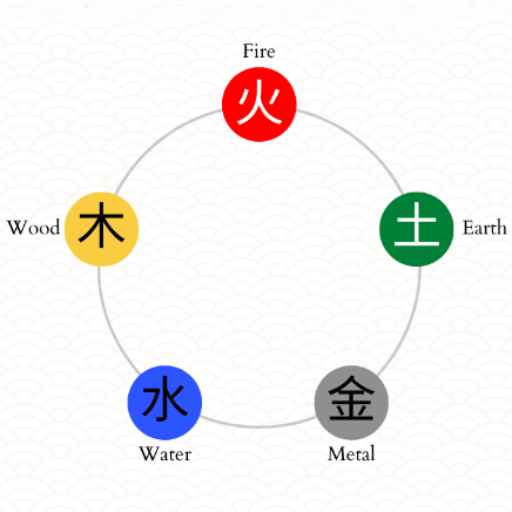
Knowing your dominant element is only useful if you apply it. Here are three practical areas where this knowledge creates immediate value.
Career Alignment
Your dominant element points toward environments where you naturally thrive.
Fire-dominant people often succeed in communication, marketing, and leadership roles. Metal-dominant people excel in law, finance, engineering, and any field requiring precision. Earth-dominant people build strong operations, HR, and administrative careers.
Wood-dominant people drive innovation and strategy. Water-dominant people succeed in research, consulting, and adaptive roles.
This does not mean you must choose a career matching your dominant element. It means you should know what energy you bring into any room. If you are Water-dominant in a Fire-heavy industry, you will need to consciously build systems that protect your processing time.
Relationship Dynamics
Dominant elements explain friction and flow. Two Fire-dominant people may ignite brilliant ideas together or burn each other out. A Metal-dominant person and a Wood-dominant person may clash because Metal cuts Wood. But that same dynamic can work if both understand the pattern and give each other space to operate.
Knowing your dominant element helps you communicate your needs. Instead of saying “I need time to think,” a Water-dominant person can recognize that the need is structural, not optional.
Timing and Luck Cycles
Your dominant element interacts with yearly and 10-year Luck Pillars. When a Luck Pillar brings more of your dominant element, you feel amplified. That can be energizing or overwhelming, depending on whether your chart needs it.
When a Luck Pillar brings the element that controls your dominant element, you feel checked or constrained. That is not necessarily bad. Constraints create focus. Understanding how to read your Luck Pillars helps you anticipate these cycles and plan accordingly.
Conclusion
Your BaZi chart contains far more information than your Day Master alone. The dominant element is the prevailing energy that shapes your personality, your decisions, and your relationships. Finding it takes ten minutes, a scorecard, and a willingness to look at the full picture.
The method is simple. Count every stem, branch, and hidden stem. Score each element. Check your birth season. Identify the winner. Then ask what that energy means for how you work, lead, love, and grow.
Your dominant element bazi profile is not a cage. It is a starting point. The chart shows the wind. You still control the sail.
Ready to find your dominant element? Generate your BaZi chart now and apply the 4-step method from this guide. Your patterns are already there. You just need to read them.
Frequently Asked Questions
How do I find my dominant element in BaZi?
Generate your Four Pillars chart, then count every Heavenly Stem, Earthly Branch, and hidden stem. Assign 1 point to each visible stem and branch, and 0.5 point to each hidden stem. The element with the highest total is your dominant element.
What is the difference between Day Master and dominant element?
Your Day Master is the Heavenly Stem of your Day Pillar. It represents your core identity. Your dominant element is the most frequent element across your entire chart. It represents the prevailing energy that influences your behavior and environment.
Is the dominant element the same as my favorable element?
No. Your dominant element is what you have most of. Your favorable element is what you need to create balance. They can be the same, but often they are different. A chart with dominant Fire may need Water to cool it, even though Fire is the strongest presence.
Can you have two dominant elements in BaZi?
Yes. If two elements score within 0.5 points of each other, your chart has co-dominant elements. This means two energies compete for influence, and you may feel pulled between their qualities.
What does it mean if my dominant element is different from my Day Master?
It means your core identity (Day Master) operates in an environment shaped by a different energy. A Water Day Master with dominant Fire may feel tension between wanting to reflect and being pushed to act. Recognizing this tension is the first step toward managing it effectively.