


A missing element in your BaZi chart means one of the Five Elements—Wood, Fire, Earth, Metal, or Water—shows zero presence across your Four Pillars. This is not automatically a flaw, a curse, or something you must fix. Whether it matters depends on whether that element is your Favorable Element (Yong Shen), not simply its absence.
The moment you see 0% next to an element, panic sets in.
Most people assume they need to compensate immediately. They buy crystals, change wardrobes, and redecorate apartments to “balance” their chart. But that number does not mean what you think it means.
Your BaZi chart is a structural map, not a wellness checklist. A missing element is a blind spot, not a destiny flaw. And in many cases, that blind spot is actually protecting you.
In this guide, you will learn exactly how to find your missing elements, how to determine if they matter, and what to do next—using logic, not guesswork.
Key Takeaways
- A missing element in BaZi means zero presence across your Four Pillars, but hidden stems inside Earthly Branches may reveal it is not truly absent.
- Missing elements are only problematic when they are your Favorable Element (Yong Shen); otherwise, their absence may help your chart function better.
- Luck Pillars (10-year cycles) often bring missing elements temporarily, creating natural windows of opportunity.
- Behavioral and career adjustments are more effective than mystical remedies like crystals or colors.
- You cannot change your natal chart, but you can understand it and make strategic decisions accordingly.
To see how all five forces work together in your chart, see our (five elements balance bazi guide).
What Does a Missing Element Mean in BaZi?
The Technical Definition
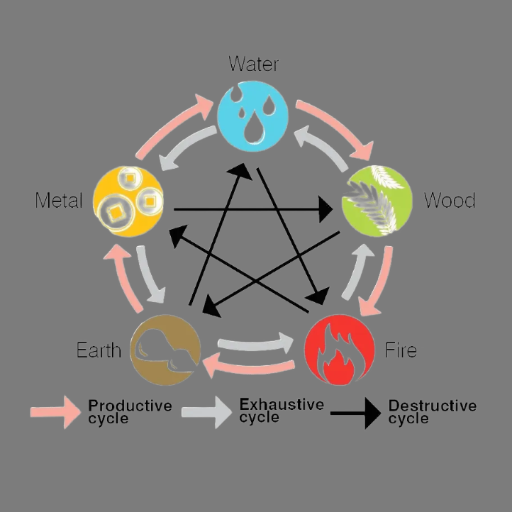
In BaZi, a missing element means one of the Five Elements scores 0% across all four pillars of your birth chart. Your Four Pillars—Year, Month, Day, and Hour—contain eight total characters: four Heavenly Stems and four Earthly Branches. Each character carries an elemental signature.
If none of those eight visible characters belong to a specific element, that element is classified as missing from your natal chart.
This creates a distinct energetic profile. You naturally operate without the patterns, behaviors, and tendencies associated with that element. For some people, this simplifies their chart. For others, it creates a genuine gap that needs addressing.
The key is knowing which scenario applies to you.
The Hidden Stems Caveat
Before you panic about a missing element, verify your hidden stems.
Every Earthly Branch contains one to three hidden elements beneath its surface. A branch might display Fire on the outside while hiding Water and Metal inside. Surface-level calculators that only count the visible eight characters can mislead you.
A proper BaZi chart calculator accounts for these hidden stems. What looks like a missing element at first glance might actually be present in subdued form.
Always check hidden stems before drawing conclusions about element gaps.
Missing vs Weak: Know the Difference
A weak element and a missing element are not the same thing.
A weak element appears in your chart but represents less than 5% of your total elemental distribution. It is present, just underrepresented. A missing element is entirely absent from both visible stems and hidden branches.
This distinction changes your strategy completely. Weak elements can often be strengthened through behavioral shifts. Missing elements require a different approach—especially when they are your Favorable Element.
For the complete framework on weak and missing elements across all five elements, see our (guide to weak element in BaZi).
The Most Common Myth About Missing Elements
Myth: You Must Add Every Missing Element
The wellness industry loves the idea of balance. All five elements present. Perfect harmony. Zero gaps.
This framing has crept into BaZi interpretation, and it is misleading. Your chart does not need to contain all five elements to function well. In fact, many highly successful people operate with only two or three dominant elements in their natal chart.
The goal is not a perfectly balanced chart. The goal is a chart that functions optimally for your specific Day Master.
As the practitioner at BaziConsult notes, “Balancing of chart is a major mis-conception… We cannot ‘insert’ lucky elements into our Bazi.”
For a step-by-step method to identify your chart’s strongest force, read our (complete guide to dominant element in BaZi).
The Truth: Missing Does Not Equal Unfavorable
What matters in BaZi is not presence or absence. It is usefulness.
Your Favorable Element, or Yong Shen (Useful God), is the specific element your Day Master needs to thrive. If your missing element happens to be your Yong Shen, then yes—you have a genuine gap to address. But if your missing element is unfavorable to your Day Master, its absence may actually be helping you.
When Elena first saw her BaZi chart, she noticed Water at 0%. Her friend immediately told her to buy a black crystal necklace and paint her office navy blue. Six months later, Elena felt more drained than before. A proper reading revealed her Day Master was Yang Fire—already intense and expressive. Water was unfavorable for her chart. The “remedies” were adding conflict, not balance. She stopped compensating and focused on channeling her Fire into structured creative projects instead. Her energy returned within weeks.
Your chart shows the wind. You still control the sail.
How to Find Your Missing Elements Step by Step
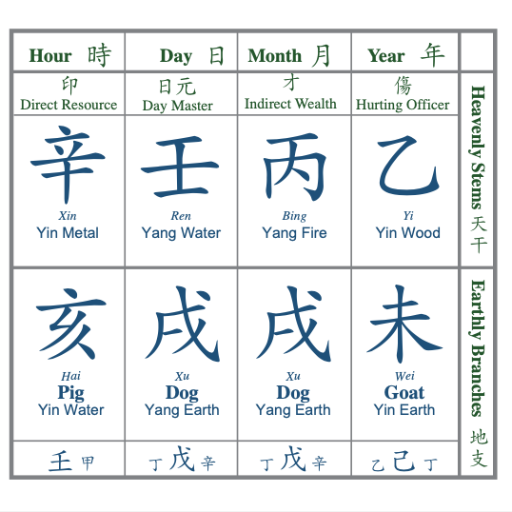
Finding your missing elements is a counting exercise, not a mystical ritual. Here is the exact process.
Step 1: Generate Your Four Pillars
Enter your exact birth date and time into a BaZi chart calculator. True solar time calculations produce the most accurate results, since the standard clock time in your birth location may differ from the astronomical time used in classical BaZi.
Your output will show four columns:
- Year Pillar
- Month Pillar
- Day Pillar
- Hour Pillar
Each column has a Heavenly Stem on top and an Earthly Branch below.
Step 2: Map Each Character to Its Element
Each of the ten Heavenly Stems and twelve Earthly Branches corresponds to one of the Five Elements. Here is the quick reference:
Heavenly Stems:
- Wood: Jia (Yang), Yi (Yin)
- Fire: Bing (Yang), Ding (Yin)
- Earth: Wu (Yang), Ji (Yin)
- Metal: Geng (Yang), Xin (Yin)
- Water: Ren (Yang), Gui (Yin)
Earthly Branches:
- Wood: Yin, Mao
- Fire: Si, Wu
- Earth: Chen, Xu, Chou, Wei
- Metal: Shen, You
- Water: Hai, Zi
Translate each of your eight visible characters to its element.
Step 3: Count the Hidden Stems
This is where most beginners make mistakes. Each Earthly Branch contains hidden stems:
| Branch | Hidden Stems |
|---|---|
| Zi | Gui (Water) |
| Chou | Ji, Gui, Xin |
| Yin | Jia, Bing, Wu |
| Mao | Yi |
| Chen | Yi, Wu, Gui |
| Si | Bing, Wu, Geng |
| Wu | Ding, Ji |
| Wei | Yi, Ding, Ji |
| Shen | Geng, Ren, Wu |
| You | Xin |
| Xu | Wu, Ding, Xin |
| Hai | Ren, Jia |
Add these hidden elements to your tally. An element that appears only here is weak, but technically present.
Step 4: Tally and Identify Gaps
Count every appearance of each element across all stems, branches, and hidden stems. If an element scores zero after this full count, it is truly missing.
Use this scorecard template:
| Element | Visible Stems | Visible Branches | Hidden Stems | Total |
|---|---|---|---|---|
| Wood | ||||
| Fire | ||||
| Earth | ||||
| Metal | ||||
| Water |
What Each Missing Element Reveals About You
Every missing element creates a specific blind spot. But blind spots also create specialization. Here is what each gap means in practical, behavioral terms.
Missing Wood
Wood governs growth, vision, and long-term planning.
If Wood is missing from your chart, you may struggle with patience for slow-building projects. Starting new initiatives feels energizing. Sustaining them through the long middle phase feels draining. You might pivot too quickly or abandon strategies before they mature.
Your strength lies in spontaneity and adaptability. You respond to immediate circumstances with flexibility that more Wood-heavy people lack.
Career implication: You thrive in fast-response environments rather than multi-year strategic planning roles. Partner with Wood-strong colleagues for long-term vision while you handle execution and adaptation.
Missing Fire
Fire governs expression, visibility, and enthusiasm.
Without Fire, you may default to a reserved, measured demeanor. Public speaking, self-promotion, and emotional expression do not come naturally. Others might perceive you as distant or overly cautious.
Your strength is listening and observation. You process before you speak, which creates depth and precision in your communication.
Career implication: You excel in research, analysis, and behind-the-scenes roles. When visibility is required, preparation and structure compensate for natural reticence.
Missing Earth
Earth governs grounding, routine, and stability.
A missing Earth element can manifest as restlessness. You may struggle with consistent routines, long-term commitments, or the emotional digestion of change. Job-hopping, lifestyle instability, and anxiety under pressure are common patterns.
Your strength is flexibility. You adapt to new environments faster than Earth-dominant personalities. Change does not frighten you; stagnation does.
For a deeper look at this specific pattern, see our guide on missing Earth in BaZi and how to find stability.
Missing Metal
Metal governs boundaries, decisiveness, and follow-through.
Without Metal, decision-making can feel paralyzing. You see all sides of every issue, which makes definitive choices difficult. Boundaries blur easily—both personal and professional. Projects may stall at 80% completion.
Your strength is empathy and diplomacy. You understand multiple perspectives naturally, making you an excellent mediator and collaborator.
Missing Water
Water governs adaptability, reflection, and emotional flow.
Missing Water often creates rigidity. You may prefer clear structures and predictable outcomes. Deep reflection feels uncomfortable, and emotional expression may seem inefficient or vulnerable. Anxiety can surface when plans change unexpectedly.
Your strength is reliability. You build systems that last. Others trust you because you deliver consistency.
If you want a deeper breakdown of what each element stands for on its own, our guide on the (wood fire earth metal water meaning) walks through every element in detail.
Missing Element Comparison Table
| Missing Element | Blind Spot | Natural Strength | Career Risk | Career Opportunity |
|---|---|---|---|---|
| Wood | Long-term planning, patience | Spontaneity, adaptability | Abandoning projects early | Crisis response, rapid iteration |
| Fire | Visibility, expression | Listening, depth | Being overlooked for promotions | Research, analysis, quality control |
| Earth | Routine, grounding | Flexibility, openness | Instability, anxiety | Travel, consulting, change management |
| Metal | Decisions, boundaries | Empathy, diplomacy | Unfinished projects | Collaboration, client relations |
| Water | Adaptability, reflection | Structure, reliability | Rigidity under change | Operations, logistics, system building |
When Missing Elements Actually Matter
Not every missing element needs attention. Here is how to diagnose whether yours does.
If Your Missing Element Is Your Favorable Element
This is the only scenario where a missing element becomes a genuine priority.
Your Favorable Element, or Yong Shen, is the specific element your Day Master needs to function at its best. A weak Day Master needs support. A strong Day Master needs release or control. The element that provides this function is your Yong Shen.
If your Yong Shen happens to be the element that is missing from your chart, you have a structural gap. Your natal blueprint lacks the very energy you need most.
Confirming your Yong Shen requires a full chart reading. You need to assess your Day Master’s strength, the seasonal influence of your birth month, and the interaction between all elements. A complete BaZi analysis can identify this for you.
When Luck Pillars Bring Your Missing Element
Here is something most articles overlook: your missing element is rarely missing forever.
Luck Pillars, or Da Yun, are 10-year cycles that rotate through different elemental combinations. Over a typical lifetime, you experience eight to ten of these cycles. That means your missing element will likely appear for a decade or more at some point.
When it does, it functions like a temporary upgrade.
Marcus had spent his entire career avoiding leadership roles. His chart was missing Fire, and public visibility felt unnatural. At age 34, he entered a Fire Luck Pillar. Suddenly, presentations that once terrified him felt energizing. He took a director position he would have declined five years earlier. The Fire did not change his personality. It gave him temporary access to an expression style his natal chart lacked. When the pillar shifted a decade later, he stepped back into advisory work, grateful for the window but clear about his natural preference.
Annual pillars provide shorter windows—one year at a time. These are smaller opportunities, but they repeat.
This is why patience matters more than panic. Your chart is static. Your life is not.
Practical Ways to Work With (Or Without) Your Missing Element
If It’s Favorable: Behavioral Remedies
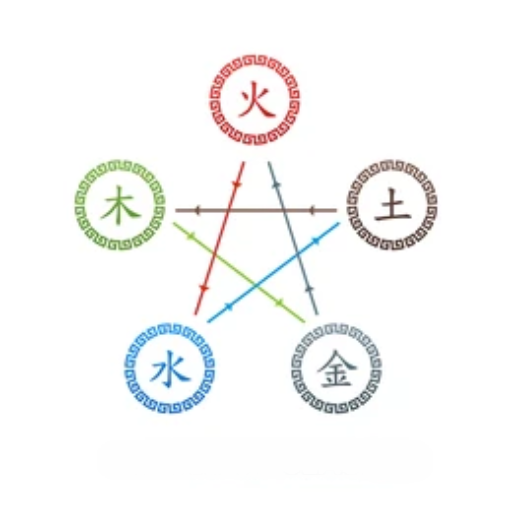
If your missing element is your Yong Shen, you cannot insert it into your natal chart. But you can support it indirectly through environment, behavior, and relationships.
Career adjustments by element:
- Missing Wood: Choose roles with visible growth trajectories. Set shorter milestone deadlines to maintain momentum.
- Missing Fire: Schedule regular presentations or visibility moments. Practice expression in low-stakes settings first.
- Missing Earth: Build external structure—calendars, routines, accountability partners. Ground yourself through physical activity.
- Missing Metal: Use decision frameworks (pros/cons lists, time-boxed choices). Set hard deadlines to force closure.
- Missing Water: Build buffer time into schedules. Practice small improvisations to build adaptability gradually.
Relationship strategy: Partner with people whose charts are strong in your missing element. They naturally supply what you lack.
Priya’s chart was missing Metal, which showed up as chronic indecision. She could analyze a problem from twelve angles but never commit to a solution. Instead of buying metal jewelry, she changed her workflow. She hired a project manager with strong Metal in her chart—someone who naturally closed decisions and enforced deadlines. Within one quarter, Priya’s team shipped three projects that had been stalled for months. She did not add Metal to herself. She partnered with it.
For a comprehensive list of practical remedies, see our (BaZi element remedies guide).
If It’s Unfavorable: Why You Might Ignore It
Sometimes the best action is no action.
If your missing element is unfavorable to your Day Master, compensation efforts can backfire. A Fire-dominant person missing Water does not need more Water. Adding it could dampen their natural drive and create internal friction.
Your chart is already optimized in its own way. The gap protects you from an element that would create imbalance.
This is the contrarian insight most guides miss: not every missing element is a problem.
The Indirect Approach
You cannot change your birth chart. What you can change is how you respond to it.
Behavioral support beats mystical fixes. A person missing Metal who needs structure will benefit more from calendar blocking and deadline systems than from wearing silver jewelry. Someone missing Earth who needs grounding will see better results from weight training and meal planning than from surrounding themselves with brown objects.
The academic analysis in Bazi and the Five Elements: The Historical Transmission and Modern Application of Traditional Cultural Semiotics frames these elements as symbolic systems rather than physical substances. They represent behavioral patterns, not material forces.
Treat them accordingly.
Conclusion
A missing element in your BaZi chart is data, not a diagnosis. It reveals a blind spot in your natural energetic profile. Whether that blind spot needs attention depends entirely on your Favorable Element and your current life phase.
Start by finding your true element distribution—including hidden stems. Then determine your Yong Shen. Only then can you decide whether to compensate, wait for your Luck Pillars to supply the gap, or simply leverage the strengths your chart already gives you.
Your chart shows the wind. You still control the sail.
Ready to decode your element profile? Generate your free BaZi chart and see exactly which elements drive your decisions.