


In BaZi, two charts are compatible when their Five Elements create productive exchange, not when a cosmic force declares them “fated.” Element compatibility in BaZi is a structured system for reading how Wood, Fire, Earth, Metal, and Water interact between any two people, whether they are co-founders, spouses, siblings, or friends.
Most people assume BaZi compatibility is only about romance.
It isn’t.
Your chart’s elements reveal how you exchange energy with everyone in your life. The same framework that explains why one couple thrives can explain why two business partners clash or why a parent and child keep misunderstanding each other. When you learn to read these patterns, you stop blaming personalities and start seeing dynamics.
In this guide, you will learn how the production and control cycles create relationship textures, how to read a complete element compatibility matrix, and how to apply this knowledge to romance, business, family, and teams. No prior BaZi knowledge required. To see how all five forces work together in your chart, see our (five elements balance bazi guide).
Key Takeaways
- Element compatibility in BaZi applies to any relationship type, not just marriage.
- The production cycle creates natural support; the control cycle creates growth through tension.
- Same-element pairings amplify strengths and weaknesses simultaneously.
- Your Day Master and overall chart balance matter more than any single element pairing.
- Current Luck Pillars shift relationship dynamics over time, so compatibility is never fixed.
What Element Compatibility Really Means
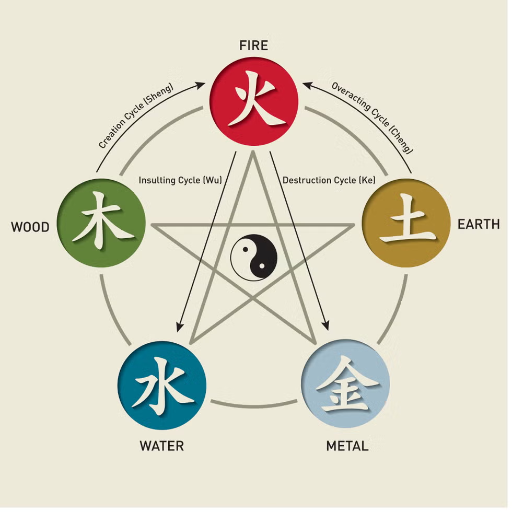
Most compatibility systems give you a score. BaZi gives you a map.
Element compatibility is not a verdict. It is a reading of how two energetic systems influence each other. When you understand this, you stop asking “Are we compatible?” and start asking “What kind of dynamic do we create, and how do we manage it?”
Compatibility as Energetic Dynamics
Every BaZi chart contains a unique mix of the Five Elements. When two people interact, their charts overlap. One person’s surplus Wood may feed the other’s Fire. One person’s strong Metal may refine the other’s Wood. Or two people’s excess Fire may burn through resources together with nothing left to ground them.
These are not mystical forces. They are patterns of influence.
Think of it like two weather systems meeting. Sometimes they merge into a calm front. Sometimes they create a storm. The storm is not “bad” — it simply demands a different response. That is how element compatibility works. It shows you the weather between two people so you can navigate it intentionally.
The Two Cycles That Govern All Relationships
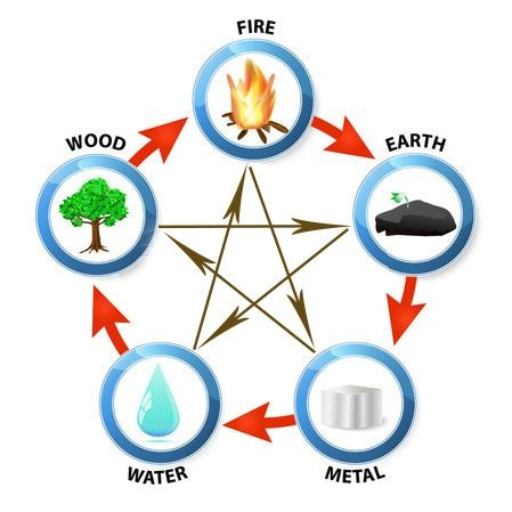
All element dynamics flow from two classical cycles: production and control, which are rooted in the foundational Five Elements.
The production cycle (Sheng, 生) is the nourishing path:
- Water feeds Wood
- Wood fuels Fire
- Fire creates Earth
- Earth bears Metal
- Metal carries Water
When one person’s elements feed into another’s, the relationship feels natural and supportive. The giver provides resources. The receiver channels them into action. This is the dynamic of mentorship, healthy partnership, and balanced teamwork.
The control cycle (Ke, 克) is the restraining path:
- Wood controls Earth
- Earth dams Water
- Water extinguishes Fire
- Fire melts Metal
- Metal cuts Wood
This creates friction. But friction is not failure. Fire melting Metal is how raw ore becomes a blade. Metal cutting Wood is how a tree becomes a ship. Control cycles demand maturity and awareness, but they often produce the deepest growth.
Neither cycle is better. They simply create different textures.
The Complete Element Compatibility Matrix
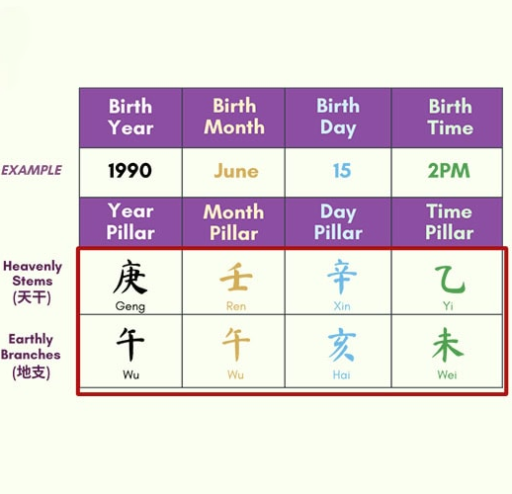
When you compare two people’s dominant elements, you get one of three dynamics: production, control, or same-element amplification. Here is how each pairing plays out in practice.
Production Cycle Pairings: Natural Support
These pairings feel effortless. One person naturally supplies what the other needs.
| Pairing | Dynamic | How It Feels |
|---|---|---|
| Water + Wood | Water nourishes Wood | The Water person offers insight and resources. The Wood person converts them into growth and vision. |
| Wood + Fire | Wood fuels Fire | The Wood person generates ideas and momentum. The Fire person expresses them with passion and clarity. |
| Fire + Earth | Fire creates Earth | The Fire person brings energy and inspiration. The Earth person stabilizes and grounds it. |
| Earth + Metal | Earth bears Metal | The Earth person provides structure and patience. The Metal person refines it into precision and discipline. |
| Metal + Water | Metal carries Water | The Metal person offers focus and boundaries. The Water person adapts and flows within them. |
The risk: Production cycles can become enabling. A Water person who endlessly nourishes a Wood partner may feel depleted. A Fire person who constantly energizes an Earth partner may burn out. Natural support requires balance on both sides.
If you want a deeper breakdown of what each element stands for on its own, our guide on the (wood fire earth metal water meaning) walks through every element in detail.
Control Cycle Pairings: Growth Through Tension
These pairings create challenge. But challenge, when understood, becomes refinement.
| Pairing | Dynamic | How It Feels |
|---|---|---|
| Wood + Earth | Wood draws from Earth | The Wood person pushes for growth. The Earth person anchors and slows the pace. |
| Earth + Water | Earth dams Water | The Earth person demands structure. The Water person resists rigid boundaries. |
| Water + Fire | Water extinguishes Fire | The Water person brings caution. The Fire person wants action and expression. |
| Fire + Metal | Fire melts Metal | The Fire person forces change. The Metal person prefers consistency and order. |
| Metal + Wood | Metal cuts Wood | The Metal person critiques and edits. The Wood person feels constrained by the feedback. |
The opportunity: Control cycles create accountability. A Metal partner keeps a Wood dreamer grounded. An Earth partner prevents a Water strategist from drifting. The tension is productive when both people recognize the pattern instead of taking it personally.
Same-Element Pairings: Amplification Dynamics
When two people share the same dominant element, they amplify each other. This is powerful when the element is balanced and dangerous when it is excessive.
- Two Wood people: Shared vision and ambition, but risk competing for the same space or lacking follow-through.
- Two Fire people: Intense connection and creativity, but risk burnout, impulsivity, and emotional volatility.
- Two Earth people: Deep loyalty and stability, but risk stagnation, over-caution, and resistance to change.
- Two Metal people: Mutual respect for precision and discipline, but risk emotional coldness, rigidity, and perfectionism.
- Two Water people: Rich intuition and adaptability, but risk indecision, emotional absorption, and lack of direction.
Same-element pairings work best when both people have strong secondary elements that differ. Two Fire people with complementary secondary elements can sustain each other. Two Fire people with no Water or Earth in their charts may burn each other out.
How to Apply Element Compatibility to Different Relationships

Most BaZi content stops at romance. That is a mistake. Element compatibility explains friction and flow in every context where two people interact.
Romantic Partnerships
In romance, element compatibility shows up in daily rhythm. A Water person who processes emotions internally paired with a Fire person who expresses everything immediately will feel constant misalignment unless they recognize the pattern.
Consider Maya and James. Maya is a Yang Fire Day Master, expressive, energetic, and visible. James is a Yin Water Day Master, adaptive, strategic, and reserved. Their elements sit in a control cycle — Water extinguishes Fire. Early in their relationship, Maya felt James was emotionally distant. James felt Maya was overwhelming. Once they understood their element dynamic, they stopped fighting the pattern and started working with it. Maya learned to give James space to process. James learned to show up visibly even when it felt unnatural. Their control cycle became a refining force instead of a source of conflict.
For romantic analysis, the Day Pillar — specifically the Day Branch, known as the Spouse Palace — adds another layer. But the element-to-element dynamic between Day Masters is the foundation.
Want to understand your own element profile? Discover what your dominant element says about you and how it shapes your relationship patterns.
Business Partnerships
Co-founders fail more often from dynamic mismatch than from bad ideas. Element compatibility gives you a framework for building complementary teams.
A Wood entrepreneur with vision and long-term thinking pairs naturally with an Earth operations lead who grounds ideas in execution. This same element logic also explains how your Day Master shapes your career path. A Fire strategist with bold market vision benefits from a Metal analyst who brings precision and risk assessment. These are production cycle partnerships where each person’s strength fills a gap.
Control cycle partnerships can also work when the roles are right. A Fire CEO who pushes hard for growth needs a Metal CFO who says no. The tension keeps the company from overextending. The key is role clarity: the Metal person must own boundaries, and the Fire person must respect them.
The most dangerous business pairing is two people with the same dominant element and no complementary voices. Two Fire founders may launch brilliantly and flame out. Two Metal founders may build a perfect product no one wants because they never adapted to market feedback.
If you’re not sure which field fits your chart best, our guide on choosing your (bazi career element) breaks down how to match your favorable element to the right line of work.
Family Dynamics
Parent-child friction often looks like personality clash. In reality, it is frequently an elemental mismatch.
A Fire parent who expresses love through enthusiasm and activity may overwhelm a Water child who needs quiet and space. The parent thinks the child is withdrawn. The child thinks the parent is overwhelming. Neither is wrong. Their elements simply operate on different frequencies.
Understanding this reframes the conflict. The Fire parent does not need to become a Water parent. They need to learn that their child receives support differently. The Water child does not need to become expressive. They need to feel safe in their own rhythm.
Sibling dynamics follow the same logic. Two Earth siblings may get along smoothly but enable each other’s inertia. A Wood sibling and a Metal sibling may clash constantly — but that clash, if understood, can push both toward growth.
Friendships and Teams
Social circles have their own element ecology. A group heavy in Fire and Wood generates energy and ideas but may lack the Earth or Metal to execute. A group heavy in Water and Metal produces deep conversation and analysis but may never act.
If you lead a team, element diversity matters more than element similarity. A balanced team needs vision (Wood), energy (Fire), stability (Earth), precision (Metal), and adaptability (Water). When one element dominates, the team’s blind spots become collective.
You do not need to run BaZi charts on every teammate. But if you know your own dominant element, you can start identifying the gaps around you. If you are strong Fire, you probably need more Metal voices to keep you honest. If you are strong Water, you probably need more Earth structure to turn insight into action.
Leading a team? Calculate your BaZi chart to identify your element profile and the gaps around you.
The Step-by-Step Compatibility Reading Method
You do not need years of study to start reading element compatibility. You need two charts and a structured process.
Step 1: Generate both Four Pillars charts.
Use a reliable BaZi calculator to produce both people’s full charts. You will need birth year, month, day, and ideally birth time. If you are new to chart structure, first understand the structure of a BaZi chart. Then generate your BaZi chart here to see your own element breakdown.
Step 2: Identify each person’s dominant element and Day Master.
The Day Master — the Heavenly Stem of the Day Pillar — represents your core identity. Its element tells you who you are at the center of your chart. If you are new to this, our guide to reading your BaZi chart walks you through finding your Day Master step by step.
Step 3: Compare the element-to-element dynamic.
Use the compatibility matrix above. Are your Day Masters in a production cycle, a control cycle, or the same element? This gives you the baseline texture of your relationship.
Step 4: Assess overall chart balance.
Does one person’s chart have a surplus of the element the other lacks? A Wood person with excess Water in their chart paired with a Fire person creates even stronger production energy. A Fire person with hidden Metal paired with a Wood person adds complexity to the dynamic. The full chart matters, not just the Day Master.
Step 5: Check current Luck Pillars.
Your Luck Pillars show which 10-year cycle each person is in. Someone in a Water Luck Pillar behaves differently than someone in a Fire Luck Pillar, even if their base charts are the same. Timing shifts the dynamic.
Step 6: Apply context.
A production cycle between business partners creates synergy. The same production cycle between friends may create dependency. A control cycle between romantic partners demands communication. The same control cycle between rivals creates destructive friction. Context shapes how the elements express themselves.
Common Misconceptions About Element Compatibility
Misinformation about BaZi compatibility is everywhere. Here are the myths that hold people back.
“Clashing elements mean a doomed relationship.”
False. A control cycle is not a curse. It is a pattern of tension that can refine both people. Many of the strongest long-term partnerships carry control cycle dynamics because the friction keeps both parties growing. The question is not whether tension exists. It is whether both people understand it and respond with maturity.
“Same element means perfect compatibility.”
False. Two Fire people do not create balance. They create amplification. If both charts are already Fire-heavy, the pairing compounds the imbalance. Same-element relationships work when both people have strong secondary elements that differ. Without that diversity, similarity becomes stagnation.
“Compatibility is fixed.”
False. Your base chart is static, but your Luck Pillars change every 10 years. A relationship that feels effortless in one cycle may demand more work in another. A control cycle that creates conflict early in life may become a source of mutual strength later. Compatibility is dynamic, not permanent.
“You need exact birth time for any analysis.”
False. Birth time improves accuracy, especially for the Hour Pillar. But the Day Pillar — which gives you the Day Master — requires only birth date. You can do meaningful element compatibility analysis with dates alone. If you have times, use them. If you do not, start with what you have.
“BaZi compatibility is just Chinese zodiac matching with extra steps.”
False. Chinese zodiac compatibility uses only your birth year animal. BaZi uses all Four Pillars — Year, Month, Day, and Hour. Two people born in the same year can have completely different compatibility outcomes because their Day Masters, element balances, and Luck Pillars differ. BaZi is more individualized and structurally precise.
Understanding Element Compatibility as a Decision Tool
Element compatibility in BaZi is not about finding your soulmate or avoiding “bad” people. It is about understanding the dynamics you create with others so you can navigate them with clarity.
A production cycle partner supports your growth naturally but may enable your weaknesses. A control cycle partner challenges your comfort but may refine your character. A same-element partner mirrors your strengths and magnifies your blind spots. None of these are inherently good or bad. They are simply different textures that demand different awareness.
The real power of this system is not prediction. It is preparation. When you understand the energetic dynamic between you and another person, you stop reacting blindly to friction and start responding intentionally. You know when to lean into support. You know when tension is growth and when it is damage. You know why some relationships feel effortless and others feel like work.
That awareness is what turns a chart into a tool.
Ready to read your own chart? Calculate your Four Pillars and discover your dominant element. Once you know your own energetic profile, you can start reading the dynamics in every relationship around you.