


How to Find Day Master in BaZi: A Complete Step-by-Step Guide
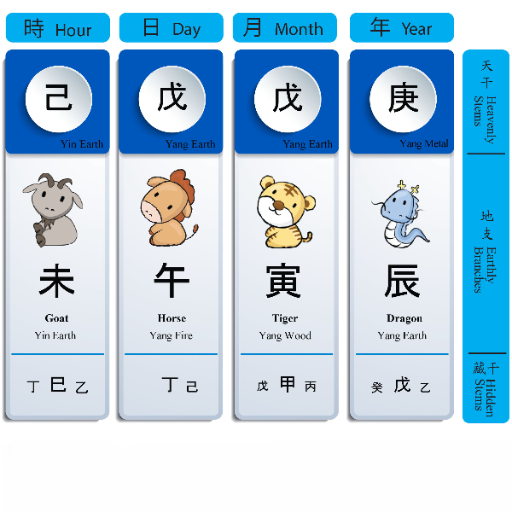
To find your Day Master in BaZi, locate the Day Pillar in your Four Pillars chart, the third column from the left. The top character of that pillar, called the Heavenly Stem, is your Day Master. It represents your core element and the reference point for your entire chart.
Most people who discover BaZi make the same mistake: they think their element is their Chinese zodiac animal. Sarah, a marketing director in Austin, spent two years reading about “Earth Dragon” traits and wondering why none of it felt right. When she finally located her Day Master, Jia Wood, the rest of her chart snapped into focus. Her career choices, her relationship patterns, even her stress triggers all started to make sense.
Your Day Master isn’t a mystical label. It’s a structural anchor. Once you know how to find it, you can determine your strength, your favorable elements, and how the rest of your chart reads. This guide shows you how to find day master bazi using two reliable methods: a calculator and a manual lookup. You’ll also get a five-point accuracy checklist so you can be confident you got it right.
Key Takeaways
- Your Day Master is the Heavenly Stem (top character) of the Day Pillar (third column) in your BaZi chart.
- You can find it in under 60 seconds using a free BaZi calculator, or by looking up your birth date in a 60-day Jiazi cycle table.
- Your birth time is not required to find your Day Master, time only affects your Hour Pillar.
- The five most common accuracy mistakes involve the solar calendar, true solar time, solar-term boundaries, column layout, and Early Zi (23:00–00:00).
- Once you know your Day Master, the next step is determining whether it is strong or weak and mapping your Ten Gods.
What Is the Day Master?
In BaZi, also called the Four Pillars of Destiny, your chart contains eight characters arranged in four pairs. Each pair is a “pillar,” and each pillar has a top character (the Heavenly Stem) and a bottom character (the Earthly Branch).
Your Day Master (Ri Zhu, 日主) is the Heavenly Stem of your Day Pillar. The Day Pillar is the third column in a standard chart, representing the day you were born.
Think of your Day Master as the central character in a story. Every other element in your chart, your Month Pillar, your Year Pillar, your Hour Pillar, your Luck Pillars, is interpreted relative to this one character. It isn’t a deity, a fixed fate, or a magical identity. It’s a reference point.
For example, if your Day Pillar is Jia Zi (甲子), your Day Master is Jia (甲), which is Yang Wood. Every interpretation that follows, your career strengths, your relationship style, your wealth patterns, flows from that starting position.
If you want a deeper conceptual explanation, read our complete guide to what the Day Master represents. For another perspective on identifying your element, DeepOracle’s Day Master guide explains the lookup process with clear chart examples. For now, we’ll focus on the practical skill of finding it.
How to Find Day Master in BaZi with a Calculator
The fastest way to find your Day Master is to use a BaZi calculator. A good calculator does the calendar conversion for you and displays the Day Pillar clearly.
Here is the exact process:
- Enter your birth date, year, month, and day. Use the Gregorian calendar (the standard Western calendar).
- Add your birth time if you know it. This is optional for finding your Day Master, but it completes your Hour Pillar.
- Enter your birth city or longitude. This allows the calculator to adjust for true solar time.
- Generate the chart and look for the Day Pillar, usually the third column from the left.
- Read the top character of that pillar. That’s your Day Master.
A reliable calculator will also tell you the element and polarity of your Day Master, so you don’t have to memorize the 10 Heavenly Stems immediately.
Want to try it now? Use our free Day Master calculator to find yours in seconds. If you want the full chart with Five Elements, Ten Gods, and Luck Pillars, use our complete BaZi calculator instead.
For a trusted third-party option, Master Sean Chan’s BaZi calculator is known for its solar time adjustments and traditional methodology.
Why Not Every Calculator Is Accurate
Free calculators vary in quality. The best ones account for:
- Solar calendar conversion: BaZi uses the Chinese solar calendar, not the lunar calendar. Your BaZi year begins around February 4 (Lichun), not January 1.
- True solar time: Clock time and solar time can differ by 30 minutes or more depending on your longitude within your time zone.
- Solar-term month boundaries: Months in BaZi are divided by the 24 Jie Qi (solar terms), not by calendar months.
- Early Zi handling: Some systems advance the Day Pillar if you were born between 23:00 and midnight.
If a calculator only asks for your date and ignores location, it may still give you the correct Day Master most of the time, but not always. For borderline cases, location matters.
Method 2: Find Your Day Master Manually
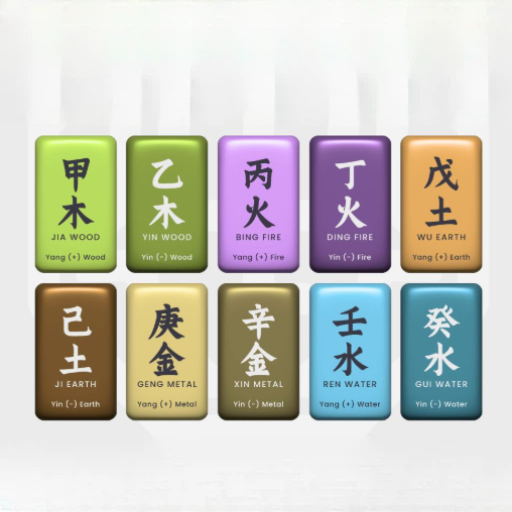
Manual lookup takes longer, but it teaches you how the system works. This is the method serious students use to verify calculator results.
What You Need
- Your exact Gregorian birth date
- Access to a Chinese perpetual calendar or a 60-day Jiazi cycle table
- Patience for one or two conversions
Step 1: Convert to the Chinese Solar Calendar
BaZi doesn’t use the lunar calendar. It uses the Chinese solar calendar, which is built around the 24 solar terms.
Key rules:
- The BaZi year begins at Lichun (around February 4), not January 1.
- The BaZi month begins at a Jie Qi boundary, not the first of the calendar month.
For example, if you were born on January 15, 1990, your BaZi year is still 1989 because Lichun had not yet occurred. Most perpetual calendars handle this automatically, but it is the first place manual lookup goes wrong.
Step 2: Look Up the Day Pillar
The Day Pillar follows a fixed 60-day cycle called the Jiazi cycle. Unlike the Year and Month Pillars, it cannot be calculated with a simple formula. You must look it up.
Find your exact birth date in a perpetual calendar or BaZi reference table. The entry will show two characters, such as Geng Yin (庚寅) or Ren Chen (壬辰). The first character is the Heavenly Stem; the second is the Earthly Branch.
Step 3: Identify the Heavenly Stem
The first character of your Day Pillar is your Day Master.
For example:
- Day Pillar Jia Zi (甲子) → Day Master is Jia (甲), Yang Wood
- Day Pillar Bing Wu (丙午) → Day Master is Bing (丙), Yang Fire
- Day Pillar Xin You (辛酉) → Day Master is Xin (辛), Yin Metal
That’s it. Once you’ve got the Heavenly Stem, you’ve got your Day Master.
Manual lookup is especially useful if you want to understand why two people born on the same calendar day always share the same Day Pillar, and why the Day Pillar cycles independently of year and month.
How to Read the Day Pillar in Any Chart
Whether you use a calculator or a printed table, the chart layout is usually the same. Here is how to read it.
A standard BaZi chart has four columns:
| Year | Month | Day | Hour | |
|---|---|---|---|---|
| Heavenly Stem | 乙 Yi | 癸 Gui | 甲 Jia | 己 Ji |
| Earthly Branch | 卯 Mao | 亥 Hai | 子 Zi | 巳 Si |
In this example, the Day Pillar is Jia Zi (甲子). The Day Master is Jia (甲), which is Yang Wood.
Some calculators display the chart vertically or in a different order. If yours looks confusing, remember this rule: the Day Pillar is always tied to your birth date. Look for the column labeled “Day,” “Day Pillar,” or “日柱.” The top character is your Day Master.
If you’re still unsure, our Heavenly Stems and Earthly Branches guide breaks down the building blocks of every BaZi chart.
The 10 Day Masters at a Glance
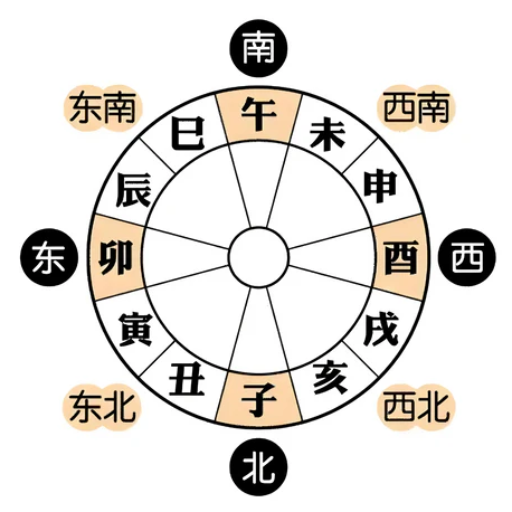
Once you have identified your Day Master, match it to the table below. This gives you your core element and polarity.
| Day Master | Pinyin | Element | Polarity | Core Trait |
|---|---|---|---|---|
| 甲 Jia | Yang Wood | Wood | Yang | Visionary, expansive |
| 乙 Yi | Yin Wood | Wood | Yin | Adaptive, diplomatic |
| 丙 Bing | Yang Fire | Fire | Yang | Charismatic, expressive |
| 丁 Ding | Yin Fire | Fire | Yin | Focused, perceptive |
| 戊 Wu | Yang Earth | Earth | Yang | Steady, authoritative |
| 己 Ji | Yin Earth | Earth | Yin | Nurturing, resourceful |
| 庚 Geng | Yang Metal | Metal | Yang | Disciplined, decisive |
| 辛 Xin | Yin Metal | Metal | Yin | Refined, precise |
| 壬 Ren | Yang Water | Water | Yang | Strategic, versatile |
| 癸 Gui | Yin Water | Water | Yin | Intuitive, contemplative |
Knowing your Day Master element is the foundation. A Yang Wood person and a Yin Wood person both belong to the Wood element, but they express it differently. Yang Wood is like a tall tree, direct, ambitious, and growth-oriented. Yin Wood is like a vine, flexible, relational, and resilient.
5 Mistakes That Give You the Wrong Day Master
Even a small error can flip your Day Master and misread your chart. Here are the five most common mistakes, and how to avoid them.
1. Using the Lunar Calendar Instead of the Solar Calendar
Many people assume BaZi follows the lunar calendar because Chinese astrology is often associated with the lunar New Year. It does not. BaZi uses the solar calendar and the 24 solar terms. If you use a lunar calendar converter, your Day Pillar may be off by days or even weeks.
2. Ignoring True Solar Time
Your birth certificate shows clock time. But BaZi cares about true solar time, the actual position of the sun relative to your birth location. If you were born in western China or near the edge of a time zone, your true solar time can differ significantly from clock time.
A calculator that asks for your birth city can correct this. Manual lookup requires you to apply a longitude adjustment.
3. Crossing a Solar-Term Boundary for the Month
BaZi months are defined by solar terms, not calendar months. For example, the month of Mao (卯, Rabbit) does not begin on March 1. It begins at the Jing Zhe solar term, around March 5–6.
This mistake usually affects your Month Pillar, not your Day Pillar. However, if you are manually deriving the Day Pillar from year and month data, a wrong month can throw off your lookup.
4. Misreading the Column Layout
Some chart generators display the Day Pillar in a non-standard position. Always confirm which column represents the day. The Day Pillar should be labeled “Day” or “日柱.” If the layout is unclear, regenerate the chart with a clearer tool.
5. Mishandling Early Zi (23:00–00:00)
In traditional BaZi, the hour of Zi (子, Rat) begins at 23:00, not at midnight. Some systems assign births between 23:00 and 00:00 to the next day’s Day Pillar. Others keep the original calendar day. Different schools handle this differently, so if you were born in that window, note the ambiguity and compare both possibilities.
For a more detailed walkthrough of these edge cases, read our guide to the Four Pillars of Destiny. Shen-Shu’s Day Master tutorial also offers a clean calculator-based introduction if you want to compare approaches.
What to Do After You Find Your Day Master
Finding your Day Master is the first step. The next steps turn that knowledge into usable insight.
Determine Whether Your Day Master Is Strong or Weak
A strong Day Master has support from the season, the Earthly Branches, and nearby Stems. A weak Day Master lacks that support. This isn’t a value judgment, it’s a structural reading.
Strong and weak Day Masters favor different elements. A strong Day Master usually benefits from elements that control, drain, or challenge it. A weak Day Master benefits from elements that support or produce it.
Read our full guide on strong vs. weak Day Master to learn the exact assessment method.
Map Your Ten Gods
The Ten Gods describe how each element in your chart relates to your Day Master. They represent patterns like wealth, authority, resources, output, and companionship. The same Ten God behaves differently depending on whether your Day Master is strong or weak.
Our Ten Gods guide explains each pattern and how to read them from your chart.
Align Your Career and Decisions
Your Day Master points toward natural strengths. A Geng Metal person may thrive in structured, justice-oriented fields. A Bing Fire person may excel in visible, leadership roles. A Gui Water person may do best in research, strategy, or advisory work.
Frequently Asked Questions
How do I find my Day Master in BaZi?
Locate the Day Pillar in your Four Pillars chart, the third column from the left. The top character of that pillar, called the Heavenly Stem, is your Day Master. You can use a free BaZi calculator or look up your birth date in a 60-day Jiazi cycle table.
Where is the Day Master located in a BaZi chart?
The Day Master is located in the Heavenly Stem position of the Day Pillar, which is the third column in a standard BaZi chart layout.
Is the Day Master the same as the Day Stem?
Yes. The terms are often used interchangeably. The Day Stem is the Heavenly Stem of the Day Pillar, and that character is your Day Master.
Can I find my Day Master without birth time?
Yes. Your birth time only determines your Hour Pillar. The Day Master comes from your birth date alone.
What are the 10 possible Day Masters?
The 10 Day Masters are the 10 Heavenly Stems: Jia, Yi, Bing, Ding, Wu, Ji, Geng, Xin, Ren, and Gui. They correspond to the Five Elements in Yin and Yang forms.
How do I know if my Day Master is strong or weak?
Assess four factors: seasonal support (command), roots in the branches (ground), support from nearby Stems (momentum), and draining or controlling forces.
Do I need a BaZi calculator to find my Day Master?
No, but a calculator is faster and reduces errors. Manual lookup using a perpetual calendar or Jiazi table works too.
What if I was born on a solar-term boundary?
If your birth date falls near a Jie Qi boundary, double-check which BaZi month and day apply. A small timing difference can shift the Day Pillar in rare cases.
Can two people have the same Day Master?
Yes. Everyone born on the same day shares the same Day Pillar and Day Master. However, their Year, Month, and Hour Pillars usually differ, so the full chart interpretation is unique.
Why is the Day Pillar the third column?
The standard BaZi chart reads from left to right as Year, Month, Day, and Hour. The Day Pillar is placed third because it represents the day of birth, which is the central reference for the entire chart.
Conclusion
Learning how to find your Day Master in BaZi is the single most important skill for reading your own chart. It isn’t complicated, but it requires precision.
Start with a calculator. Locate the Day Pillar. Read the top character. Then verify the result with the five-point accuracy checklist: solar calendar, true solar time, solar-term boundaries, column layout, and Early Zi.
Once you know your Day Master, everything else in BaZi becomes readable. You can assess your strength, explore your Ten Gods, and make decisions that align with your natural design instead of fighting against it.
Ready to find yours? Use our free Day Master calculator and see your core element in seconds. Then explore what it means with our complete Day Master guide. Your chart is already written, you just need to know where to look.