


The study of social determinants within Chinese metaphysics has, to a large extent, focused on the interplay between fate and money, and more especially vis-à-vis the four pillars of fortune known as Bazi. In the history of China, there were, of course, quite several great men and women whose financial prosperity not only excelled but also enhanced the potential of Day Masters of the Bazi. This article will be looking into the top 3 most wealthy day masters in Chinese history and the different characteristics and astrology that enhanced their accomplishments extremely. To achieve this, we will look at their paths to richness, with the hope that the knowledge will help evaluate the roles of fate and actions in attaining such success. Be ready to see outstanding stories and themes when the old law touches the earthly success.
☯️
Introduction to Day Masters in Chinese Metaphysics
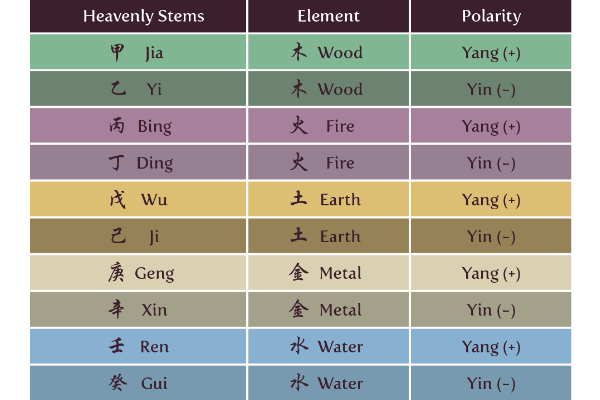
In Chinese metaphysics, the Day Masters symbolise the central Day Stem (the core self) of any given person and hence are useful in predicting any individual’s BaZi. The aspect decides the feeling, characteristics, and outlook of a person in some or all areas of life, such as love, health, work, etc. This is the heavenly stem of the given day in the Chinese 10-day cycle, and it is known as the day master. For instance, the Day Masters are classified into 5 groups, namely, Wood, Fire, Earth, Metal, and Water, and the character of any given person, including the potential in life that he/she would cling to, can be determined and aligned appropriately with their cosmic psychodynamics.
📖
Definition of “Day Master” in Chinese BaZi
In Bazi, the Day Master is the most important among the concepts, because it describes the ego of a person. The Day Master is defined by the heavenly stem in the day pillar of a person’s Bazi chart, controlling one’s perception and response to the environment by external factors. The way the Day Master correlates with the other elements in the Bazi chart’s stems and branches, as reflected by the specific placement of the Day Master, can point to the characteristics of the person’s career, relationships, and lifestyle.
Most people know that the day masters of BaZi Wood, Fire, Earth, Metal, Water, and the 10 heavenly stems each have a specific purpose and meaning. For example, the wood day master can stand for expansion, elasticity, and resistance, while the metal day master can stand for determination, carefulness, and coherence. Apart from explaining a person’s qualities, the day master evolves in tandem with space, time, and lifelines; however, in a manner that drives or influences actions and commonplace reactions in the face of adversity. It is essential to know the Day Master to make karmic predictions and decisions in favor of the person’s inner abilities and the patterns presented by the universe.
💰
Significance of Wealth in BaZi Analysis
In Bazi, wealth is one of the pillars, and it is linked to a person’s ability to grow, enhance, and maintain his or her material and monetary resources. Wealth in Bazi is unsurprisingly divided into Direct Wealth (Zheng Cai) and Indirect Wealth (Pian Cai). Direct wealth accounts for well-defined income sources over an extended period of time, such as employment with salaries or predictable business performance. Indirect wealth, however, represents more flexible types of income such as gains from investments, business successes, or gambling.
As part of the four pillars of Bazi analysis, the Day Master, together with the other four elements are analyzed to determine the presence of wealth elements and their extent. The wealth elements are antagonistic towards the Day Master as it depicts the natural element of the Day Master, which in turn represents oneself. Moreover, it may relate to the need to work, make money, and take advantage of certain chances.
The relationship between wealth elements and the Luck Pillars, therefore, shows that the wealth potential is subject to change over different stages of life, depending on the timing and the conditions. BaZi experts, besides these, take into account the correlations that wealth elements have in connection with a person’s strengths and weaknesses, which helps them to give precise advice as far as choosing careers, strategies for investments, or turning to businesses. Hence, in BaZi, wealth is not just about the financial aspects; it is also about the comprehension and optimization of resources, promoting a person’s potential in a conducive way.
Brief Historical Context of BaZi
It is through the measuring of a person’s fortune, developed during the Tang Dynasty of China (618–907 AD), which is often referred to as the Four Pillars of Destiny, with respect to the year, month, day, and time of a person’s birth, which signifies the formation of Bazi. Originated in China, Bazi has numerous theoretical bases from some content about balance of Yin and Yang and the Five components (Wood, Fire, Earth, Metal, Water) in addition to a few ethical concepts such as survival, such that much of this took the form of traditional Chinese philosophies and medical practice in the early days to some extent. Eventually, Bazi was updated during the Song and Mishnah dynasties when some ways for understanding astral waves and their effects on people were developed. It is still practiced today because it does give organized and “scientific” descriptions of the individuals and their lifestyles and choice-making far better than most metaphoric tools that have been used in the past. After all, it is a concept that extends back in history.
⚖️
Criteria for Wealth Determination in BaZi

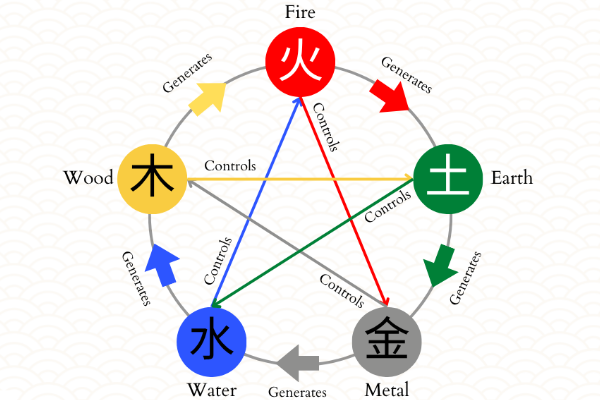
Evaluating wealth in Bazi derives essentially from one’s chart and the arrangement and positioning of certain elements within the said chart in one’s Four Pillars of Destiny. In this regard, the main requirements seem to be establishing the so-called “wealth element”. Simply put, the wealth element is the element that is controlled by the day master in line with the five-element relations. To illustrate, if the day master is wood, then fire will be the wealth element.
The term “wealth element,” however, is even further expounded by elaborating on the location and condition of this element in the position of heavenly stems and cyclic-earthly branch spare parts, also known as pillars. Wealth elements that are solid and in appropriate placements are mostly a positive indicator that the person is either rich or has the potential and correct skills to become rich and maintain the wealth. And in relation to this, some aspects would broaden the discussion, such as clashes, colors, attachment, and restrictions. These are factors that further elicit when discussing an individual’s earnings.
Explanation of Wealth Elements in BaZi Charts
The study of Bazi (or Four Pillars of Destiny) conjures up Wheel of Wealth elements that can explain the dynamics within the chart derived from the perspective of the Day Master. Every two of the element is always in control of, or controlling the Day master component. Consequently, the perception of wealth is essentially volatile, except for such a few occasions as Direct (Zheng Cai) and Indirect Wealth (Pian Cai). Direct Wealth is about material earnings, strategies, and deposits. The unused family wealth attribute is Outward Wealth under this system.
Different configurations for wealth size and wealth position within the chart vary according to the perennial nature of the world, the five elements balance effect (green, red, brown, white, and black), and the clash and combination effect. If the wealth configuration is an individual’s strength, it is possible for them to make a lot of money with a good, supportive consulting chart. On the other hand, excessive wealth configurations or harsh configurations may impair an individual’s stability or cause a loss of resources due to the lack of harmony in the chart.
Moreover, there is an interaction between the Wealth elements and other elements, for instance, the resource elements, which are supportive of the Day Master, and the output elements that are responsible for the production of the Wealth. Based on such deep understanding and structural analysis, a guide will help the individual in correlating their financial plans and goals to suit their fate and personal horoscope with balance.
Factors Influencing Wealth Accumulation Based on Day Masters
The build-up in wealth for each of the Day Masters is understood as a careful balance among the elements, the personality, and the chart owner’s way of wealth working in one’s birth chart. These determinants are outlined below:
⚡
Energy Level of the Day Master
A Day Master which is either in proper equilibrium or considerably strong handles the wealth factors well. Such a Day Master, which is either overly weak or extremely strong, can have problems in using the wealth elements unless they are compensated by elements from the Producer’s Output or Resources. As a case in point, too many wealth elements without resources can only mean overstrain and the looming of a collapse.
🔄
Favorable and Unfavorable Elements
The dia yun or elements of favor advance wealth prospects by growing the Day master or such wealth-linked elements. On the flipside, however, elements of xian yiyu can bring trouble in any number of ways, such as a lack of control over money, delays or balancing requirements, severe fluctuations, which are all financial situations.
🌐
Heaven and Earth Connections
Heavenly Stems and Earthly Branches present with Wealth elements are extremely important when it comes to financial inclination and potential. Sharp contrasts tend to create smooth cash flows, while sanctions or restrictions may listen to financial threat or implication of assets and their management strategy.
⏳
Time and Luck Pillars
Luck Pillars (10-year or yearly seasons) can determine the activation or repression of Wealth sectors. Favorable pillars reinforce the capacity for wealth through harmonizing natal and transient elements, while destructive ones prompt abstention or countermeasures.
Direct Wealth vs. Indirect Wealth: A Quick Reference
| Wealth Type | Chinese Term | Description | Examples |
|---|---|---|---|
| Direct Wealth | Zheng Cai (正財) | Well-defined, stable income over an extended period | Salary, predictable business performance |
| Indirect Wealth | Pian Cai (偏財) | Flexible, variable, or speculative income streams | Investments, business windfalls, gambling gains |
Historical Records and Their Relevance to Wealth Interpretation
Analysis of records is vital for understanding how money is generated and spread among people over time, and to place the occurrence of the present day in a factual and predictive manner. Such records deal with the economics, potential inheritance of their financial decisions, and other societal factors that, in a given society, make a few rich. In this way, practitioners can isolate and recognize the link and patterns between what a person or an individual risks in relation to wealth in purposeful behaviour, including, say, events in history that affected the wealth of one’s ancestors or even economic swings and the corresponding impacts.
Looking into the economic events within a certain historical margin testifies to the explanatory power of the base framework for wealth, and the further implications of such levels are carried to everyone’s life stories. By way of an example, the property rights legislation change and post war booms coincide with the introduction of positive planetary periods in the natal charts of affluent people. Using historical data along with birth chart and transits analysis is one of the top precision strategies that mixes old-fashioned and scientific ways of interpreting a birth chart.
1
🥇 Most Wealthy
The First Wealthiest Day Master in Chinese History
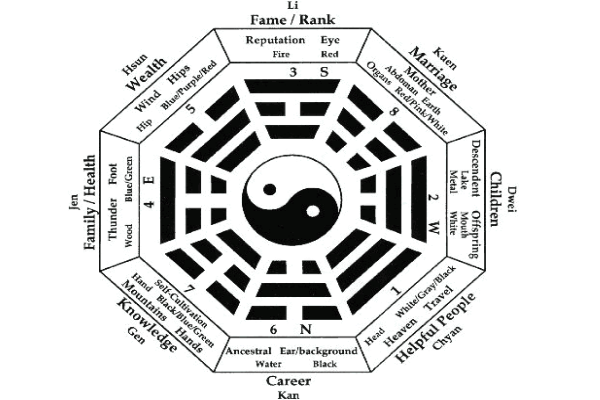
In the history of China, it is important to point out that one day, a master of cancer makes great fortune due to their star sign. ‘The top 3 most wealthy day masters in Chinese history’ is simply the phrase, which refers to those people who, as a part of their birth chart, are capable of earning or amassing much wealth. Such individuals help provide evidence that, in some circumstances, certain elements will allow very serious gains. All of this is usually recorded in history, where we learn that such people managed to change the currents of economies of either their regions or the entire country itself, while most importantly earning a place in the Chinese metaphysics as well.
Identification of the Day Master and Historical Background
In Chinese metaphysics, Day Master is the term used for the Heavenly Stem that sits in the Day Pillar of the Personal BaZi Chart. Day Master is considered to be at the core of an individual’s psyche, power, and talent. So every individual would have a different day Master as their birthday, and the time of birth is different to draw the BaZi Chart. Five elements — wood, fire, earth, metal, water — are in one of the forms, either yin or yang. The shaping of each element takes the form of an attitude or nature of a person, and the manner of responding to the other component within the charts as well.
Speaking of the top 3 wealthiest day masters in Chinese history, one would immediately think of the known names of the explicit yet dangerous figures. The records indicate that the continent has experienced two economic boom periods in 1898 and 1929. On this basis, there is strenuous discussion on whether economic expansion will be accompanied by a faster or slower share of inequality, accompanied by growth. The Inquisition, largely sparked by climate change, was built on similar grounds. Restoring each individual to his or her ‘natural place in the world’, a diverse breed of human that economic inequality in its current catastrophic form has already been creating.
When looking at day masters whose elements were in accordance with the prevailing cycles of nature, it has been noticed, among other things, that such individuals were mostly those who have enriched the lives of others. For example, one cannot ignore the fact that the majority of civil and military leaders in the Ming and Qing periods are viewed through the prism of their correlation with their Day Masters. Such studies advocate that cosmology plays an important role in determining the qualities and capabilities of a human being, and correspondingly, the premodern and contemporary understanding of a Day Master should be considered.
Analysis of Their BaZi Chart and Wealth Elements
It is needless to say that the Four Pillars of Destiny, that is, the BaZi chart, is a quite complicated system. It integrates the laws of the Five Elements (Water, Wood, Earth, Metal, and Fire), based on traditions, however, adjusted separately to the individual. The existing framework consists of Year, Month, Day, and Hour Pillars, each containing distinctive information. The most pertinent subject, The Day Master, is the Day Pillar or the Heavenly Stem of the Day. It helps in the analysis of the character and life course of a person.
When calculating the elements of wealth in the BaZi chart, often it is the elements that the Day Master overcomes that are seen as wealth. For instance, if Wood is the Day Master, Metal will be seen as wealth because the Wood element controls the Metal element. In BaZi, wealth can be equally identified as Direct Wealth (indicative of regular sources of income or physical investment) as well as Indirect Wealth (includes sporadic ‘lucky’ gains or risky ventures). Whether a person has the ability to make money, as well as how they will do it, is primarily determined by the abundance and distribution of the wealth ingredients in the chart.
Detailed investigation of the theory involves, among other things, examining which aspects of the chart are favourable and which are not. Most strong Day Masters will be able to control the wealth elements, which often leads to imbalance, so they prefer to avoid such situations, while weaker Day Masters need resources first, before dealing with wealth. The aspect of timing is another important consideration; one’s luck pillars show significant shifts of wealth opportunity in each stage of his/her life. With this information already in place, wealth can be understood much more readily and practically both in terms of opportunities and threats.
Key Achievements and Historical Significance
The phenomenon of the generation and distribution of wealth according to the Bazi theory can be traced back to the earliest periods of Chinese history. The lateral inclusion of Bazi techniques into wealth structuring analysis gives one a chance to discern certain possible dorsal financial aid, and this guides one’s actions, such as farming, trading, and resource usage, during the reigns of the dynasties. The advancement of the theoretical positions with reference to this concern is to be able to accurately determine when and where a person has financial enticements, taking into account the luck pillars on top of the elemental balancing, good for the individual. This activity has spanned generations and has branched out into this era since it also helps people and corporations shape their financial behaviors by appreciating the existence of the particular spices of such healthy behaviors specific to the wealth element. In this way, the practices of Bazi have persisted over the ages as forecasting and personal growth systems, proving once again that they are centuries-old yet useful and applicable to the present day.
2
🥈 Second Most Wealthy
The Second Wealthiest Day Master in Chinese History
Before the Yin Wood Day Master, there is in the ranking of the top 3 most wealthy day masters in Chinese history, the Earth Day Master. One explaining factor is the ability to handle the correct alignment of elements that helps to redistribute elements that govern wealth the most. The chart description of this master houses outstanding characteristics in terms of producing wealth, which can be seen in the compatibility with other charts nourished by the helping resource stars in their own chart. This explains that people of strong ability able to make money by any means are born with such an advantage. This enables them to identify such gifts and use them in making business decisions, hence growing their wealth and avoiding situations that could lead to losses, thereby making them among the influential wealth creators of all time.
Introduction to the Individual and Historical Context
Known as more of an economic and historical persona rather than an individual, the influence cannot be underestimated and placed in the vacuum of their plotting. They were born during fields of major economic and social changes, and they did not let these opportunities slip, managing to raise themselves in the ranks of more strategic actors within this given timeframe. Their judgement coupled with analytical thinking skills, was terse but creative and was honed further by an addled, rigid character to the extent that they never refused the economic drain but instead exploited it. Having fit their skills into the most successful system available at the time, they were able to fight for liquidity, yet arguably, they went even further and explained capitalism within broader historical terms of the economy, and even more so, business advancement.
Detailed Examination of BaZi Chart and Wealth Indicators
Analyzing an individual’s Bazi chart reveals many varied aspects about one’s ability to handle wealth and make money. This is done through the evaluation of the Day Master, the five elements of nature (wood, fire, Earth, Metal, and Water), and the wealth stars in the chart. An individual’s Day Master that is of strong character and has Resource elements is likely to be opportunistic smartly. However, when a Day Master is weak, and there are many Wealth stars, this can spell trouble – reaching wallets that do not belong to one.
Further understanding of individual wealth-generating patterns is highlighted by Key wealth indicators like Direct Wealth and Indirect Wealth stars — how ready is the subject to earn a stable income, as opposed to taking risks to increase returns. The relationship between these stars and the other elements in the chart, feeding on such behavioral tendencies, may help to understand how one is likely to perform within complex commercial settings. The integration of the positive elements and their forces is very strong, especially when the branches are either fighting or sending good vibes, which helps to uncover financial risks and gain opportunities within a particular time frame.
Finally, the Periods of Luck, figuratively speaking, take the last and also most significant part in establishing the duration of wealth and period lacks. If the structure of these pillars combines well with the structure of the natal chart, then it ensures better timeliness and appropriate assistance for wealth generation, which makes the necessity to evaluate life plans according to changing situations more important each time.
Contributions to Their Era and Legacy
Into that formulation, they were engaged because they were imaginative, different, forward-thinking, and very productive in their sciences. It was through pathbreaking research work coupled with creative behavior that they resolved the issues they faced in that era, bringing about practices or technologies that raised the bar and helped in more advancements thereafter. Their work is secured in the sense that their values have been accepted by almost everyone, across generations, and by workers who come later. And relentless discourse about them in history, and more recently, places them as change agents helping to surpass their era. Their most famous achievements do not only exist in books, but within every one of the practitioners, the so-called eternity, in the field.
3
🥉 Third Most Wealthy
The Third Wealthiest Day Master in Chinese History

The third most affluent figures from the capitalist class of Benchmasters are recognized not only as being a part of the top 3 most wealthy day masters in Chinese history, but also as being able to carry out economic activities in a way that proved quite effective considering their resources. The mastery and expertise in financial matters, as well as proper cognition of the market and investments of a long-term nature, helped in the remarkable wealth generation and steady economic advance. Several authors often refer to their original means of conducting trade, kinds of taxes, and financial systems that were invented in their respective ages. These inputs helped in ensuring the continuity of their historical existence since their presence in history could not have been ignored with respect to the time and after the time they lived.
Summary of Their Role in History and Societal Influence
The reason for their significance in societal structures, dating back many years, is that they have positioned themselves as creators and promoters of the economy. Take maritime trade, they organized beneficial routes in places and effects and made trade happen yet again, affecting the world markets. In their case, appropriate policies geared towards equitable taxation and circulation of money enabled them to not only grow their nations’ economies but also reduce strain on societies by solving such problems as the distribution of resources and the development of infrastructure. Then again, one brought about development in schooling, scientific research, and culture in general, leaving achievement in especially art patronage, which is enhanced to this date by the governance and policies of states.
Breakdown of BaZi Chart in Relation to Wealth
Based on Bazi, it can be said that the tides of fortune for an individual are assessed upon his/her Day Master and the components available in the chart, especially the presence or absence of Resource, Output, and Wealth stars to be specific. While considering this particular birth chart, it is clear that the considerable age of Direct Wealth signifies that accounts are organized and the income comes from constant sources. On the other hand, Indirect Wealth shows that there may be fewer, but then again, there may be some investments or earnings of money through enterprise, hence a more relaxed approach to wealth creation. The existence of such elements in the chart demonstrates to the practitioner an appreciation of both the positives and negatives that may arise and the need to create a proper strategy to avert the negatives and maximize the positives.
At a Glance: Top 3 Wealthiest Day Masters Compared
| Rank | Day Master Type | Key Wealth Trait | Dominant Wealth Type | Legacy Focus |
|---|---|---|---|---|
| 🥇 1st | Strong Day Master with aligned wealth elements | Controls wealth elements; full elemental harmony | Direct & Indirect Wealth | Regional & national economic transformation |
| 🥈 2nd | Earth Day Master with strong resource stars | Wealth redistribution; strong analytical instincts | Direct Wealth & Luck Pillar activation | Pathbreaking innovation; cross-generational impact |
| 🥉 3rd | Mixed Direct/Indirect Wealth configuration | Long-term market cognition; financial systems mastery | Balanced Direct & Indirect Wealth | Trade, taxation, culture, and infrastructure |
Conclusion
The top 3 wealthiest Day Masters in Chinese history stand as extraordinary proof that cosmic blueprints, when aligned with personal drive and historical timing, can produce wealth of transformative scale. Through the lens of BaZi — its Wealth elements, Luck Pillars, and Five Element dynamics — we gain not only an appreciation for these towering figures of the past, but a practical framework for understanding how destiny and deliberate action together shape the arc of financial greatness. The wisdom of the Four Pillars of Destiny is as relevant today as it was in the Tang Dynasty: balance, timing, and elemental harmony are the true cornerstones of lasting wealth.
Reference Sources
A Deep Analysis of Why the ‘Day Stem’ Is Used to Represent the Master in Four Pillars
This article delves into the philosophical and practical reasons for using the Day Stem as the Day Master in Bazi, linking it to Yin-Yang principles and historical developments in Chinese metaphysics.
A Bazi (Chinese Astrology) Primer
This primer introduces the concept of the Day Master as the “self” in a Bazi chart, detailing its relationship with other elements and its role in determining the flow of the chart.
Frequently Asked Questions (FAQs)
Which people were marked as the top 3 wealthiest day masters in Chinese history?”
It is surprising how the phrase “the top 3 most wealthy day masters” is thrown around, but in the case of Chinese history, it is used to refer to those rulers or wealthy individuals- either from the Han dynasty, Tang dynasty, Song dynasty, or Ming dynasty- who had amassed incredible wealth. It includes those emperors, especially emperors; merchant families that managed to control ocean trade or, rarely, land-based trade-the Silk Road; lastly, officials who were responsible for controlling the finances in the imperial court and palace respectively. When lists are drawn up, it will not be surprising to find well-known rulers such as Liu Bang who founded the Western Han dynasty as regards to the wealth held within the state; the merchant princes of the Song dynasty based in Kaifeng and Hangzhou who enjoyed the free trading of goods across borders; and the last, but not least, in time, the Qing emperors that carried out the revolutions and territories that all nations believe in.
In what ways did the Han dynasty become the richest?
The Chinese imperial history almost rendered the formation of a central government that supported trade and agriculture into an unavoidable development, and indeed the Han dynasties (the western and eastern ones) were no exception. The first emperors and the upper class of organization were the real proponents of a policy of concentration of economic riches, whereas personalities like that of Liu Bang and very esteemed people became rich and pleased because of extensive lands, sub métier effective taxation, and sales of goods. There were great public works like the building of the great canals, which made transportation easier in domestic trade, and in later eras, the system of such civil servants was trained and therefore elite-enhancing.
How did the Tang dynasty and Chang’an contribute to the emergence of an oligarchy of rich elites?
During the reign of the Tang emperors, the capital of Chang’an was a center of trade along the Silk Road, and the empire benefited greatly from this trade economically. Lands, control over trade routes, and tax farming allowed the imperial family, prominent families, aristocrats, and their foreign counterparts to make considerable amounts of money. Unique urban culture, active foreign markets, and high-quality Tang ceramics made wealth accumulation possible for some privileged classes either modestly or as emperors.
Would these emperors of the Tang dynasty make it to the top 3 most wealthy day masters in Chinese history?
Yes, because as the emperor of the Tang dynasty, the state and land, along with civilizations, were all in control of one man. The emperor was, in fact, the richest among the rulers of the entire Chinese institutionalized system, since he controlled the personal palace, the pre-Forbidden City, and the income of the state, which stretched along the domestic and international trade routes directly to the Silk Road.
What roles did the Qing dynasty play in determining the pool of elite beneficiaries?
The Manchu government established monopolies over significant reserves, while the government centralized under the Qing dynasty, which was the final imperial regime of China. Riches flowed into the pockets of the Manchu nobles, and their Chinese allies, as well as regional administrators. Emperors Kangxi and his successors administered a predominantly agricultural sector as well as agricultural districts, where there was a shift in sea trade with regard to foreign countries, apart from land, revenue generation, and entry to the imperial court, which were the main areas for getting massively rich.
Do you think participation in maritime affairs during the era of the Ming dynasty particularly benefited its businessmen?
Throughout the age of Ming, the practice of marine trade, more so at the onset of the Ming period, as well as later by private foreign trade, enabled many traders to become rich with goods such as porcelain and silk. Despite the provision of the grand canal, where local supplies were maintained, expanding marine commerce and contacts with foreign traders pushed some merchant clans into opulence that was comparable to the gentry or even some members of the government.