


BaZi and Western astrology are not in competition; rather, they are two entirely different analytical systems that are reading the same set of birth data through different lenses. Western astrology compares planetary positions to zodiac signs in order to see basic psychological archetypes. BaZi takes birth time into elemental codes to show the structural pattern and timing of life phases.
Sarah’s astrologer and BaZi consultant gave her two entirely different readings. Her astrologer told her she was an extremely sensitive, intuitive Pisces, with a Scorpio Moon. The consultant said she was a powerful Gui Day Master, with Grand Resource and Output Stars. They were both right. They just answered different questions.
This is usually the worst thing about comparison articles: they paint the differences without showing you any reason to base your decision on one or the other system. Our guide will help with this.
You will find the seven principal differences between these systems, how each of them calculates your chart, and exactly which one answers which questions. Even more importantly you will learn how to use them together.
If you want to follow along with your own data, generate your free BaZi chart now.
Key Takeaways
- Western astrology uses planetary positions as a source of psychological insight, and BaZi uses elemental calendar codes for strategic structuring and time analysis.
- Transits of the collective sky contribute to Western techniques of timing, while 10-year cycles of Luck Pillars in BaZi–unique to one’s chart–work as time-to-go signals.
- Sun Sign denotes one of twelve potential options, while Day Master pertains to one combination among sixty possible stem-branch combinations in the Day Pillar.
- The birth year animal only generates one of the eight characters in a full BaZi chart; it is by no means the whole picture.
- For relationships and personal perspectives, Western astrology is practical; for career and money timing, decision-making matters, it is advisable to use BaZi.
- The whole comprehensive picture is to use both tools differentially, aligning each to do what they do best.
The Core Difference in One Sentence

Here’s the easiest way to go about it.
Western astrology: This goes over your birth moment by referencing where the Sun, Moon, and planets were at the 12 zodiac signs on its chart. It looks above at the sky.
Bazi: This goes over your life moment as it starts with converting your year, month, day, and hour of birth into eight characters using the Chinese calendar, then goes on and looks at the elemental “weather” of that moment.
Here is another comparison. Astrology is like a photograph of the sky, but BaZi is like a report of the weather at that moment, as both describe conditions; they just use different data.
For a complete foundation on what these eight characters represent, see our complete (guide to Four Pillars of Destiny).
Difference 1: What Each System Measures
Western Astrology has excelled in psychological and archetypal studies. Even the position of Venus can indicate one’s style of loving based on emotional patterns, relationship dynamics, and personal myths. Surely, the position of the Moon can also point to the kind of emotional need the natives have. Saturn does the same in life lessons that it preliminarily grants.
BaZi is, on the other hand, distinguished by its structural and strategic analysis. It deals with the balance of the elements, the timing of life periods, and the guidelines for evaluating choices. The Five Elements show the distribution of forces within oneself, and The Ten Gods show your relationship to wealth, authority, creativity, and support. The Luck Pillars show when each of these themes is activated.
| Question Type | Western Astrology | BaZi |
|---|---|---|
| Why do I feel this way? | Excellent | Limited |
| How do I relate to others? | Excellent | Good |
| When should I change careers? | Moderate | Excellent |
| What element do I need? | Not applicable | Excellent |
| What is my life phase timing? | Moderate | Excellent |
| What archetype am I living? | Excellent | Moderate |
Leo Sun Marcus has fiery Yang, Bing, Day Master, while according to Western astrology was meant for Royal performances and formed in a guise of fire needing visibility and expression. His BaZi forms two different pictures, saying with strong Yang Fire there is a preference of Water to balance the person. Leadership became a huge area of discussion and farther questioning; one viewed it as a psychological need, while the other viewed it as an elemental force requiring management.
Difference 2: How Charts Are Calculated
All this talk about calculation methods gives us a perfect idea of how their working determines the different results.
Western astrology just works with three inputs: date, time, and place of birth. The place of birth matters because it is all about a rising sign, determined by the sign that rises on the eastern horizon at the time of one’s birth. The rising sign changes about every 4 minutes or so, meaning two people born 10 minutes apart in the same hospital may well have a very different rising sign and house stuctures.
BaZi, on the other hand, requires date as well as good-time data but applies this differently because it is not private like Western astrology. BaZi has given us the sexagenary calendar whose year branch determines the Earthly Branch. Location is needed in order to make any proper corrections for true solar time in what are known as the Four Pillars of Destiny, the monthly branches calculated by referring to the sexagenary calendar and not the sky.
This creates a key distinction. Western astrologers can use different house systems, producing different charts from the same birth data. BaZi calculation is deterministic. The Heavenly Stems and Earthly Branches are fixed by the calendar. The math is identical for every practitioner.
For a structured comparison of how these calculation differences affect readings, XuanSeal’s analysis offers useful technical context.
Difference 3: Core Identity Marker

Western astrology identifies you primarily through your Sun Sign. This is the sign the Sun occupied on your birthday. It is one of 12 options. Your full chart adds Moon sign, Rising sign, and planetary placements across 12 houses.
BaZi identifies you through your Day Master. This is the Heavenly Stem of your Day Pillar. It is one of 10 stems combined with one of 12 branches, producing far more individualized combinations than Sun Signs alone.
The Day Master is not just a label. It is the analytical center of your entire chart. Every other element is read relative to it. Resource stars support it. Wealth stars are controlled by it. Officer stars regulate it. Output stars express it.
To understand why this matters, read our complete Day Master guide. Your Day Master reveals your core elemental nature in a way that goes far beyond zodiac sign generalizations.
Difference 4: Timing and Prediction
This is where the systems diverge most dramatically.
Western astrology uses transits and progressions. Using the language of the astronomical zodiac, a transit denotes where a planet currently is in relation or proximity to a natal chart. The Saturn return is the profoundest of the collective integrations ever. The Saturn period is formed at the completion of the 29-year orbit of Saturn around the Sun. Transits of Jupiter come for the same lotteries for division just about every time. Sky-based, these are very much discussed in the collective.
In the study of Ji, Luck Pillars are used; in other words, instead of years, there are ten-year elemental cycles defined by performers. They begin at some particular age-and age depends on how old you are when you are born, and gender. Depending on one’s chart, one might have the Luck Pillar at age 4 or age 9. Talk about how much it is a sure spectacle to oneself, as no one else follows the Timeline of his Lucky Pillar, by all means, down to minute detail.
Of Infinitea, the intra-working is on occasion for determining the best moment in long-term planning. Western transits serve to lend an understanding of general themes and emotional weather on a timescale of limited length.
Priya skillfully handled both systems. When Jupiter entered her Sun Sign, an astrologer told her that she had one year of expansion and optimism. She felt that emotionally. But her BaZi consultant told her that she was entering a Resource Luck Pillar-now was a time to invest in learning and credentials, rather than immediate income. So she did not quit but enrolled in a certification program. After 18 months, 60% higher pay was offered to her for that role with the credential. Western astrology revealed themes to Priya, while BaZi provided strategies.
For a deeper look at how BaZi timing works, see our Luck Pillars guide.
Difference 5: The Chinese Zodiac Is Not BaZi
This confusion causes more misunderstanding than almost any other topic in Chinese metaphysics.
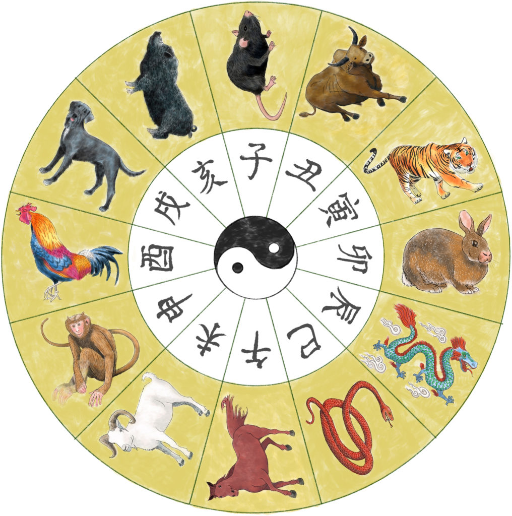
Your Chinese Zodiac animal is your Year Branch. It is one character out of eight. It represents only your year of birth, a broad social and generational influence.
Full BaZi uses all Four Pillars: Year, Month, Day, and Hour. The Day Pillar is the most personal. The Month Pillar shapes career and family structure. The Hour Pillar reveals ambitions and legacy.
Reading someone as “just a Dragon” or “just a Rat” is like reading a Western astrologer as “just a Leo.” It captures a sliver of information and misses the entire structure.
If you have only ever read your Chinese Zodiac animal, you have not experienced BaZi. You have experienced one-eighth of it.
Which System Should You Use? A Decision Framework
The question is not which system is better. The question is which system answers your question.
Use Western Astrology When You Want:
- Psychological self-understanding
- Emotional pattern recognition
- Relationship compatibility analysis
- Archetypal life narrative
- Short-term collective timing
Use BaZi When You Want:
- Career direction and strategy
- Wealth timing and financial planning
- Elemental health and constitution analysis
- Long-range life phase planning
- Structural strength assessment
Use Both When You Want:
- The most complete self-portrait possible
- Emotional insight combined with strategic timing
- Archetypal understanding combined with elemental balance
- Short-term emotional weather combined with long-range structural cycles
| Your Goal | Best System | Why |
|---|---|---|
| Understand my personality deeply | Western astrology | Archetypal language is richer for psychology |
| Know when to change jobs | BaZi | Luck Pillars pinpoint career windows |
| Improve my relationship | Both | Synastry + element compatibility |
| Plan my finances | BaZi | Wealth stars and Luck Pillar timing |
| Find my life purpose | Western astrology | Nodal analysis and house placement |
| Build a business | BaZi | Officer and Wealth star analysis |
Many modern practitioners, as The OriCode discusses, now use both systems complementarily. Western astrology provides the “why” of your inner world. BaZi provides the “when” and “how” of your outer strategy.
Nova Masters Consulting’s accuracy analysis also notes that BaZi tends to offer more precise structural readings, while Western astrology offers more nuanced psychological portraits. Neither is universally “more accurate.” Each is more accurate for its domain.
Frequently Asked Questions
Is BaZi the same as astrology?
BaZi is astrology; they are different systems that apply different metaphysical traditions, so no. In Eurasia, BaZi analyses the elemental codes against the ticking of the calendar rise in astronomical signs. Western astrology, rather, examines positions of planets in light of the zodiac signs. Their data are thus complicated (projections of total energy). Their diverging calendar/record points give rise to the many divergent calculations and in all, many different kinds of insight.
Which form of analysis do you feel is more reliable: BaZi or Western astrology?
Thankfully, there never occurs a pronounced black or white; that’s if we turn our search around for it. Western astrology can debit for emotional and psychological insight better than any other side coming between them. BaZi Chart, on the other hand, beats them to the structural/domain analytical, timing and strategic decision-making aspect.vbrush up
Can you use BaZi and Western astrology together?
Yes. Numerous practitioners will use both systems in tandem. Western astrology will grant us psychological depth and archetypal understanding, whereas BaZi will help narrow in on systematic life-phase analysis and exact timing. Together, they give a greater composite picture compared to any one system alone.
Is BaZi Scientific?
BaZi is neither scientific in the empirical confirmation sense. It is a structured, deterministic calculation system based on Chinese metaphysics. Its usefulness lies in pattern recognition and the strategic frameworks, not in laboratory measurements.
What does BaZi tell you that astrology doesn’t?
BaZi works out your elemental balance, what’s fundamentally rigorous, and the 10-year phase of life uniquely personalized for you. One gets an indication of which elements give support to you and which act as impediments, with detailed timing for when each theme comes into play respectively.
How does Chinese Zodiac differ from BaZi?
In Chinese Zodiac, only one’s animal of birth year is considered whereas BaZi uses exact year of birth, month, day, and hour to determine the details of four pillars and eight characters. The Zodiac animal is simply one of those eight characters.
Which is better for career guidance?
BaZi is generally deemed superior for career guidance, as wealth stars, officer stars, and luck pillars are directly related to professional timing and strategy. Western astrology can pick out career themes from house placements and Midheaven readings but has less precision in timing factors against a BaZi chart.
Did industry professionals inform me of my birth time Variation in BaZi?
Yes, for a fullful reading. The Hour Pillar is the Quaternity Pillar. It focuses on ambitions, children, and later life comings. Even if you do not have your birth time, three Pillars are considered substantial reading, though incomplete.
Conclusion
BaZi vs Western astrology is the wrong framing. The right framing is: what are you trying to know?
Western astrology offers extraordinary depth when it comes to learning about the inner world, the patterns of fiat emotional states, or relational dynamics. BaZi, on the other hand, lends itself to precise timing when dealing with career possibilities, gaining insight into one’s elemental constitution, and reading the structural strengths.
The most sophisticated approach is not choosing one. It is using each for what it does best.
Start with your free BaZi chart. Identify your Day Master. See your element balance. Read your current Luck Pillar. Then compare that structural blueprint to your Western natal chart. You may find, like Sarah, that both systems were right all along. They were just speaking different languages about the same person.
Your blueprint already exists in both systems. You just need to read it.