
An excessive element in your BaZi chart is an element so overrepresented that it disrupts the chart’s natural equilibrium relative to your Day Master. It can create behavioral blind spots, career friction, and recurring life patterns that feel impossible to escape.
Most BaZi guides warn you about what’s missing. They tell you to hunt for gaps, patch deficiencies, and chase balance. But what if the real problem isn’t what’s absent — it’s what’s overflowing?
An excessive element doesn’t whisper. It shouts. It shapes your temper, your career crashes, your health patterns, and your relationship conflicts.
The good news: once you learn to read element excess, you stop fighting yourself and start channeling the overflow. This guide shows you exactly how.
If you haven’t yet, generate your free BaZi chart now so you can follow along and count your own elements. To see how all five forces work together in your chart, see our (five elements balance bazi guide).
Key Takeaways
- An excessive element is different from a dominant one: dominance is about frequency, while excess is about functional imbalance relative to your Day Master.
- Too much Wood creates rigidity; too much Fire creates burnout; too much Earth creates stagnation; too much Metal creates harshness; too much Water creates indecision.
- Some charts are “special structures” (Dominant Pattern or Follower Pattern) where excess is actually the correct state and should not be corrected.
- Luck Pillars can temporarily amplify or relieve element excess across 10-year cycles.
- Management is behavioral, not mystical: career alignment, daily routines, and social connections can redirect overflow into productive channels.
What Is an Excessive Element in BaZi?
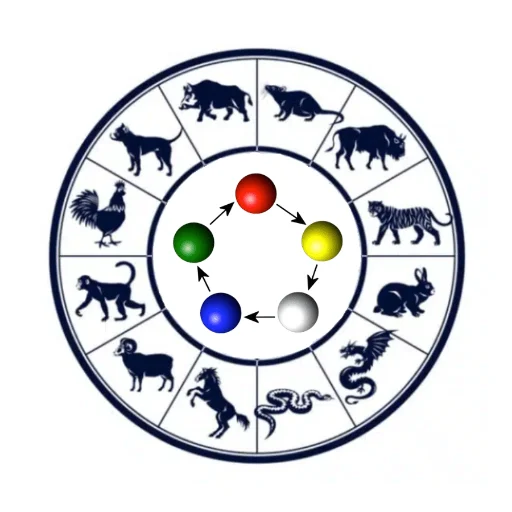
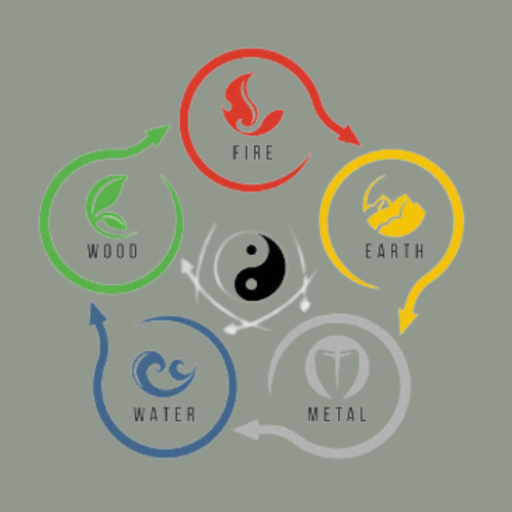
Your BaZi chart contains eight visible characters: four Heavenly Stems and four Earthly Branches. Each character maps to one of the Five Elements — Wood, Fire, Earth, Metal, or Water. Together with the hidden stems inside each branch, your chart holds up to 16 elemental references.
An excessive element is one that occupies roughly 30% or more of those references and, critically, overwhelms your Day Master or disrupts the Control Cycle.
Understanding excessive element bazi patterns starts with your Five Elements balance. This is not the same as having a dominant element. Dominance is a counting concept: which element shows up most often. Excess is a functional concept: which element creates measurable friction in your life.
For example, someone might have Wood as their dominant element (four of sixteen references) but still operate in balance because Wood feeds their Fire Day Master productively. Another person might have only three Fire references, but if Fire controls their Metal Day Master destructively and no Water appears to regulate it, Fire is excessive despite a lower count.
How to Measure Excess
Here is a practical diagnostic framework:
- Count all visible stems and branches mapped to each element.
- Add hidden stems from inside each Earthly Branch.
- Apply a seasonal boost: if the element matches your birth month, increase its effective count by roughly 30%.
- Check the element’s relationship to your Day Master. Does it drain, control, or overwhelm?
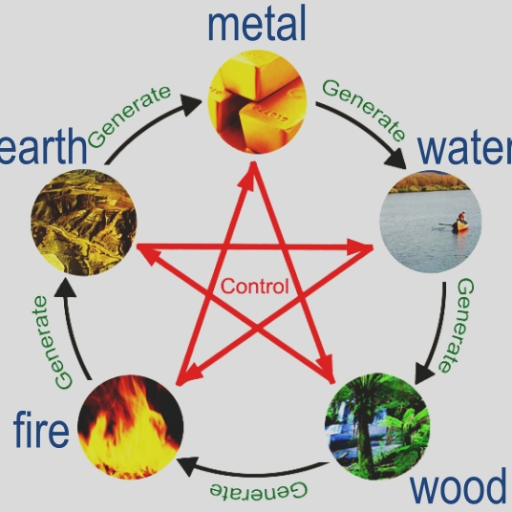
- Look for absence of the element that should regulate it through the Control Cycle (Ke).
If one element scores 4+ references, receives seasonal support, and lacks its natural controller, you are likely looking at excess.
Excessive Element vs Dominant Element: Know the Difference
This distinction matters more than most beginners realize. Confusing excess with dominance — or with a weak element — leads to misguided “fixes” that can actually worsen your chart’s function.
| Aspect | Dominant Element | Excessive Element |
|---|---|---|
| Definition | Most frequent element by raw count | Functionally overabundant relative to Day Master |
| Impact | Shapes personality and default tendencies | Creates friction, blind spots, and recurring problems |
| Day Master | May or may not conflict | Often controls, drains, or overwhelms Day Master |
| Management | Usually use, sometimes balance | Usually redirect or drain the overflow |
| Special Structure | Can exist in any chart type | May indicate Dominant Pattern (专旺格) or Follower Pattern (从格) |
Think of dominance as volume. Think of excess as distortion.
A dominant element that works with your Day Master is an asset. An excessive element that works against your Day Master is a liability — unless your chart is one of the rare special structures where that liability is actually the foundation of your strength.
For a step-by-step method to identify your chart’s strongest force, read our (complete guide to dominant element in BaZi).
What Too Much of Each Element Looks Like
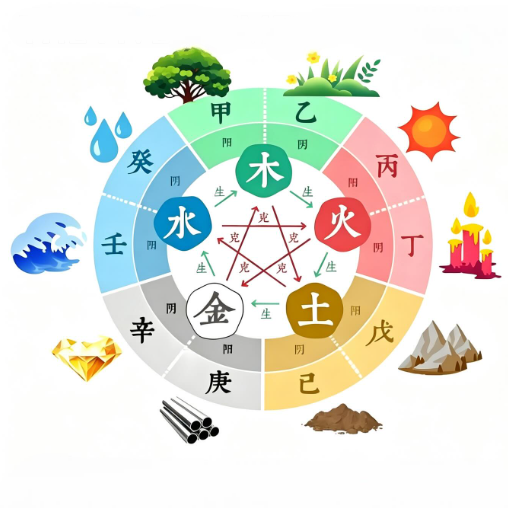
Every element has a balanced expression, a deficient expression, and an excessive expression. Most guides describe deficiency. Here is what a bazi element imbalance looks like when each of the five elements overflows.
Too Much Wood (木旺)
Wood represents growth, vision, and forward momentum. In balance, it fuels ambition and strategic planning. In excess, it becomes rigid and controlling.
Personality patterns: Impatient, forceful, stubborn vision, difficulty receiving feedback, overplanning.
Behavioral signs: Can’t pivot when plans fail. Pushes projects forward long after data says stop. Ignores team input because “the vision is clear.”
Career impact: Clashes with authority. Startup burnout from unsustainable growth pushes. Refuses to delegate.
Health correlations: In traditional Chinese medicine (TCM), Wood governs the Liver and Gallbladder. Excessive Wood often correlates with Liver Qi stagnation, eye strain, and tendon tension.
Management strategy: Add Metal structure — deadlines, clear boundaries, and decision frameworks. Reduce Fire stimulation that feeds Wood’s intensity.
Too Much Fire (火旺)
Fire is expression, visibility, and passion. In balance, it inspires and leads. In excess, it burns through resources and relationships.
Lisa changed jobs three times in two years. Her BaZi chart showed why: 60% Fire, born in summer, with a Luck Pillar pouring on more. Every role started with brilliant enthusiasm. Every role ended when the burnout hit and her team couldn’t keep up with her chaotic pace.
Personality patterns: Dramatic, impulsive, attention-seeking, emotionally volatile, reactive.
Behavioral signs: Starts strong, finishes rarely. Overcommits to projects. Creates conflict through emotional intensity.
Career impact: Chaotic project management. Reputation risk from public outbursts. Team friction from unpredictable energy.
Health correlations: Fire governs the Heart and Small Intestine. Excessive Fire often shows up as insomnia, anxiety, circulation issues, and burnout syndromes.
Management strategy: Add Water reflection — cool-down routines, journaling, evening wind-down protocols. Reduce Wood fuel that feeds Fire’s intensity.
Too Much Earth (土旺)
Earth is stability, nurturing, and grounding. In balance, it anchors teams and builds reliable systems. In excess, it resists change and hoards resources.
Personality patterns: Stubborn, resistant to change, overprotective, stagnant thinking, risk-averse.
Behavioral signs: Analysis paralysis on every decision. Hoards information and resources. Rejects new ideas that threaten existing structures.
Career impact: Misses market shifts. Slow to adapt to new tools or methods. Micromanages because “this is how we’ve always done it.”
Health correlations: Earth governs the Spleen and Stomach. Excessive Earth often correlates with digestive sluggishness, weight stagnation, and what TCM calls “dampness.”
Management strategy: Add Wood movement — new projects, travel, exposure to different perspectives. Reduce Fire overthinking that keeps Earth stuck in analysis mode.
Too Much Metal (金旺)
Metal is structure, precision, and discipline. In balance, it brings clarity and principled decision-making. In excess, it becomes cold and inflexible.
Marcus was a software architect with dominant Metal. His code was flawless. His documentation was exhaustive.
But his team turnover was 40% higher than company average because his feedback was brutally precise and never softened. He added weekly team celebrations and forced himself to frame criticism as questions. Retention improved within two quarters.
Personality patterns: Harsh, critical, inflexible, perfectionistic, emotionally distant.
Behavioral signs: Micromanages every detail. Burns relationships with blunt honesty. Can’t relax standards even when they hurt outcomes.
Career impact: Team morale issues. Missed collaboration opportunities. Rigidity that blocks innovation.
Health correlations: Metal governs the Lungs and Large Intestine. Excessive Metal often correlates with respiratory sensitivity, skin dryness, and immune reactivity.
Management strategy: Add Fire warmth — social connection, celebration, emotional expression. Reduce Earth accumulation that feeds Metal’s density.
Too Much Water (水旺)
Water is wisdom, adaptability, and depth. In balance, it enables strategic insight and emotional flow. In excess, it floods decision-making and avoids commitment.
Personality patterns: Indecisive, evasive, emotionally flooded, overanalytical, detached.
Behavioral signs: Spirals on hypothetical possibilities. Avoids concrete commitments. Intellectualizes feelings instead of experiencing them.
Career impact: Missed deadlines from overthinking. Unclear communication that confuses stakeholders. Avoidance of hard conversations.
Health correlations: Water governs the Kidneys and Bladder. Excessive Water often shows up as adrenal fatigue, cold constitution, and urinary system sensitivity.
Management strategy: Add Earth anchoring — concrete daily routines, measurable goals, fixed deadlines. Reduce Metal overanalysis that keeps Water circulating without landing.
If you want a deeper breakdown of what each element stands for on its own, our guide on the (wood fire earth metal water meaning) walks through every element in detail.
When Element Excess Is Actually Beneficial
Here is the counterintuitive truth: not all excess needs correction. Some charts are built around excess.
The Dominant Pattern (专旺格)
In classical BaZi texts like the San Ming Tong Hui, the Dominant Pattern describes a chart where one element is so overwhelmingly present — roughly 70% or more of all references — that the Day Master essentially becomes an expression of that element.
These charts are rare, appearing in approximately 5-10% of all BaZi cases. In these structures, “balance” would actually break the chart. The excess IS the system.
Someone with a Dominant Fire pattern, for example, should not try to “add Water” or “reduce Fire.” Their strength comes from channeling that Fire into visible, expressive, leadership-oriented roles. Attempting to balance them creates internal conflict and diminished performance.
The Follower Pattern (从格)
The Follower Pattern occurs when the Day Master is so weak and so unsupported that it effectively surrenders to the dominant force in the chart. Rather than fighting the excess, the Day Master aligns with it.
Fighting this structure — trying to strengthen the Day Master against the overwhelming tide — creates exhaustion and failure. Success comes from reading the dominant energy and flowing with it.
How to Suspect Your Chart Is a Special Structure
Use this checklist:
- Is one element 70% or more of your chart?
- Is your Day Master unsupported by any Resource or Companion elements?
- Does the Control Cycle appear broken (no regulating element present)?
- Have you tried “balancing” this element before and felt worse, not better?
If you answer yes to three or more, consider consulting an advanced practitioner. Special structures require precise diagnosis, and self-management can backfire.
How Luck Pillars Amplify (or Resolve) Element Excess
Your natal chart is fixed. But your life cycles are not. Luck Pillars — the 10-year Da Yun cycles — layer temporary elemental energy over your permanent chart.
This means an element that is merely dominant in your natal chart can become genuinely excessive during a Luck Pillar that doubles down on it. Conversely, an excessive element in your natal chart can find relief when a Luck Pillar brings its natural controller.
When Da Yun Makes It Worse
Imagine someone with already-high Fire entering a Fire Luck Pillar. The natal excess becomes a 10-year amplification. This is when patterns that were manageable become destructive.
Recognizing this cycle ahead of time allows you to prepare: reduce commitments, build recovery routines, and avoid major launches during the peak years.
When Da Yun Brings Relief
The same person with excessive Fire might enter a Water Luck Pillar. Water naturally controls Fire through the Control Cycle.
Suddenly, the temper cools. Sleep improves. Decisions become less reactive. These windows are ideal for major initiatives that require steadiness rather than flash.
Annual Pillar Micro-Adjustments
Yearly cycles operate as temporary amplifiers or dampeners. An Earth year might briefly worsen Water excess by blocking its flow. A Metal year might relieve Earth excess by drawing energy away from it.
You can’t control these cycles. But you can anticipate them and adjust your behavior accordingly.
Practical Ways to Manage Element Excess
Here is where most guides fail. They offer crystals, colors, and vague Feng Shui tips. What follows is a behavioral framework — practical element remedies and actions you can take today.
For a comprehensive list of practical remedies, see our (BaZi element remedies guide).
Career and Work Environment
Work with the element’s positive side while managing the overflow:
| Excessive Element | Leverage | Manage By |
|---|---|---|
| Wood | Vision, growth, initiative | Adding structure, deadlines, feedback loops |
| Fire | Charisma, creativity, visibility | Adding reflection, cool-down time, measured commitments |
| Earth | Reliability, systems, patience | Adding variety, travel, exposure to new methods |
| Metal | Precision, clarity, standards | Adding warmth, celebration, collaborative framing |
| Water | Strategy, adaptability, depth | Adding routines, concrete goals, fixed deadlines |
Daily Routines and Behavior
Your morning and evening routines can drain or redirect excess energy.
Someone with excessive Fire might need an evening “cool-down” protocol: no screens after 9 p.m., a brief journaling session, and a breathing exercise before sleep.
Someone with excessive Water might need a morning “landing” protocol: write three concrete tasks, set a timer for each, and commit to completing one before checking email.
Social and Relationship Strategies
Surround yourself with people strong in your regulating element.
Excessive Wood benefits from Metal-dominant friends who bring structure and deadlines. Excessive Metal benefits from Fire-dominant friends who bring warmth and spontaneity. These aren’t mystical pairings — they are complementary behavioral tendencies that create natural checks and balances.
When NOT to Manage Excess
If your chart is a Dominant Pattern or Follower structure, the strategies above do not apply. In these rare cases, management means channeling the excess, not correcting it.
The counterintuitive truth: sometimes the overflow is the point.
FAQ: Element Excess Questions Answered
What happens if you have too much of one element in BaZi?
An overabundant element creates behavioral blind spots, career friction, and recurring life patterns. In an excessive element bazi chart, this overflow overwhelms your Day Master or breaks the Control Cycle, leading to distorted expressions of that element’s traits.
Is it bad to have an excessive element?
Not necessarily. Excess creates friction, but friction can be managed. In rare special structures (Dominant Pattern or Follower Pattern), excess is actually the foundation of strength and should not be corrected.
How is excess different from dominance?
Dominance is about raw count: which element appears most frequently. Excess is about functional impact: which element disrupts your chart’s equilibrium relative to your Day Master.
Can excessive elements be beneficial?
Yes, in special structures where one element is so dominant it becomes the chart’s entire identity. These cases require advanced diagnosis rather than self-managed balancing.
What health issues correlate with element excess?
TCM correlations suggest: excessive Wood with Liver tension, excessive Fire with anxiety and insomnia, excessive Earth with digestive sluggishness, excessive Metal with respiratory sensitivity, and excessive Water with adrenal fatigue. These are traditional frameworks, not medical diagnoses.
Do Luck Pillars make excessive elements worse?
They can. A 10-year Luck Pillar that brings more of your excessive element can amplify its negative effects. Conversely, a Luck Pillar bringing your regulating element can provide natural relief.
How do I balance an overabundant element?
Through behavioral adjustments, not mystical fixes. Align your career with the element’s positive side. Build daily routines that drain excess energy. Partner with people strong in your regulating element. Use the Control Cycle as a practical framework.
What is a Dominant Pattern in BaZi?
The Dominant Pattern (专旺格) is a special structure where one element occupies roughly 70% or more of the chart. In these rare cases, the excess is the correct state and balancing it would weaken the chart’s function.
Conclusion
Element excess is a signal, not a sentence.
Your BaZi chart maps the forces that shape your tendencies. It does not lock you into outcomes. When you understand which elements overflow in your chart — and whether that excessive element bazi pattern is a problem or a special structure — you gain the ability to redirect energy instead of fighting it.
The key diagnostic principle is simple: check if the element is truly excessive relative to your Day Master, not merely dominant by count.
If you’re ready to see your own elemental blueprint, generate your free BaZi chart now. Count your elements. Identify your Day Master. Learn how to read your BaZi chart step by step. And ask yourself: is any element shouting while the others whisper?
Your chart maps the forces. You decide how to navigate them.