
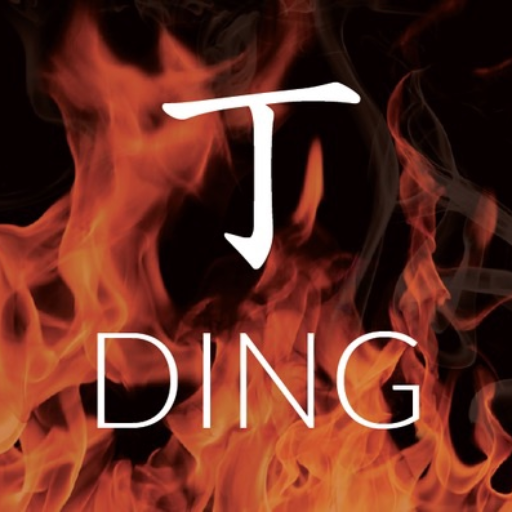
A yin fire personality, known as Ding Fire (丁) in BaZi, is characterized by focused warmth, emotional depth, and quiet charisma. Unlike the blazing outward energy of Yang Fire, Yin Fire operates like a candle flame: intimate, precise, and deeply influential in one-on-one settings.
But here’s what most people get wrong about the yin fire personality.
It is not weaker than Yang Fire. It is not less capable. It is simply a different system of power, one that rewards focus over volume, and depth over reach. The sun lights up a city. A candle can change a single room forever.
If you have ever felt like your quiet nature was misunderstood as passivity, or your emotional sensitivity treated as a liability, this guide will reframe what you see. Your yin fire day master is not a limitation. It is a specific operating system with distinct strengths, predictable challenges, and clear optimization strategies.
In the next ten minutes, you will learn exactly how Ding Fire shapes your decision patterns, your relationships, your career trajectory, and what you can do to align your life with how you are actually built.
Not sure if you are a Yin Fire Day Master? Generate your BaZi chart now to confirm your Day Master and see your full Four Pillars breakdown.
Key Takeaways
- A yin fire personality operates like a candle flame, focused, warm, and precise, rather than like the sun, which disperses energy broadly.
- Strong Ding Fire expresses as confident leadership through influence; Weak Ding Fire shows up as self-doubt and emotional fragility without support.
- Yin Fire excels in roles requiring emotional intelligence, precision, and one-to-one depth, modern examples include UX research, therapy, financial planning, and strategic communications.
- Wood elements fuel Yin Fire (encouragement and learning), while excessive Water or Earth can destabilize or smother it.
- The most common mistake Yin Fire people make is overextending in caregiving roles until burnout, your flame needs protection, not just fuel.
What Is Yin Fire (Ding Fire) in BaZi?
In the BaZi system, your Day Master is the Heavenly Stem of your birth day. It functions as your core identity, the baseline pattern that everything else in your chart revolves around.
Ding Fire (丁火) is the Yin expression of the Fire element. Where Bing Fire (Yang Fire) blazes like the midday sun, visible, expansive, and impossible to ignore, Ding Fire behaves like candlelight, a lamp, or embers. It does not dominate space. It draws people in. For a broader look at how each element shapes personality, see our guide to (Five Elements personality in BaZi).
This distinction matters because most BaZi beginners assume Fire is Fire. They are not. The yin fire vs yang fire comparison reveals two entirely different behavioral architectures, and understanding the yin fire personality separately from its Yang counterpart is essential for accurate chart reading.
| Dimension | Bing Fire (Yang Fire) | Ding Fire (Yin Fire) |
|---|---|---|
| Symbol | The Sun | Candle Flame |
| Social style | Broad, public, magnetic | Selective, intimate, warm |
| Communication | Direct, loud, unfiltered | Nuanced, diplomatic, precise |
| Energy pattern | Expansive and outward | Concentrated and inward |
| Need | Visibility and recognition | Protection and fuel |
| Risk | Burnout from overexposure | Extinguishment from neglect |
Understanding whether you are Yin or Yang Fire is the first step in reading your chart accurately.
The rest of your Ten Gods framework, your Wealth, Power, Resource, and Output stars, are all interpreted relative to this Day Master. Misidentify your core element, and you misread your entire chart.
The Yin Fire Personality: Core Traits
The Candle Flame Archetype
The yin fire personality is best understood through its central metaphor. A candle does not compete with the sun. It does not try to light up a stadium. It does one thing exceptionally well: it creates a zone of warmth and visibility for the people close to it.
This is the Ding Fire operating system. You focus on specific people, specific problems, and specific outcomes. You are not scattered. You are not performative. You are precise.
Mei had worked in enterprise sales for four years when she realized something was fundamentally misaligned. She was hitting her numbers, but the work was draining her in ways her colleagues did not seem to experience. Large client dinners left her exhausted for days. Aggressive negotiating felt like acting. When she discovered her Day Master was Ding Fire, the pattern became obvious: she was built for depth, not volume. One genuine relationship with a client produced better long-term results than ten shallow contacts. She shifted to account strategy and saw her performance, and her energy, improve within months.
Strengths That Define Ding Fire
People with a yin fire personality consistently show several core strengths. These are not vague spiritual qualities. They are observable behavioral patterns.
Emotional precision. You read people accurately. You notice shifts in tone, posture, and energy that others miss. This makes you an exceptional listener and a trusted advisor.
Perseverance under pressure. Like a candle that continues burning in a draft, you persist through difficulty without dramatic displays. Your resilience is quiet, not loud.
Creative synthesis. You connect details across domains. Where others see unrelated facts, you see patterns. This shows up in problem-solving, design, writing, and strategic thinking.
Diplomatic influence. You do not force agreement. You guide people toward it. The yin fire personality excels in negotiation, counseling, and any context where buy-in matters more than compliance.
Sacrificial dedication. When you commit to someone or something, you commit fully. You will invest time, energy, and attention at levels that surprise people who do not know you well.
The Shadow Side
Every strength has a corresponding risk. The yin fire personality is no exception.
Emotional fragility under criticism. Your sensitivity is an asset until it is not. Harsh feedback can land harder than intended and derail your confidence for extended periods.
Tendency toward self-neglect. You give to others the way a candle gives light, by consuming itself. Without boundaries, you burn out while everyone around you benefits.
Bottled resentment. You avoid conflict until you cannot. When pushed past your limit, your reaction is disproportionate and surprising to people who thought you were “so calm.”
Dependency on external validation. Your flame needs fuel. Without encouragement, recognition, or emotional support, your motivation drops sharply.
These are not character flaws. They are system vulnerabilities. And like any system, they can be monitored and managed once you know they exist.
Strong vs Weak Yin Fire: Why Strength Changes Everything
Here is where most online guides stop being useful. They describe the yin fire personality as a single uniform profile. It is not. A Strong Ding Fire Day Master and a Weak Ding Fire Day Master express the same core element in fundamentally different ways.
Your Day Master strength is determined by the season you were born in and the overall element balance in your chart. Spring and summer generally strengthen Fire. Autumn and winter generally weaken it. The presence of Wood (which feeds Fire) or Water (which suppresses it) also shifts the equation.
Strong Ding Fire Expression
When your Ding Fire is strong, your yin fire personality shows up with confidence.
You are warm without being needy. You influence without manipulating. You feel deeply but do not drown in your emotions. Strong Yin Fire people are often the quiet power behind successful teams, the strategist who sees what others miss, the advisor who says the right thing at the right moment.
The risk for strong Ding Fire is pride. You can become so convinced of your own insight that you stop listening. You can also overextend your caregiving capacity because you assume your flame is unlimited. It is not.
Weak Ding Fire Expression
When your Ding Fire is weak, the same core traits show up as insecurity.
You still read people well, but you second-guess your readings. You still want to help, but you feel depleted faster. You still seek deep connection, but you fear rejection more intensely. The weak ding fire personality often struggles with indecision, people-pleasing, and a persistent sense of not being “enough.”
The key distinction: weak Ding Fire is not broken Ding Fire. It is Ding Fire that needs support. Wood elements, learning, mentors, encouragement, function as fuel. Without them, the flame flickers. With them, it stabilizes.
How to Assess Your Day Master Strength
You do not need years of study to get a rough sense of your strength.
Start with your BaZi chart. Look at the Day Master (your birth day’s Heavenly Stem). Then look at the other seven characters in your Four Pillars. Count how many support Fire versus how many challenge it.
- Wood and Fire elements support your Ding Fire.
- Water and heavy Earth challenge or suppress it.
- Metal represents a productive relationship, your output and wealth, but too much can restrict your flame.
If supporting elements outnumber challenging ones by a clear margin, you likely have a strong ding fire personality. If challenging elements dominate, you likely have a weak yin fire personality. For a precise assessment, your full ding fire bazi analysis, including hidden stems in the Earthly Branches, is necessary.
David and Sarah both worked at the same consulting firm. Both had Ding Fire Day Masters. David was born in July (summer, Fire season) with multiple Wood elements in his chart. Sarah was born in December (winter, Water season) with heavy Earth and Water throughout her pillars.
David led strategy sessions with quiet authority. He spoke rarely, but when he did, the room listened. Sarah was equally intelligent but constantly questioned her own analysis. She stayed late redoing work that was already solid. She was not less capable. She was Weak Ding Fire operating without adequate fuel. When Sarah moved to a team with a mentor who actively validated her work, providing the Wood her chart needed, her confidence and output shifted dramatically within one quarter.
Yin Fire in Relationships and Social Dynamics
Friendship Style
The yin fire personality does not collect acquaintances. You collect allies.
You prefer a small circle of deep connections over a wide network of shallow ones. You are the friend who remembers the details: what someone said three months ago, what they are worried about, what they need before they ask. This makes you invaluable to the people you are close to. It also means you invest heavily in relationships that may not reciprocate equally.
The yin fire personality conserves social energy carefully. Large group settings drain you faster than one-on-one conversations. You are not antisocial. You are selectively social.
Romantic Partnerships
In relationships, the yin fire personality brings warmth, attentiveness, and emotional depth. You are naturally supportive. You notice your partner’s needs and adjust your behavior to meet them.
The challenge is maintaining boundaries. Your tendency to absorb your partner’s stress, like a flame absorbing wax, can leave you depleted. You may also struggle with partners who do not verbally affirm you, because your flame needs explicit fuel. A partner who shows love through actions but rarely through words may leave you feeling insecure even when the relationship is stable.
You are often drawn to older or more established partners, or to people who represent stability (Earth elements) or structure (Metal elements). These pairings can work well if your partner understands your need for encouragement.
Family and Filial Bonds
Traditional BaZi texts consistently note the strong filial piety in Ding Fire people. You feel deep obligation toward parents and family. You sacrifice for them readily. This is admirable, but it can become a source of chronic stress if family expectations consistently override your own needs.
Career Strategy for the Yin Fire Personality

Where Yin Fire Naturally Excels
The yin fire personality performs best in roles that reward three things: emotional intelligence, precision, and one-to-one impact.
You are not built for high-volume, low-touch work. Cold calling, mass marketing, and aggressive sales cultures will deplete you faster than they will most other Day Masters. You are built for depth, trust, and long-term relationship value.
Roles where Ding Fire consistently succeeds include:
- Counseling and therapy
- Strategic consulting
- UX research and design
- Financial planning and advising
- Teaching and mentoring
- Diplomacy and mediation
- Writing and content strategy
- Product management
- Nursing and healthcare support
Notice what these roles have in common. They all require understanding someone else’s needs, synthesizing complex information, and delivering precise solutions. That is the Ding Fire operating system in action.
Modern Career Paths
Most BaZi guides list generic careers for the ding fire personality: artist, teacher, healer. These are not wrong, but they are incomplete. The modern economy has created dozens of roles that align perfectly with the yin fire personality.
UX Researcher: You observe user behavior, identify emotional friction points, and translate them into design improvements. This is pure Ding Fire, reading people and synthesizing insights.
Content Strategist: You understand audience psychology, craft precise messaging, and guide people toward decisions through narrative. Your diplomatic influence becomes a commercial asset.
Executive Coach: You work one-on-one with leaders, helping them see their own blind spots. Your emotional precision and sacrificial dedication make you exceptionally effective.
Financial Advisor: Trust is everything in finance. Your ability to make people feel seen and secure translates directly into client retention.
Product Manager: You balance stakeholder needs, user feedback, and technical constraints. Your pattern-recognition and diplomatic skills keep teams aligned.
Work Environment Needs
Your environment matters as much as your role. For the ding fire personality, the right workplace is essential. The yin fire personality thrives in settings that provide:
- Autonomy over visibility. You do not need to be the public face. You need space to think and influence behind the scenes.
- Recognition systems. Your motivation depends on knowing your work matters. Silent appreciation is not enough. You need explicit acknowledgment.
- Meaningful problems. Trivial work extinguishes your flame. You need to believe your effort produces real value for real people.
- Protective boundaries. Open-plan offices, constant interruptions, and high-conflict cultures will drain you faster than they will your Yang Fire colleagues.
Element Interactions: What Supports and Challenges Yin Fire
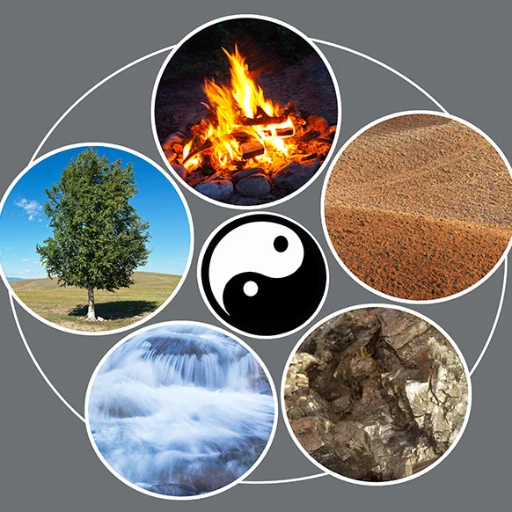
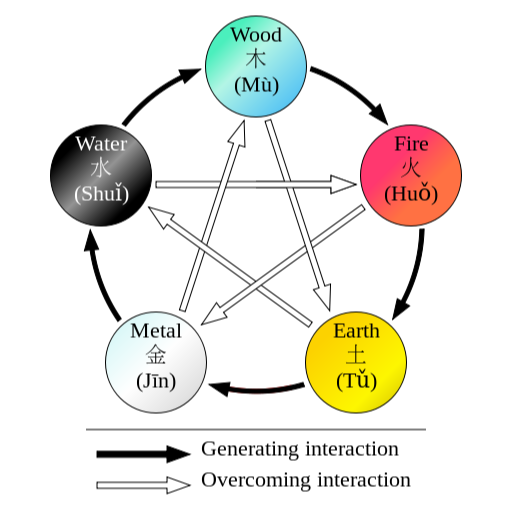
Your Day Master does not operate in isolation. The other elements in your Five Elements framework either fuel your flame, suppress it, or channel it into productive output.
Understanding these interactions is how you move from description to strategy.
| Element | Relationship to Yin Fire | Effect | Practical Meaning |
|---|---|---|---|
| Wood | Nurturing (Resource) | Fuels the flame | Learning, mentors, encouragement strengthen you |
| Fire | Supporting (Companion) | Adds intensity | Collaboration and community boost your energy |
| Earth | Exhausting (Output) | Absorbs heat | Creativity and expression use your energy, productive but draining |
| Metal | Controlling (Wealth) | Channels flame | Wealth and discipline opportunities; requires skill to manage |
| Water | Opposing (Power) | Threatens to extinguish | Authority and pressure challenge you; too much creates instability |
Wood: Your Fuel Source
Wood is the most important supporting element for the yin fire personality. In ding fire bazi analysis, Wood represents learning, growth, and maternal nurture. In BaZi, Wood represents learning, growth, and maternal nurture. For Ding Fire, this translates to: education, mentorship, positive feedback, and environments that encourage development.
If your chart is low on Wood, you may feel chronically unsupported regardless of your actual circumstances. The solution is not to change your environment wholesale. It is to intentionally add Wood-like inputs: structured learning, coaching relationships, and regular acknowledgment of your progress.
Water: Your Primary Challenge
Water suppresses Fire. For the yin fire personality, already a small flame, excessive Water is particularly dangerous. In practical terms, this shows up as pressure, criticism, high-stakes authority figures, and emotionally cold environments.
You cannot eliminate Water from your life. No chart is perfectly balanced. But you can manage your exposure. If you are in a role dominated by punitive authority figures or constant performance pressure, you are fighting your own element.
Metal: Your Productive Tension
Metal represents a controlling relationship to Fire, but for the yin fire personality, this can be highly productive. Yang Metal (Geng) in particular gives your flame something to forge. It creates structure, discipline, and tangible outcomes.
The key is proportion. A small amount of Metal focuses your energy. Too much restricts it.
Earth: Your Creative Exhaustion
Earth absorbs Fire. For the yin fire personality, this is not inherently negative, your creativity, teaching, and expression all channel your flame into Earth-like output. But excessive Earth in your chart, or excessive output demands in your life, will smother you over time.
How to Balance and Optimize Your Yin Fire Energy
Knowing your yin fire personality is useful. Knowing what to do with that knowledge is transformative.
Here are five specific strategies from ding fire bazi analysis to optimize your Ding Fire energy:
1. Schedule recovery like you schedule work. Your flame does not regenerate automatically. You need deliberate rest, solitude, and low-stimulation environments to recover from social and emotional expenditure. Block recovery time on your calendar with the same priority as meetings.
2. Seek explicit feedback, not implied appreciation. You need to hear that your work matters. Do not wait for people to volunteer praise. Ask for specific feedback on what you are doing well. This is not insecurity. It is fuel management.
3. Limit high-conflict exposure. You are more vulnerable to emotional turbulence than most Day Masters. This does not mean avoiding all conflict. It means choosing your battles and exiting environments where hostility is the default culture.
4. Build Wood into your routine. Read consistently. Maintain mentor relationships. Take courses. Wood feeds Fire systematically. Make learning a structural part of your life, not an occasional event.
5. Track your burnout signals. For the yin fire personality, burnout rarely arrives suddenly. It builds through gradual emotional depletion. Your early warning signs may include: increased sensitivity to criticism, withdrawing from people you normally enjoy, and a sense that your work no longer feels meaningful. When you notice these, treat them as system alerts, not personal failures.
Yin Fire Personality FAQ
What is a yin fire personality in BaZi?
A yin fire personality, or Ding Fire (丁), is the Yin expression of the Fire element in the Four Pillars system. Symbolized by candlelight, it represents focused warmth, emotional depth, and quiet influence rather than broad, outward energy.
What is the difference between yin fire and yang fire?
Yang Fire (Bing) is like the sun, expansive, visible, and magnetic. Yin Fire (Ding) is like a candle flame, intimate, precise, and selective. They share the Fire element but operate on entirely different behavioral architectures.
Is Ding Fire weak or strong?
Neither. The ding fire personality is not weaker than Yang Fire, it is a specialized operating system. Within Ding Fire itself, strength depends on birth season and element balance. Strong Ding Fire shows confidence; Weak Ding Fire shows insecurity that stabilizes with support.
What careers suit a yin fire personality?
Roles rewarding emotional intelligence, precision, and one-to-one impact suit Ding Fire best. Modern examples include UX researcher, executive coach, financial advisor, content strategist, therapist, and product manager.
What elements support Yin Fire?
Wood fuels Yin Fire through learning, mentorship, and encouragement. Fire companions add energy. Metal channels Flame into productive output. Excessive Water or Earth can destabilize or smother the flame.
How do I know if my Ding Fire is strong or weak?
Check your BaZi chart. If you were born in spring or summer with Wood and Fire elements dominating, your Ding Fire is likely strong. If born in autumn or winter with heavy Water and Earth, it is likely weak.
Conclusion
The yin fire personality is not a diminished version of Fire. It is a specialized version.
You are not built to dominate rooms. You are built to change minds. You are not built for shallow networks. You are built for transformative relationships. Your sensitivity is not a weakness. It is the sensor array that makes your insight possible.
The key is alignment. When your role, environment, and relationships match your ding fire personality, you perform at levels that surprise even you. When they do not, you exhaust yourself trying to be someone you were never designed to be.
Your BaZi chart does not determine your future. It maps your tendencies. And when you understand your yin fire personality and those tendencies, you stop fighting yourself and start leveraging yourself.
That is the real power of knowing your Day Master.
Want to explore how Yin Fire compares to other Day Masters? Read our complete guide to the Yang Fire (Bing Fire) personality or dive deeper into the Ten Gods framework to understand how your Day Master interacts with every other element in your chart. For timing insights, explore how Luck Pillars shift your energy across different life cycles.