


BaZi, or the Four Pillars of Destiny, is an organized analysis system of birth charts that has grown over more than 1,000 years from the ancient Chinese astronomy and calendrics into the efficient tool of private decision making. This goes back in history from the Shang Dynasty’s timekeeping records, through the destiny-analysis methods of the Tang, the shift of the Song into an individual-centered system of reading, to today’s digitized calculators with AI-enhanced interpretations.
For most people, their first touch of BaZi is “Chinese fortune-telling.” And yet, it misses the point: BaZi was discovered and honed by imperial scholars, in no flame. It had to do with human resources management of a country, not practicing with the temple. And at its core, BaZi’s evolution from time tracking to individual potential became part of one of the most crucial intellectual movements in history.
In this article, we will be tracing the entire history of the BaZi and how a calendar framework turned into a personal analysis framework; why everything changed in the Song Dynasty; and how a thousand-year-old methodology still drives chart readings today.
Key Takeaways
- BaZi, the Heavenly Stems and Earthly Branches of, goes back to the Shang Dynasty over 3,000 years ago. They were derived initially to tell time and not for destiny analysis.
- The formal destiny analysis began somewhere in the Tang Dynasty (618-917 CE) via a scholar called Li Xuzhong, who first put down the Three Pillars method using the Year, Month, and Day of birth.
- Xu Ziping, during the Song Dynasty, introduced a great leap forward in BaZi. He added the Heavenly Pillar and invited a decision to shift the focus away from the ancestral/ Year Pillar to the Day Master/individual.
- Classical BaZi methodologies are enshrined in the Ming and Qing dynasties by the appropriate texts—Yuanhai Ziping, Sanming Tonghui, and Di Tian Sui,—that cumulatively set BaZi standards.
- Despite its suppression in mainland China, BaZi was kept alive in Hong Kong and Taiwan by practitioners and currently forms the center of digital worldwide recovery.
What Is BaZi? A 60-Second Primer
Before we explore the history, here’s what we’re actually talking about.
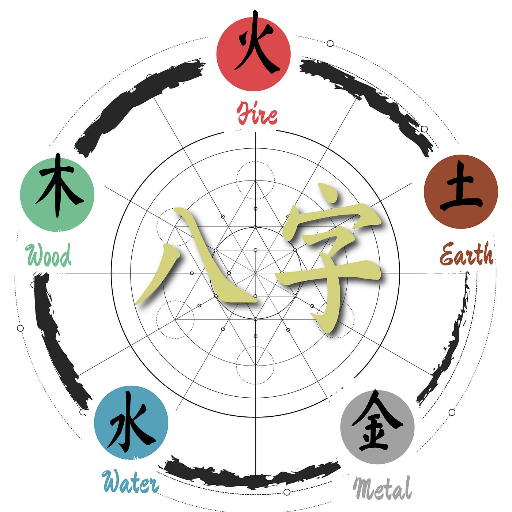
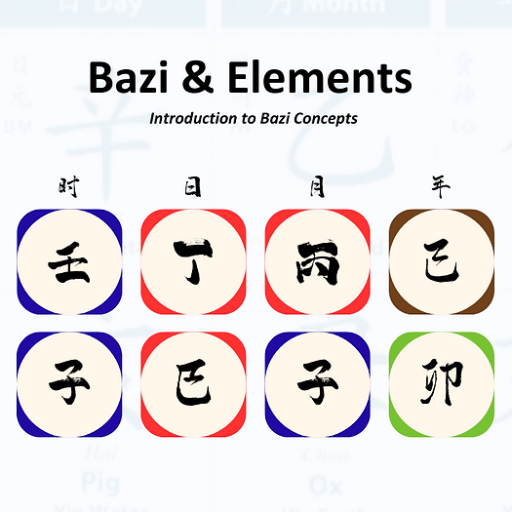
A translation: A person’s date and time of birth are substituted together by the BaZi (八字), actually meaning “Eight Characters,” in the Chinese calendrical cycle of Heavenly Stems and Earthly Branches. Each Stem is paired with a Branch; thus, two characters per unit of time; thus, four branches and four stems for the total of eight characters.
Those eight characters are organized into four pillars:
- Year Pillar, ancestry, early environment, collective identity
- Month Pillar, career trajectory, parents, social structure
- Day Pillar, the self, core identity, relationships (this is the most important)
- Hour Pillar, future direction, children, inner potential
The system analyzes how the Five Elements (Wood, Fire, Earth, Metal, Water) interact across these pillars, using the Day Master, the Heavenly Stem of the Day Pillar, as the central reference point.
BaZi is not astrology in the Western sense. It does not use planets or constellations. It uses the cyclical energetic qualities of time itself. And that distinction matters when you understand where the system came from.
Want to see your own chart while you read? Generate your free BaZi chart now and follow along.
Before BaZi: The Ancient Foundations
The Shang Dynasty and Oracle Bones (c. 1600–1050 BCE)
The story begins with time-keeping and not with fortune-telling.
Over 3,000 years ago, during the Shang Dynasty in China, scribes were carving records on oracle bones and tortoise shells while recording agricultural cycles, royal divinations, and, most importantly, the passage of time, all in a Stem-Branch system which consisted of 10 stems and 12 branches.
This Stem-Branch (Gan-Zhi) system was a calendar. It marked days, months, and years in a repeating 60-year cycle called the JiaZi cycle. Farmers used it to plant crops. Astronomers used it to track celestial movements. Historians used it to date events.
No one was using it to read personal destiny. The concept didn’t exist yet.
Even though obviously undeveloped or intentionally ignored, the raw ideas were there: Stem-Branch elements were linked with the elements; the cycle implied some sort of a pattern-although agriculture, astronomy stellar observations, and historiography were the only interests. The Shang oracle bones also hinted at Yin and Yang concepts, in which reality is composed of interrelated opposites.
The Warring States and Han Dynasty: Philosophy Meets Chronology
By the Warring States period (475–221 BCE) and the Han Dynasty (206 BCE–220 CE), Chinese philosophers had formalized two critical frameworks:
- Yin-Yang theory, the dynamic balance of opposing forces
- Five Elements (Wu Xing), Wood, Fire, Earth, Metal, Water as phases of transformation, not static substances
These were philosophical systems. They explained nature, medicine, politics, and cosmology. The Lunheng (論衡), a Han Dynasty text by Wang Chong, even discussed the idea that a person “receives qi” (vital energy) at birth, an early conceptual seed for birth-based analysis.
During the Eastern Han Dynasty, the Stem-Branch system was extended to mark not just days, but also months and hours. The technical possibility of a four-pillar birth chart now existed. The theoretical foundation was set. But the formal system of destiny analysis was still centuries away.
The key insight: BaZi’s building blocks are ancient, but the system itself is relatively recent. Using Stems and Branches for personal analysis required a specific intellectual leap, from tracking time to interpreting life patterns.
The Tang Dynasty: Li Xuzhong and the Birth of Destiny Analysis
That leap happened in the Tang Dynasty (618–907 CE).
Li Xuzhong (李虛中, 761–813 CE) was an official, not a fortune-teller; in other words, he was in government service from ruling emperors due to his intellectual stoutness. His innovation was earth-shaking in terms of giving birth to basic scientific systems emphasizing the analysis of a person’s fate through birth year, month, and day.
This was the “Three Pillars” method; six characters total. It was the first formal destiny-analysis system in Chinese history.
Why the Year Pillar Mattered
Li Xuzhong’s method focused heavily on the Year Pillar. In Tang Dynasty society, this made perfect sense. The Tang was a lineage-focused culture. Your birth year connected you to ancestral energy, family status, and collective destiny. The year you were born mattered more than the day.
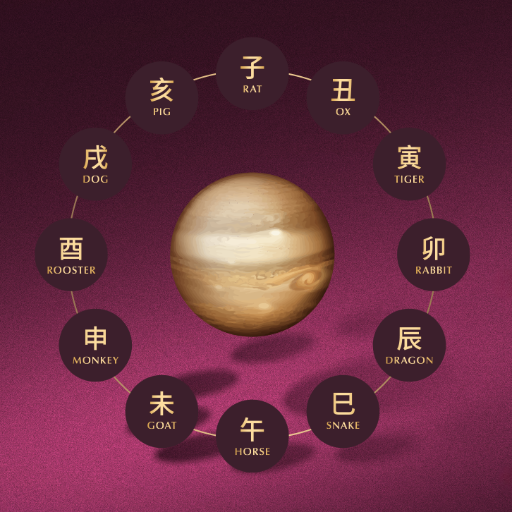
This ancestral focus is why the Chinese zodiac, the 12 animal signs associated with birth years, became so popular. It is a simplified, folk remnant of the earliest BaZi methodology.
But the Three Pillars system was limited. It lacked the Hour Pillar. It couldn’t capture the granularity of a person’s specific birth moment. And its analytical framework was still relatively coarse compared to what would come next.
Li Xuzhong’s work was compiled posthumously into the Li Xuzhong’s Book of Fate (李虛中命書), which became an important early text in the tradition.
The Song Dynasty: Xu Ziping’s Revolution
If Li Sui had invented the land machine, Xu Zi-Ping invented the highways.
Xu Zi-Ping (徐子平) was a mountain sage in the transition age from the Five Dynasties to the period of the Northern Song. He actually has begun the observance of the modern BaZi as its far officer, or the one who has transitioned into an analytical system based on their character that had emerged out of a hasty method of divination.
His three innovations represented no less than a paradigm shift for mankind.
Innovation 1: The Hour Pillar
Xu Ziping added the Hour Pillar, completing the Four Pillars and producing the full Eight Characters (BaZi). This may sound like a minor technical addition, but it doubled the information density of the chart.
The hour of birth introduces entirely new elemental interactions. It can change the balance of the Five Elements. It affects the Ten Gods mapping. In some cases, a different hour produces a completely different analytical conclusion.
Innovation 2: The Day Master
This was the philosophical earthquake.
Xu Ziping shifted the analytical center of the chart from the Year Pillar (ancestry, collective) to the Day Master (the individual self). The Day Master is the Heavenly Stem of the Day Pillar. It represents your core identity, your elemental nature, your personal reference point.
This shift mirrored broader changes in Song Dynasty culture. The Song was an era of individual scholarship, Neo-Confucianism, and personal cultivation. Society was moving away from pure lineage-based identity toward individual merit and self-development.
BaZi evolved to match that cultural shift. And that is why the system remains relevant today: it analyzes the individual, not just their family or birth year.
See how the Day Master shapes your own chart.
Innovation 3: The Ten Gods Framework
Xu Ziping replaced the abstract “Na Yin” (melody) Five Elements method with a relational framework called the Ten Gods (Shi Shen). Each element in the chart is interpreted based on its relationship to the Day Master:
- Wealth, elements the Day Master controls
- Power, elements that control the Day Master
- Resource, elements that support the Day Master
- Output, elements the Day Master produces
- Companion, elements identical to the Day Master
These are not deities. They are behavioral archetypes. They describe how you relate to money, authority, learning, creativity, and peers. See what each of the Ten Gods means in your chart.
Xu Ziping’s teachings were compiled into the Yuanhai Ziping (淵海子平, “The Deep Sea of Zi Ping”), which remains one of the most important classical texts in BaZi. The system itself is still often called “Zi Ping Shu” (子平术), the Ziping Method, in his honor.
Mini-Story: The Shift That Changed Everything
Consider two individuals born in the same year, both sharing the Chinese zodiac sign of the Dragon. Under the old Tang Dynasty’s system, their readings would have begun from one point: the elemental source, the collective elemental expression, and the shared destiny.
Under Xu Ziping’s later Song Dynasty system, the two people may not even have the same Day Master at all. One might have proliferation of Yang Fire, imposing, expressive, leadership-driven, a real extrovert. The other would favor the Yin Water: adaptive, intuitive, strategic, a good observer, and very calculating. Elemental balances would be different, with five elements dead opposed to one another—unmixable like oil and water. Their Ten Gods mappings would diverge at this point. Their life strategies would be entirely different.
This is why only knowing one’s Chinese zodiac year is like reading just the first page of one 500-page novel. The actual story is in this Day Master. The focus on individual identity is what makes BaZi a personal tool rather than a communal label.
Ming and Qing Dynasties: Refinement and Maturity
Following Xu Ziping’s creation of the framework, scholars spent 600 years improving it.
The Ming Dynasty (1368–1644) and Qing Dynasty (1644–1912) together constituted the era of BaZi scholarship. This was the time to codify its rules, exceptions, and advanced methodologies into books from which serious practitioners still draw knowledge.
The Classical Texts
This era has three constitutional texts:
1. Sanming Tonghui (三命通會, “Comprehensive Record of the Three Destinies”)
Written by Wan Min Ying during the Ming Dynasty, this work is the most comprehensive and methodological manual in BaZi’s history, where the readers receive coaching in Heavenly Stems, Earthly Branches, Day Masters, Month Commanders, chart structures, and advanced interpretation rules.
2. Di Tian Sui (滴天髓, “Drops of Heavenly Essence”)
This advanced book aims to analyze chart patterns, identify specific chart structures, discuss beneficial and detrimental elements, and discuss subtle chart interactions that make a good reading a great reading. It is regarded as the indispensable text for those wishing to achieve more than the basic interpretation.
3. Qiongtong Baojian (窮通寶鑑, “Precious Mirror of Fate Adjustment”)
Conceptualized in the Qing Dynasty by Yu Chuntai, Image Astrology and Human Adjustment focuses on practical considerations. It explains how to adjust the imbalance from the elemental chart below practical BaZi variables through lifestyle, environment, and timing decisions.
BaZi in Society
During the Ming and Qing Dynasties, BaZi was deeply integrated into Chinese culture. It was used for:
- Imperial official selection, as an interdisciplinary “people-observing” skill
- Marriage compatibility, assessing elemental harmony between partners
- Career guidance, identifying favorable industries and timing
- Auspicious date selection, choosing the right moment for important events
BaZi existed alongside Feng Shui and Traditional Chinese Medicine as one of the Wu Shu (Five Arts), the classical disciplines for understanding and optimizing human experience.
The Modern Era: Suppression, Survival, and Digital Revival
The 20th century nearly killed BaZi. The 21st century may be its most exciting chapter yet.
The 20th Century Interruption
Following the establishment of the peoples republic, traditional practices like the BaZi were marginalized and declared “feudal superstition” by the state. The Cultural Revolution (1966–1976) was highly destructive; not only were the classical texts burned, but the practitioners were actively persecuted, driving the tradition underground.
But BaZi did not disappear. It survived through three channels:
- Folk practice in rural China, oral transmission continued in secret
- Hong Kong and Taiwan, where the tradition flourished openly and was preserved by masters who had fled the mainland
- Diaspora communities, Southeast Asia, North America, and Europe carried the tradition forward
The 21st Century Renaissance
Since China’s reform era began in the late 1970s, interest in traditional culture has rebounded. BaZi has experienced a global revival driven by three forces:
Digital tools. Online calculators and mobile apps have democratized access. What once required a trained practitioner and hours of manual calculation now happens in seconds. Our own BaZi calculator uses algorithmic precision to generate complete Four Pillars charts instantly.
Modern reworking. Presently, practitioners have combined psychological, statistical, and decision theory concepts within classical methodology. BaZi method was given the face of a structured tool for self-analysis and not predictive mysticism.
AI integration. In 2025, MIT Technology Review reported that DeepSeek had become a “fortune teller for China’s youth”, an AI system trained partly on classical Chinese metaphysical texts, including BaZi methodology. The 1,000-year-old analytical system is now being processed by neural networks.
Mini-Story: The Diaspora Preservation
Master Chen (a combined name from documented historical context) exited from Shanghai in 1949, one trunk filled with classics in his possession. He ended up in Honk-Kong just to spend the next three decades imparting knowledge of BaZi to a cluster of pupils at his end. His pupils turned teachers. Their students established schools in Malaysia, Singapore, and, in the end, online.
By 2020, learning the same Ziping Method that Master Chen had carried off from Shanghai became feasible for a student in London, not through an old, secret, oral tradition but through structured online courses and a calculator that was freely available for the application of classical rules.
This system has lived on because of its highly-precise methodology handed down and across cultures, languages, and technologies. A system that works does not die out.
Why the History Matters Today
Realizing the story behind a BaZi made me see things differently.
When you learn that BaZi was refined by scholars through well over 1,000 years, experiences in looking at BaZi as sounding mystical folklore start transforming into an analytical tradition. Once year of birth animal is just a tiny dot in a vast landscape of factors variegated by elements and senses. How it survived suppression, altered its very essence into a digital AVATAR that we are used to today, shows that the essence of wisdom of BaZi is the method, not its mystique.
The Complete BaZi History Timeline
| Period | Development | Key Figure / Text |
|---|---|---|
| Shang Dynasty (c. 1600–1050 BCE) | 10 Heavenly Stems and 12 Earthly Branches created for calendrics | Oracle bone scribes |
| Warring States–Han Dynasty (475 BCE–220 CE) | Yin-Yang and Five Elements theory formalized; Stem-Branch system extended to months and hours | Wang Chong (Lunheng) |
| Tang Dynasty (618–907 CE) | First formal destiny-analysis system: Three Pillars (year, month, day) | Li Xuzhong |
| Song Dynasty (960–1279 CE) | Hour Pillar added; Day Master becomes analytical center; Ten Gods framework introduced | Xu Ziping; Yuanhai Ziping |
| Ming Dynasty (1368–1644) | Major methodological codification; 12-chapter comprehensive manual | Wan Min Ying; Sanming Tonghui |
| Qing Dynasty (1644–1912) | Advanced pattern analysis; practical adjustment theory; system reaches full maturity | Di Tian Sui; Qiongtong Baojian |
| 20th Century | Suppression in mainland China; preservation in Hong Kong, Taiwan, and diaspora communities | Folk practitioners; expatriate masters |
| 21st Century | Digital calculators, online education, AI integration, global accessibility | Modern practitioners; algorithmic tools |
Key Classical Texts Every Student Should Know
If you want to go deeper into BaZi’s intellectual tradition, these four texts are essential:
1. Yuanhai Ziping (淵海子平), The foundation. Compiled during the Song Dynasty from Xu Ziping’s teachings, this is the first text to describe the complete Four Pillars calculation system. It established the rules that every subsequent text built upon.
2. Sanming Tonghui (三命通會), The comprehensive manual. The 12-chapter Ming Dynasty work by Wan Min Ying covers all kinds of major methodological topics-Stems, branches, day masters, months commanders, tint structures, and the umbrella frameworks in interpretation. If you have to choose only one classical text, choose this one.
3. Di Tian Sui (滴天髓), Advanced pattern theory. This text moves beyond basic rules into the subtle art of identifying special chart configurations and understanding the deep interactions between elements. It is the text that separates competent practitioners from exceptional ones.
4. Qiongtong Baojian (窮通寶鑑), Practical application. Yu Chuntai’s Qing Dynasty work focuses on what to do with your chart. How do you adjust elemental imbalance? How do you choose favorable timing? How do you apply BaZi to real decisions? This is the action-oriented text.
These four works form the classical canon of BaZi. Modern calculators and apps, including our own analysis engine, encode the rules and principles first articulated in these texts. The technology has changed. The methodology has not.
Conclusion
BaZi history does not tell of magic or octopus predictions; it is an account of erudite scholars, astronomers, and philosophers who toiled for over a millennium on the refinement of an abstraction of human potential.
From Shang time-keeping to the Tang era’s makeover and the Song Dynasty’s overhaul, and from the Ming and Qing Dynasty consolidation onwards, every era introduced another layer of analysis. The transition from Year Pillar into Day Master was nothing short of a bold philosophical turn that turned BaZi from being an astrological tool into one for real personal decision-making.
This is why the system managed to survive even to be transported across oceans so that now one can carry it on his or her smartphone. Its real value is in the soundness of its structure; the utmost perfection becomes self-evident too. Moreover, history has shown that the system is truly more than just a folk tale.
Your BaZi chart is the result of 1,000 years of analytical refinement. Ancients who created this tool never had a chance to sit in awe at the sight of you. For you, they designed it.
Generate your free BaZi chart now and see what a millennium of intellectual development reveals about your strengths, your timing, and your path forward.
For a complete foundation on what these eight characters represent, see our complete (guide to Four Pillars of Destiny).