


The natural world is a flowery and colorful painting of the Creator and the Destroyer, which is an everlasting circle that varies and redefines the very basis of life. The very core of this cycle is where nature’s most powerful forces converge, from the tiniest particles to the mightiest elements. A blog post will dazzle the reader with the captivating birth-and-death drama being enacted all around us, and will show how the elements are joined, changed, and thus, the life balance on Earth is influenced. Regardless of being attracted to the stars’ chemistry or the earth’s regeneration, the journey will bring to the surface the cosmic connectedness and ceaseless movement that are the characteristics of our universe.
Introduction to the Cycle of Elements
Understanding the Concept of Elements
Elements are the basic units of all matter in the universe, with each one having its own protons in the atom’s nucleus. They are the simplest substances, not capable of further breaking down by chemical means. The periodic table has about 118 elements today that vary in their physical and chemical properties and participate in different natural processes. Approximately 90 of these elements are believed to be present naturally on the Earth, while the others are man-made, produced in labs by means of complex nuclear processes.
Out of these elements, a few are the main driving forces of life and Earth’s processes. Carbon, hydrogen, oxygen, and nitrogen together account for nearly 96% of the human body. Oxygen, in addition to being inhaled and exhaled, constitutes approximately 46% of the crust of the Earth, and iron and nickel are the principal elements in the core of the planet. Water, which is the primary requisite for living organisms, results from the combination of hydrogen and oxygen, which exemplifies the role of elemental interactions in the development of planetary systems.
The Importance of Five Elements Theory
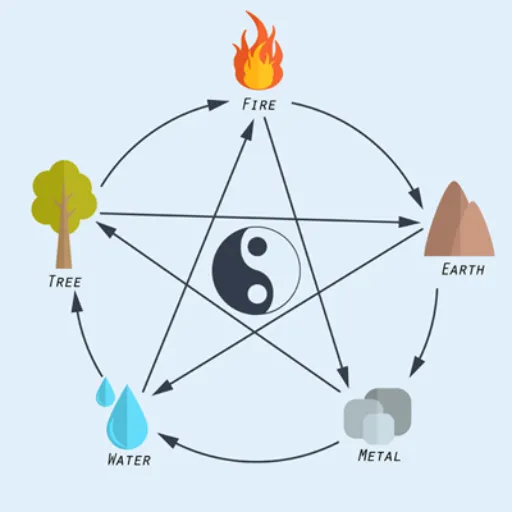
The Five Elements Theory, or “Wu Xing,” in Chinese philosophy stands for wood, fire, earth, metal, and water that represent the basic elements of nature. These elements are not only representations with symbols but also indicate the patterns of relationships and interactions in the universe. This theory, which is rooted in ancient Chinese cosmology, has found its applications in various domains like medicine, agriculture, and even in interpersonal relationships, which are not ungoverned by the theory.
Traditional Chinese Medicine (TCM) is the prominent application of the Five Elements Theory, where the elements are linked to organs and processes in the body. For example, the liver corresponds to wood, the heart to fire, and the kidneys to water. These associations enable TCM practitioners to determine the illness and plan treatment by re-establishing the harmony among these elements. Research indicates that this whole approach has received worldwide acceptance, and the global TCM market is expected to grow at a compound annual rate of 6.8% from 2023 to 2030, as per the latest analytics.
The Interaction of the Five Elements
Natural Examples of Elemental Interactions
The Water and Earth Interaction in Wetlands
Among the many interactions of water and earth, wetland areas are the greatest examples. They are natural sponges, where soil (Earth) absorbs and filters excessive rainwater (Water), thus minimizing the risk of the latter. The Ramsar Convention estimates that about 6% of the planet is covered by wetlands that contain about 12,000 cubic kilometers of freshwater. The proper functioning of this interplay of water and soil supports the existence of a great variety of living organisms and thus the extinction of many plant and animal species. When this balance is disrupted, for example by urban sprawl or pollution, consequences will be such as flooding and the deterioration of habitats.
Fire and Wood Dynamics in Forest Ecosystems
Fires, even if they destroy, are still very important for the health of forest ecosystems. Fire (as the element of Fire) decomposes and oxidizes dead vegetation (Wood), and thus, it also returns nutrients and minerals to the soil to help new plants grow. In some forests like the coniferous forests of North America, tree species such as lodgepole pine need the high temperature of fire to release seeds from their cones. Unfortunately, the high intensity of wildfires often caused by extremely dry conditions or climate change can disrupt this natural cycle, resulting in the destruction of regeneration areas.
Metal and Water in Mountain Springs
Water found in mountain springs is a great example showing how minerals (metal) and water interact intimately. When rainwater passes through the rocks, it gets the necessary minerals like calcium and magnesium, which the water, in turn, distributes to living organisms downstream. The US Geological Survey informed through a study, that the minerals brought in by springs are of great importance in determining the chemical makeup of freshwater ecosystems, which in turn is supportive of aquatic life and the provision of clean drinking water to the populations living around those ecosystems.
Cosmological Perspectives on Elemental Cycles
The planetary perspective of the Cosmos sees the elemental cycles as a factor uniting Earth’s processes with the universe as a whole. The glowing elements of life on our earth—carbon, nitrogen, oxygen, and hydrogen—are all jurisdictions under the nuclear fusion of the stars. After going through their life cycles, stars, which also happen to be the case with supernovae, release heavy elements into the universe. This cosmic recycling is credited with planetary evolution and the later coming up of living entities.
Carbon-nitrogen-oxygen (CNO) cycle which is crucial in stellar nucleosynthesis is one of the main cycles that demonstrate the eternal existence of elements across billions of years. NASA’s Chandra X-ray Observatory data corroborate the truth that interstellar clouds full of carbon and oxygen are fundamental to star formation, thus linking the origins of these elements to the habitability of planets.
Case Studies of Elemental Interactions
Ecosystem Examples: Nature’s Cycles
The cycles of nature are the main pillars of the stability and continuity of ecosystems; they reflect the balance between living and non-living components in a very dramatic way. The carbon cycle is one such instance of this process, which is a cycle that sees the carbon atoms being transferred from the biosphere to the lithosphere, then to the atmosphere and finally to the hydrosphere. Trees are one of the key agents in this cycle when they absorb the carbon dioxide that is present in the air during the process of photosynthesis and turn it into glucose. Studies show that among various other forests, the Amazon is one that consumes most carbon and emits the least. It has been documented that this forest consumes about 2 billion tons of carbon dioxide every year. Nevertheless, cutting down trees can shift the balance in a negative way by releasing the carbon that was previously stored back into the air.
Another cycle that is very important is the nitrogen cycle. This cycle is responsible for the conversion of atmospheric nitrogen into usable forms for living beings. The activity of certain microbes present both in the soil and water leads to a conversion of nitrogen gas to ammonia, which is then converted to nitrates and nitrites by other microorganisms. The current research indicates that the use of fertilizers in agriculture is the main reason for the introduction of excess nitrogen to ecosystems, which in turn often leads to problems like eutrophication, which is detrimental to the aquatic biodiversity.
The water cycle is one of the cycles that control the systems very closely, as it is precipitation, evaporation, and condensation that determine the availability of Earth’s freshwater. Water covers approximately 71% of the earth’s surface, yet only a mere 2.5% of it is freshwater and this is mostly found in glaciers and ice caps. The global temperature change has resulted in an intensified water cycle with the stress on water resources being caused by the higher evaporation and the erratic rainfall patterns. Water resources are critical for both ecosystems and human consumption.
Celestial Events and Elemental Dynamics
Celestial events like solar eclipses, meteors showers, lunar cycles, etc., have a very important role in revealing the elemental dynamics of the planet. The whole universe of the cosmos gives the earth a new window of exploration in the field of nature’s interaction, with the heavens, one of which is the earth’s tides, and the next is the weather patterns, and, sometimes even the biological rhythms of living organisms.
For example, a solar eclipse gives a very infrequent possibility of looking at the corona of the sun and its influence on the earth’s atmosphere at the same time. During these events, the data collected has shown a rise and fall in temperature and a change in pressure in the atmosphere. Like for instance, meteor showers would be the Perseids, where the tiny meteoroid particles are dropped into the earth’s atmosphere, they would interact with its chemical composition and participate in the cycle of the essential elements such as carbon and nitrogen.
Implications for Environmental Sustainability
Understanding Sustainability through Elemental Theory
Sustainability viewed through the lens of the elemental theory reveals a very fine line between the main sources of the Earth—water, air, fire and earth—that had the greatest impact on the environment. The elements in the wrong hands can throw nature out of balance to the point that human-caused problems like global warming, deforestation, and water scarcity are worsened rather than slowed down. One example is that a survey done recently shows that soil degradation is taking 24 billion tons of fertile soil away from the planet every year and that, by 2025, water scarcity is going to take place in the lives of 1.8 billion people.
On the other hand, melting ice caps caused by climate change which as a result of greenhouse gas emissions plus warming of the Earth’s surface point out fire’s (as energy) crucial part in the whole scenario. A decade was the hottest in history according to the reports and they talk about the year 2023 being another one with a temperature rise of 1.5°C above that of the preindustrial era. On the other hand, the issue of air pollution is still being felt as a whopping 91% of the global populace live in areas where the quality of air does not meet WHO’s standards, thus suffering from the bad effects on health and the environment.
Technological Advancement Inspired by Element Cycles
Innovations from the Carbon Cycle
One of the carbon cycle’s major drivers has been the innovation of carbon capture and storage (CCS) technologies. Global operational capacity for capturing carbon has reached around 44 million metric tons every year as of 2023 according to recent figures and there are many more projects in the pipeline that will lead to a substantial rise in this capacity. These methods take the carbon dioxide out of industrial emissions or from the air and either store it underground or change it into useful materials. Besides, the progress of biochar production which is a method of natural carbon sequestration in soil—is improving backyard farming and that too while keeping atmospheric carbon buried for centuries.
Technologies of the Water Cycle
The technological achievements coming from the water cycle—water desalination and purification—are being accepted as the main Fighting Water Scarcity Technologies. The reverse osmosis and solar desalination systems that produce fresh water for millions are currently the most common water purification systems. Besides the desalinization capacity that the world had reached daily as of 2023 of over 100 million cubic meters, there are also atmospheric water generation systems that extract water from the air in hot climates, which is a great and eco-friendly way of making sure people have enough clean drinking water.
Solutions from the Nitrogen Cycle
The nitrogen cycle’s harmony is mirrored in the technological innovations for nitrogen fixation like the development of low-energy and green ammonia production processes. Modern technology allows the use of slow-release or bio-enhanced fertilizers that do not pollute much and even help in making crops yield more. Scientists are working on genetically modified crops that can fix more nitrogen naturally, thus reducing dependency on synthetic fertilizers worldwide.
Future Directions in Elemental Research
Emerging Theories in Elemental Interactions
The latest research on elemental interactions has opened up new avenues to understanding and applying scientific theories, which if developed, would lead to the new concept of synergistic elements among the cycles, showing the potential that the carbon cycle disruption may lead to several corresponding changes in the nitrogen or water cycles. This interrelationship has pointed out the need for the use of a holistic approach to environmental problems that will be effective in their solution.
A 2023 Nature study early on in the year announced that taking care of the chemical interaction between the carbon and nitrogen elements of soil in the ecosystem, the greenhouse emissions from agriculture could be cut down to the tune of 20%. Moreover, the latest computerized models indicate that making the best use of these elemental linkages may not only the reduce the cost of the carbon capture technologies but also lead to the massive growth of the global sequestration efforts by 15-25% over the coming decade.
Potential Applications in Environmental Science
The marriage of advanced materials with rare earth elements is soon to be the biggest eco-friendly solution provider that mankind will ever experience. Not so long ago rare earth-based catalysts were yielding close to zero emissions from the industrial use of that catalyzer. A significant application is their installation in the catalytic converters, which can cut the nitrogen oxide emissions by as much as up to 90% as per, the latest research findings.
On top of that, rare earth materials are nearing the point of being the lifeblood of the renewable energy technologies. Wind turbine generators often depend on neodymium-iron-boron magnets, which not only allow but also keep the costs of maintenance low due to zero energy loss through heat. The International Energy Agency (IEA) went even further to say that the modern day offshore wind turbines need around 200 kilograms of the rare earth elements, thus demonstrating the very essential aspect of sustainability over resource management in lifting the global climate goals.
Reference Sources
-
The Impact of Birth, Death and Re-Birth Cycle on Progeny
- Key Findings: This study explores the cyclical nature of birth, death, and rebirth, emphasizing the role of chance in deterministic systems. It highlights how interactions within this cycle leave a lasting impact on the universe.
- Methodology: Theoretical analysis incorporating elements of chance and deterministic scientific principles to understand the broader implications of the cycle.
-
- Key Findings: Investigates the life cycle of transposable elements (TEs) in organisms like Drosophila melanogaster, focusing on their birth, proliferation, and eventual dormancy or reactivation. Highlights the interaction between TEs and their host organisms.
- Methodology: Biological analysis of transposable elements, using genetic data to track their life stages and interactions with host genomes.
-
- Key Findings: Discusses the philosophical and practical implications of the cycle of destruction and creation, emphasizing how ideas and interactions evolve through this process.
- Methodology: Conceptual exploration of the cycle, using theoretical frameworks to analyze the interplay between destruction and creation in various systems.
Frequently Asked Questions (FAQs)
Can the 5 elements productive cycle be used to nourish a weak element?
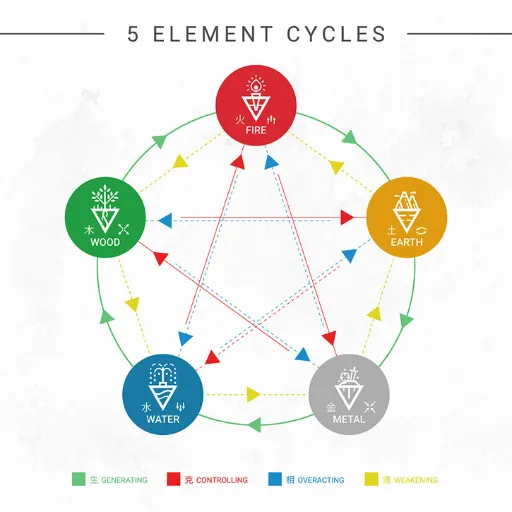
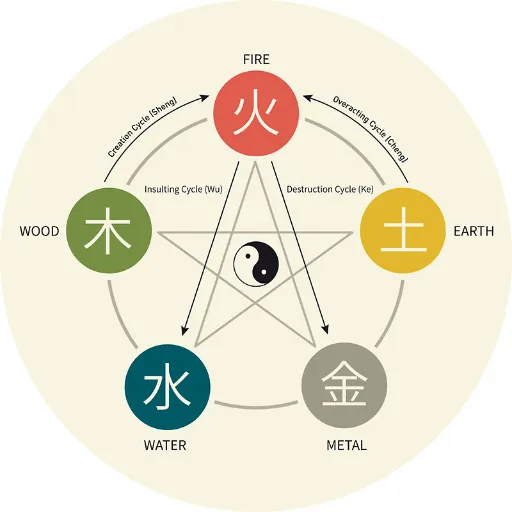
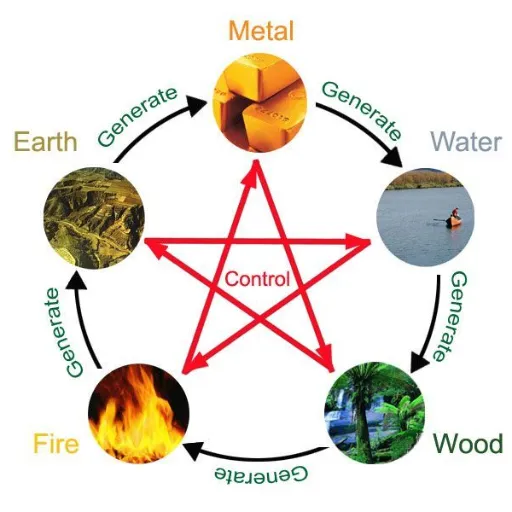
Definitely. The productive cycle (generative cycle) generates and nourishes elements: wood produces fire, fire produces earth (fire melts metal into earth metaphorically), earth produces metal, metal produces water (in some classical metaphors metal condenses to produce water), and water produces wood. If an element in your destiny chart or fengshui analysis is weak, introducing its generating element can strengthen it — for example, to strengthen wood, increase water or objects associated with water; to nourish fire, add wood.
How does the destructive cycle of the 5 elements explain what destroys what?
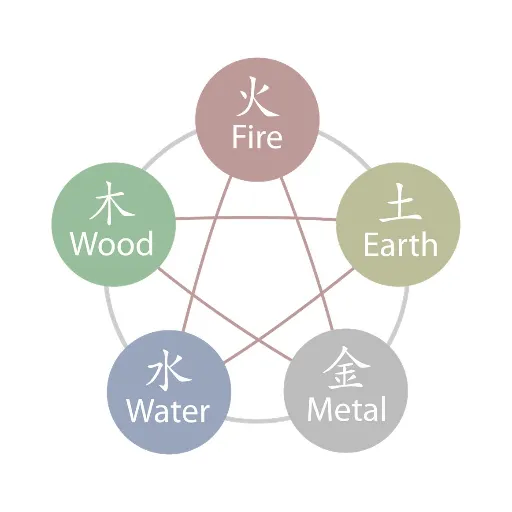
The destructive cycle shows which element destroys or weakens another: wood destroys earth by rooting in soil, earth destroys water by damming it, water destroys fire by extinguishing it, fire destroys metal by melting it, and metal destroys wood by cutting it. Fengshui and yin-yang analysis use this cycle to predict conflicts between elements in a space or a natal pillar, and to decide which element to introduce or remove to keep harmony.
How do yin and yang interact with the 5 elements in seasonal phases?
Yin and yang qualities are assigned to the 5 elements and shift with seasons and phases: wood (spring) tends toward yang growth, fire (summer) is strongly yang, earth is neutral or stabilizing, metal (autumn) trends toward yin contraction, and water (winter) is yin. In fengshui and metaphysical analysis, yin and yang balance influences how an element will produce or weaken another element in a given season or date and time.
How do I use a 5 elements chart or pillar analysis to improve destiny or profile readings?
A 5 elements chart or four pillars analysis (which uses year, month, day and hour) maps the elements present in a person’s birth date and time to reveal strengths, weaknesses and potential destiny trends. By identifying which elements are weak or strong, an advisor can suggest remedies: introduce colours, objects or materials that produce the weak element (nourishment), use controlling cycle elements to restrain overly strong elements, or cut ties by removing items of another element.
Key Takeaways
The cycle of elements demonstrates the interconnectedness of all natural processes, from the smallest atomic interactions to cosmic phenomena. Understanding these relationships is crucial for environmental sustainability and technological innovation. By respecting and working with these elemental cycles, we can develop solutions that harmonize with nature rather than oppose it.