


The astrological chart’s components are in constant motion with each other; hence, the whole picture of the individual and the difficulties of his/her life is revealed. In this case, the clashing forces of Wood and Metal occupy the main position as the most frequent source of inner conflict. To be more specific, the tree or Wood is the symbol of development, adaptability, and abundance, while the Iron or Metal stands for the opposite — limitations, rules, and accuracy. They are indeed conflicting forces but they can also be a source for peace when they are rightly tuned. This article will guide you through the process of recognizing and controlling the oscillation of these elements in your chart, leading you to increased self-knowledge and emotional stability.
Introduction to Feng Shui and the 5 Elements
Understanding the Basics of Feng Shui
Feng Shui, a term that literally means ‘wind’ and ‘water’, is one of the oldest and most traditional Chinese practices which aims to align the people with their environment through harmonizing the elements. It is primarily based on the idea that a space’s energy, or “chi”, can be one such factor that influences the health, thus providing directions on how to move and set up the objects and structures to achieve balance and vitality. Its application is no longer limited to the residential sector but also extends to offices and gardens where people want to keep the energy flowing in a positive manner.
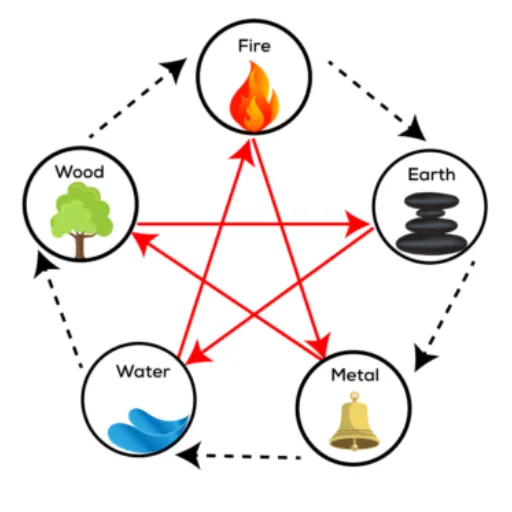
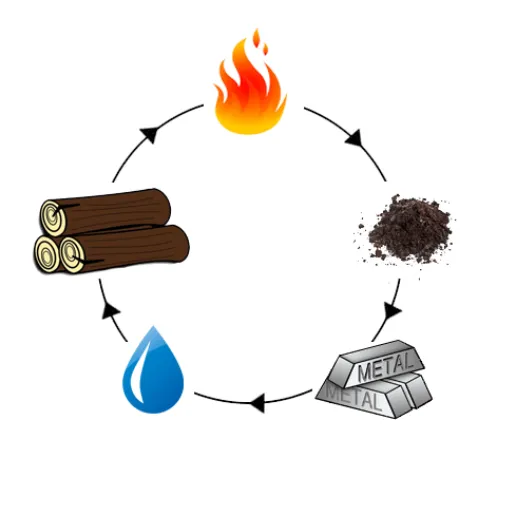
The five elements—Wood, Fire, Earth, Metal, and Water—are central to Feng Shui practices. Each of them presents its own characteristics and has interactions with the other elements in both favourable and unfavourable ways. As an example, in the constructive cycle Water supports Wood while in the controlling dynamic it can extinguish Fire. Once these interrelations are known one can detect where the energy flow is stuck and thus perform the kind of treatment that will bring about the healing and the flow of harmony.
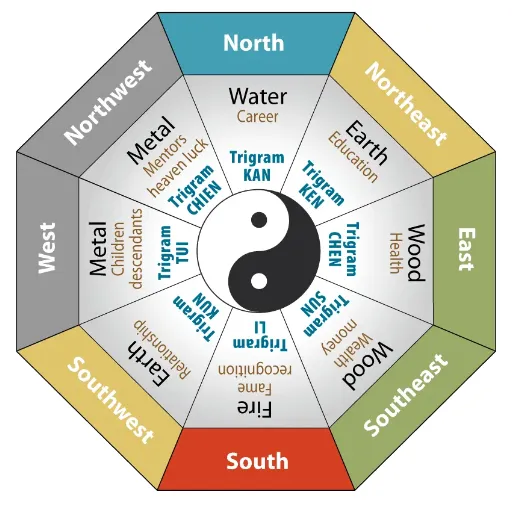
💡 Key Insight: Feng Shui considers direction, color, shape, and every element associated with objects while deciding about the placement of things. For instance, placing trees (Wood element) in the east or southeast can lead to prosperity and growth, while the addition of Metal in the west might bring about clarity and concentration.
The Role of the 5 Elements in Feng Shui
The 5 widely accepted elements of Feng Shui, namely Wood, Fire, Earth, Metal, and Water, are the basic building blocks of harmony and balance within interiors. The positive characteristics and energies of these elements affect the different facets of life: Wood for instance supports creativity and vitality; Fire is seen as the source of passion and energizing and is the element of transformation and so on. Hence, the right and smart application of the elements in your vicinity can bring in favorable energy and help the most vital areas of your personal and professional life grow and prosper.
Overview of Wood and Metal Elements
The element Wood stands for development, liveliness, and enlargement. It is related to the traits of imagination, tenacity, and adaptability in one’s life. This element, often symbolized through plants, trees, and wooden products, is connected to the eastern and southeastern parts of the Bagua map, thereby facilitating the flow of health and wealth in those areas. Adding the Wood element to a room can be achieved through the use of green and brown shades, the application of vertical shapes, and the presence of living plants—all of which contribute to an atmosphere of energy and renewal.
The Metal element reflects power, exactness, and transparent communication. East and northwest in the Bagua map are the sectors where this element shines, with focus on artistic creation and friendly connections, respectively. The Metal element can be applied in a way that brings a sense of neatness and concentration, thus making the process of decision-making and communication in the vicinity run naturally and smoothly.
⚠️ Balance Warning: It is necessary to take care of the proper balance of the Wood and Metal elements in a room. Metal is a source of order and concentration while Wood gives off energy and life. Too much Metal will weaken the Wood and the whole thing will become stuck, and on the other hand, too much Wood might overpower the Metal and thus, disrupt the order and clarity that it brings.
Exploring the Wood Element
Characteristics of the Wood Element
The Wood element is usually linked to the concepts of growth, flexibility, and vitality. It is a symbol of the energy of springtime, a season when nature is waking up and the plants are growing. The Wood element is the representation of the feature of upward and outward growth and it has the characteristics of being creative, being able to bounce back, and being strong. It is also associated with the green color, the liver and gallbladder in traditional medicine, and the feelings of hope and rejuvenation.
✓ Balanced Wood Energy
- Ambitious and visionary
- Adaptable to change
- Creative and innovative
- Resilient and strong
✗ Imbalanced Wood Energy
- Excess: Irritation, anger, aggression
- Deficiency: Feeling stuck, lack of creativity
- Relationship tensions
- Loss of direction
Positive Attributes of Wood in Feng Shui
Feng Shui’s Wood element is a representative of nature’s growth, energy, and to some extent, the whole world. It is viewed as a mixture of soft and hard, colorfully and non-colorfully. Sometimes we have to bend with the circumstances around us to be able to make the best out of it, just like the wood that grows upwards and sideways as it meets the wind. Therefore, the wood element in one’s home creates a feeling of freshness and upswing, so it is the perfect addition for those who want to grow in their personal lives or careers.
Key Benefits of Wood Element:
- Health and Healing: Energizing qualities that promote physical and emotional well-being
- Detoxification: Corresponds to the liver in Five Element Theory, supporting elimination of negative energy
- Ambition and Willpower: Motivates goal-setting and achievement
- Creative Growth: Provides foundation for new ideas and innovation
Wood Element in Personal Charts
The Wood element in personal charts can show important aspects of an individual’s personality, inclinations, and capabilities. The strength and position of Wood in the personal charts frequently relate to characteristics like inventiveness, versatility, and steadfastness. People whose Wood element is the strongest usually draw strength from difficulties, showing a birthright to transform and grow in the environment of their choice.
It is very important to balance the Wood element with the other elements in the chart. For example, too much Wood without the tempering influence of Metal (which keeps Wood in check) can bring about recklessness or overcommitment. On the other hand, lack of the energizing Water may drain the Wood of its potential, leading to a deadlock. Data also reveal that even people with well-rounded Wood elements are likely to succeed in the fields of business, management, or arts, where imagination and newness are the main traits.
Understanding the Metal Element
Characteristics of the Metal Element
In different metaphysical systems such as traditional Chinese philosophy, the Metal element embodies the attributes of flexibility, transparency, and sophistication. It is partnered with the traits of boldness, perseverance, and keeping one’s mind sharp. Individuals who are rich in the Metal element are often very orderly in their lives and are advocates for rules, limits, and honesty across both their individual and business relations. Besides, they are usually long-term thinkers who pay respect to customs and morals while adopting a practical way of realizing their dreams.
Metal’s Emotional Aspect: Metal is connected to mourning and the skill of letting go. When properly managed, Metal gives people the power to release what no longer serves them, thus enabling growth and emotional fitness. However, when unbalanced, it can manifest as rigidity, loneliness, or dogmatism.
Looking at the larger picture, Metal is a factor in the processes of cooling and shrinking, thus symbolizing the idea or value becoming its purest form through the process of refinement. It is often the lungs in Chinese medicine that the element is linked with, which reflects that the element plays a vital role in breathing and utterance.
Positive Attributes of Metal in Feng Shui
The element of Metal signifies lucidity, accuracy, and might, augmenting the power of the energy that is very concentrated in the environment. It embodies the attributes of being able to work effectively, being self-disciplined and persistent, which can be of use to people in the pursuit of their goal with the tenacity and loyalty.
Advantages of Metal Element:
- Enhanced Focus: Promotes clear thinking and decisive action
- Financial Success: Associated with wealth and resources
- Organizational Power: Creates structure and maintains balance
- Synergy with Water: Supports idea generation and quick decision-making
- Fire Balance: Reduces negative effects of excessive Fire energy through refinement
💡 Design Tip: Introducing metallic hues of colors such as white, gray, and silver or bringing in objects like sculptures, tools, or any other metallic décor pieces into your living or working areas can greatly increase these advantages.
Metal Element in Personal Charts
The Metal corresponding to the personal charts is very often linked with the characteristics of being determined, resilient, and having a very strong sense of justice. A strong Metal presence in the charts can usually identify individuals who are disciplined, concentrated and possess the great vitality that allows them to conquer obstacles. Metal people prefer to be in settings that are structured where their methodological and clear decision-making abilities are considered as good properties.
The Metal element when traced on the personal charts does not only signify clear communication of thoughts but also having the good quality of coming up with better decisions. Such occupations or activities as law, engineering, and finance that all need utmost precision are believed to be associated with this Metal element. The balancing of the Metal element is vital since too much of it will lead to a hard and uncompromising nature while on the other hand, too little of it will make one waver and lack a sense of direction.
The Nature of Wood and Metal Conflict
What Happens When Wood Clashes with Metal
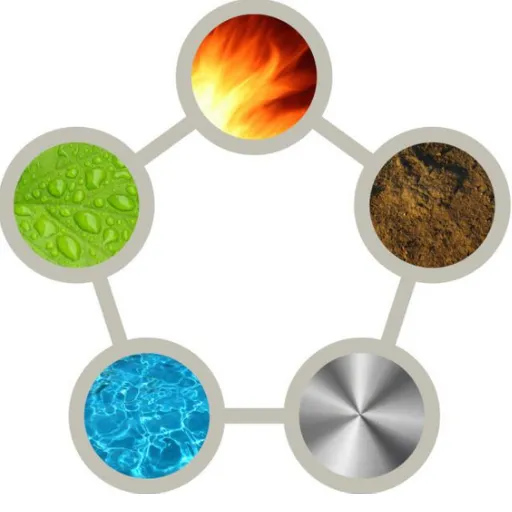
The clash between Wood and Metal is a conflict of energies at the fundamental level and its resulting manifestations are in different aspects of life, especially in feng shui and metaphysical interpretations. Wood depicts growth, expansion, and change, just like a tree growing high and being rooted deep at the same time. On the other hand, Metal stands for discipline, order, and accuracy, and with that, it does show rigidity and containment to some extent. The methods of these energies are opposites and that is how the clash occurs—Metal’s strong control usually restrains Wood’s inherent ability to grow and express.
| Scenario | Dominant Energy | Result |
|---|---|---|
| Excessive Wood Energy | Wood overwhelms Metal | Frustration, discord in relationships/career; feeling choked or trapped |
| Excessive Metal Energy | Metal suppresses Wood | Feeling smothered; decision-making difficulties; imbalance in leadership |
| Balanced with Water | Water mediates both | Smooth energy flow; harmony between structure and growth |
🔄 Resolution Strategy: Feng shui experts scrutinizing this confrontation may propose actions for easing the situation like bringing in Water to unpretentiously reconcile the two elements considering Water’s role as the one that pumps life to Wood and moderates Metal thereby, establishing a smooth flow of energy.
Signs of Wood vs. Metal Conflict in Personal Charts
The conflict between Wood and Metal in personal charts is often seen as a source of internal tension and external conflicts. While Wood represents the opposite side of the personality with its qualities of growth, expansion, and creativity, Metal stands on the other side with its qualities of order, discipline, and precision. When these two forces are not in balance, the person may feel restricted or frustrated.
Common Manifestations of Wood-Metal Conflict:
- In the Workplace: Creative, bold solutions clash with step-by-step processes and strict rules
- Personal Dilemmas: Career ambitions (Wood) versus family obligations (Metal)
- Relationship Tensions: Different approaches causing misunderstandings and disputes
- Internal Struggle: Feeling “trapped” or “split” between competing directions
Careful examination of a personal chart can clarify these elements’ conflict and provide means for negotiating conflicts in a positive way. One way of resolving Wood and Metal conflict is through partnership in activities that are energising for both. A person with a solid Metal presence might gain from being involved in art, acting, etc., as a way of experiencing Wood’s looseness, while people with powerful Wood energy can sharpen their organizing or planning talents to be in resonance with Metal.
Emotional and Psychological Implications of the Conflict
When there is a conflict between Wood and Metal in an individual’s personal chart, it can show up through different emotional and psychological signs. The Wood element is connected with growth, adapting, and enlarging, and usually, it is the one that encourages the person to look for new ideas and to be progressive. The Metal element, however, is strict, disciplined, and precise and thus, advocates for order and restraints.
Wood Perspective
Feels oppressed under Metal’s hard limits, potentially leading to:
- Rebellion
- Impulsive actions
- Frustration with restrictions
- Need for freedom
Metal Perspective
Views Wood’s growth as disorderly or destabilizing, causing:
- Anxiety
- Need for control
- Discomfort with change
- Rigidity
From the psychological point of view, the conflict may produce a more intense feeling of self-doubt and a higher degree of uncertainty because the person will be trying hard to come up with a solution to his/her contradiction. This whole thing could be a major problem in both personal and work relationships if not managed.
🌱 Growth Opportunity: It is through understanding and working on elemental conflict that one can experience great personal growth and even come to feel more balanced. Acknowledging the pros and cons of both Wood and Metal, one could learn to bring together these seemingly opposite forces. To give an example, combining the inventiveness of Wood with the organization of Metal can lead to the emergence of new ideas that are also well-structured.
Practical Solutions for Harmonizing Wood and Metal
Techniques to Balance Wood and Metal Energies
The balancing of wood and metal energies can be easily done with thoughtful changes in environment, habits, and mindsets. The use of earth element symbols can be a great help in preventing the struggle of energies since according to the five-element theory earth is the least disputed element.
Practical Balancing Techniques:
- Introduce Earth Elements: Use ceramics, terracotta, or earthy colors to mediate between Wood and Metal
- Design Integration: Combine rounded/fluid shapes (Metal) with plants/wooden accents (Wood)
- Daily Rituals: Practice mindful breathing or tai chi to harmonize internal energies
- Lighting Balance: Natural light enhances Wood energy; metallic or reflective light sources symbolize Metal energy
- Conscious Integration: Blend physical and symbolic elements in your environment for harmony and productivity
Feng Shui Remedies and Enhancements
Feng Shui remedies aim to create harmony between the energies of a space so that they would facilitate the well-being of a person, the health, and the prosperity. The use of such elements as plants, mirrors, and certain color schemes can have a very strong effect on the chi flow. For example, the presence of plants with lush green leaves can contribute to the wood energy that represents growth and vitality, while mirrors placed in the right way can triple the light coming in and give the impression of a larger area, thus inviting clarity and openness.
| Enhancement Type | Description | Benefits |
|---|---|---|
| Water Elements | Fish tanks, fountains (especially in southeast corner) | Prosperity and abundance; mediates Wood-Metal conflict |
| Crystals & Gemstones | Earth energy accumulators | Environmental stability and grounding |
| Bagua Mapping | Nine energy zones corresponding to life aspects | Strategic placement for maximum effectiveness |
| Modern Integration | Warm artificial light + soft metallic accents | Elemental balance for contemporary spaces |
💡 Modern Application: The modern-day interpretation merges Feng Shui practice and the individual’s taste to create a stylish apartment that fits today’s lifestyles. For example, in a city flat that does not get much sunlight, one could use warm-looking artificial light along with soft metallic accents to achieve elemental balance while retaining the space’s functionality.
Creating a Harmonious Environment
Designing a harmonious and peaceful environment is not only about the beauty of the place; it needs a lot of attention to its energy flow, the arrangement of the space, and the mixing of elements. The furniture and decoration according to Feng Shui principles is of utmost importance in making positive energy, or “Chi,” flow through the space easily.
Key Principles for Harmonious Spaces:
- Strategic Positioning: Place functional objects like desks and beds facing entrances without direct alignment for empowerment and safety
- Clutter Removal: Clear unnecessary items to allow smooth energy flow
- Natural Elements: Introduce plants or fountains to create calming environments
- Smart Home Integration: Use technology to monitor light, temperature, and sound levels for optimal living conditions
- Adaptive Systems: Implement automated adjustments based on time of day or user preferences
With the continuous development of modern design and technology, new ways are opened to enhance the harmony of a space. Different studies have found that ambient lighting and airflow can have a positive or negative effect on one’s mood and productivity, hence, systems that can change these conditions automatically according to the time of the day or the user’s preferences can be a great addition to a more adaptable and balanced living environment.
Color and Texture Guidelines:
| Space Type | Recommended Colors | Effect |
|---|---|---|
| Bedrooms | Soft, neutral colors with slight accents | Serene and relaxing atmosphere |
| Children’s Play Areas | Vivid or dark colors | Boost energy and creativity |
| Living Spaces | Balanced mix with natural materials (wood/stone) | Visual appeal and tactile comfort |
Moreover, current research findings confirm the essential role of color, texture, and pattern in the psychological state of the household. By incorporating these contemporary ideas into the ancient rules of color and textures, one can create a living space that mirrors his or her taste and simultaneously enhances mental clarity and emotional control. In conclusion, making a harmonious environment is an ongoing adaptation in the process of changing lifestyle needs and design innovations.
Summary: Transforming Conflict into Growth
The balance of their interaction is power that fuels creativity, being at home, and steady progress. By understanding and working through the elemental conflict between Wood and Metal, individuals can experience profound personal growth and achieve greater emotional balance. The key lies in acknowledging both elements’ strengths and learning to harmonize these seemingly opposing forces into a unified, productive energy.
Through conscious application of Feng Shui principles, environmental adjustments, and personal awareness practices, the Wood-Metal conflict transforms from a source of tension into an opportunity for self-discovery, enhanced relationships, and professional success.
📚 References
- The Three Realms, the Four Domains, and the Five Elements
PDF Document from drbachinese.org
This document discusses the interactions and mutual restraint between elements, including Wood and Metal. - Understanding The 5 Elements
Presentation from Evergreen State College
This resource explains the relationships and pairings of the five elements, including their symbolic meanings. - Family Feud or Full House? A Feng Shui Guide to Cherishing Family Relationships
Article from the International Feng Shui Guild
This guide explores the controlling relationships between elements, such as Metal and Wood, in real-world applications. - Click here to read more.
Frequently Asked Questions (FAQ)
❓ What defines the Wood vs Metal Element Conflict in a personal chart?
The Wood vs Metal element conflict occurs in the BaZi (Four Pillars of Destiny) systems and others where these two antagonistic forces are the most noticeable and the least balanced in a person’s astrological chart. According to the five-element controlling cycle, Metal cuts Wood. This interaction symbolizes a basic opposition where Metal’s attributes of structure, discipline, and rigidity repel Wood’s features of growth, flexibility, and expansion. This natural rivalry can show up as challenges both within and outside a person’s life in different domains.
❓ How does an Elemental Conflict Resolution Guide address this clash?
An elemental conflict resolution guide proposes organized techniques for reducing the deleterious impacts of the Wood vs Metal element conflict. The principal approach incorporates a “mediator” element, which is Water. In the elemental cycle, Metal makes Water, and Water nurtures Wood. By making the Water element stronger in one’s life through certain activities, environments, or diet choices, one can establish a more peaceful energy flow, changing the destructive cycle into a fertile one and lightening the elemental energy imbalance.
❓ What are the typical Wood and Metal personality traits in this conflict?
People who have a considerable Wood vs Metal conflict reveal a duality in their character. They can swap between Metal’s strict insistence—being disciplined, principled, and sometimes inflexible—and Wood’s creative flexibility that takes them to the areas of growth, innovation, and change. This internal struggle can result in uncertainty, irritation, or the feeling that their organized plans are regularly thwarted by a wish for new experiences.
❓ Can you explain the health implications of managing internal elemental clashes like Wood vs Metal?
The Wood vs Metal element conflict has a clear-cut consequence in health matters according to Traditional Chinese Medicine (TCM). The Metal element is linked to the respiratory system (lungs and large intestine), while the Wood element has rulership over the liver and gallbladder. A resistance between them may cause health problems in these organs, such as breathing problems, allergies, or liver function issues like stress, anger, and detoxification difficulties. Controlling this internal elemental clash is vital for the maintenance of physical and emotional health.
❓ How does the Wood vs Metal energy balance affect professional life?
In a professional environment, a Wood vs Metal energy balance that is not equal can be visible in the form of considerable career obstacles. A person may experience that his/her creative ideas (Wood) get constantly rejected by the processes in place or by a strict supervisor (Metal). On the other hand, he/she may find that the discipline (Metal) he/she applies feels suppressed due to the rapid changes in the industry (Wood). This can lead to conflicts with bosses, unpopular projects, and a sense of professional tension that won’t go away.
❓ What relationship dynamics arise from a Wood vs Metal Element Conflict?
Such a conflict in a relationship often results in a pull-push pattern. The person might want at the same time the security and the order that Metal brings and the development and the novelty that is coming with Wood. This could easily manifest in the person’s discontent with his/her partners, because a need for routine might conflict with a need for adventure. To overcome this conflict, good communication becomes crucial, because it is through communication that misunderstandings will be cleared up that arise from this innate duality and that will be found a way between safety and inspiration.
❓ Are there opportunities associated with balancing Wood and Metal energies?
Indeed, even though the conflict gives rise to challenges, balancing Wood and Metal energies is a bottomless well of tremendous opportunities for personal development. People who manage to reconcile these forces will have the advantage of a rare and powerful flexibility. They become experts in the art of handling the most diverse situations and can be both disciplined and creative at the same time. Their profound comprehension of the contradiction between structure and flexibility is the reason why they are talented problem-solvers and mediators. They will not only supersede divides and strengthen cooperation but also by the power of their multifaceted nature will be able to tap the richness of such a nature.
Begin Your Journey to Balance
Understanding the Wood vs Metal conflict in your personal chart is the first step toward harmonizing these powerful energies. By applying the principles and techniques outlined in this guide, you can transform internal conflicts into sources of strength, creativity, and personal growth. Remember that balance is not a destination but an ongoing practice of awareness, adjustment, and alignment with your true nature.